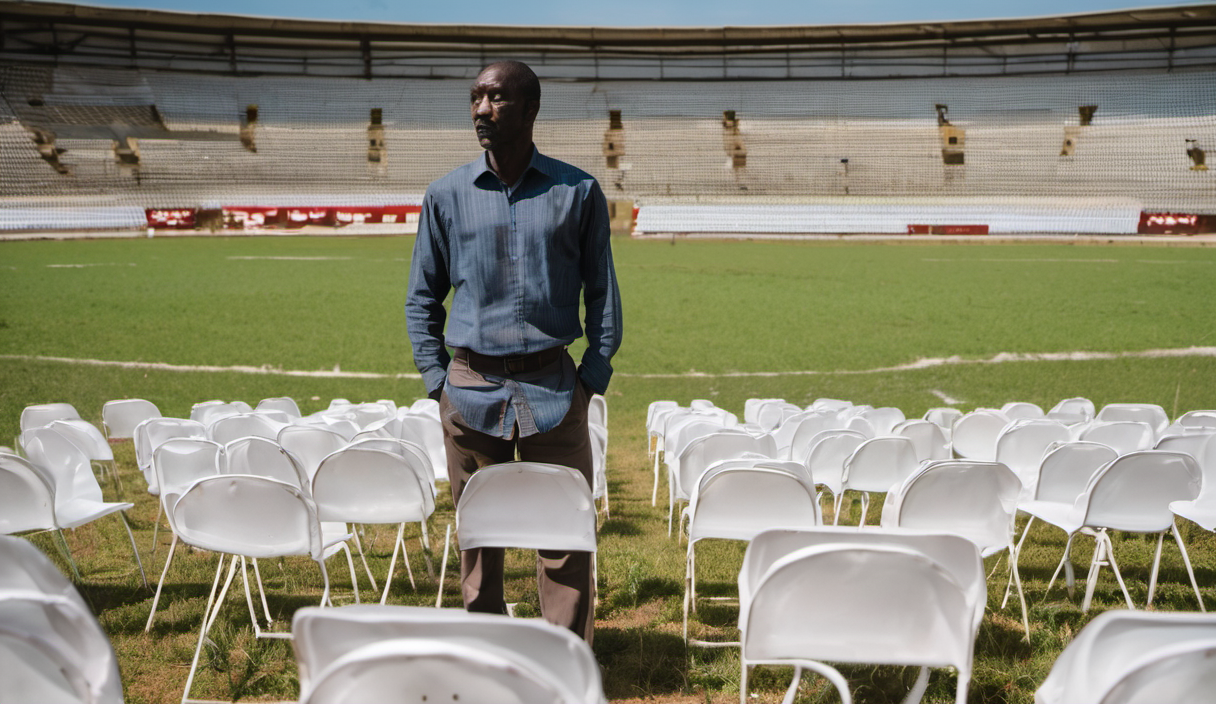
Featured image: A middle-aged Black man is standing in the foreground. AI-generated image; not a photograph of the reported event.
A BBC Africa Eye investigation has found that three people killed by police during a memorial for former Kenyan Prime Minister Raila Odinga were not involved in any violent confrontation. Source: bbc.co.uk.
What Happened at the Memorial
Thousands gathered at Nairobi’s Kasarani Stadium to pay their respects to Odinga after his death the previous day. The event was moved from parliament to the stadium due to fears of a security breach. The venue has a capacity of 48,000, and thousands spilled onto the pitch and stands without proper control.
Footage shows a small section of the crowd throwing plastic chairs at officers guarding the VIP pavilion. No evidence of stones or other projectiles was found.
Where the Victims Were Located
Analysis of over 1,500 videos and images shows the three victims were far from the area where objects were thrown.
- Evans Kiche, a 40-year-old chef and father of seven, was killed near the confrontation.
- Vincent Ogutu, a 36-year-old father of three, was shot in the chest.
- Jidah Burka, a 42-year-old woman, was fatally shot in the head.
Autopsy reports confirm all three died from gunshot wounds. Forensic analysis suggests the shots came from elite police units assigned to protect the president.
Who Fired the Shots?
The BBC identified at least eight officers wearing tactical gear and military camouflage. Their uniforms and movements match those of the presidential protection unit.
At least three of these officers fired live rounds. The BBC cannot confirm which bullets killed each victim or whether others fired inside the stadium.
Kenya’s National Police Service said the incident has formed a ‘fundamental learning curve’ for future operations.
Reactions and Public Outcry
Yvonne Akinyi, widow of Evans Kiche, said: These are the people that cause us this pain. These are the people that make us become young widows in this country.
She described the incident as deeply painful: At Kasarani there were so many people, so many of them. Why him?
Ogutu’s wife said he had not planned to attend the event. He was in central Nairobi when he saw the crowds and decided to join.
Investigation Status
Kenya’s Independent Policing Oversight Authority (IPOA) is still investigating the incident. No individuals have been held accountable.
Interior Minister Kipchumba Murkomen defended the police, saying they were under ‘so much pressure’ and had been deployed to a new venue at short notice.
He said: I don’t think… somebody [was] sitting there and saying: ‘Shoot now’. It is the judgment of the police officer at the spur of the moment.
Why This Matters
The incident raises serious questions about the use of force by security personnel during public events.
It highlights a gap in accountability and transparency in police actions, especially when high-profile figures are involved.
It also underscores the vulnerability of ordinary citizens during large public gatherings.
Limitations and Open Questions
The BBC cannot confirm which officer fired the fatal shots.
There is no public record of a formal review or independent audit of the incident.
It remains unclear whether the police response was justified or if it violated established protocols.
What to Watch Next
Kenya’s IPOA is expected to release a full report in the coming months.
Public and media scrutiny may intensify as the investigation progresses.
Further analysis of security protocols at public events could follow.
Source: BBC News Africa Eye, https://www.bbc.co.uk/news/articles/c962y4ld1d7do?at_medium=RSS&at_campaign=rss