Christine Mowinckel, a travel editor, discovered a hidden corner of Norway’s eastern forests during a three-day trip to Finnskogen. Far from the popular Lofoten Islands or Arctic lights, this region offers a rare blend of nature, folklore, and off-grid living. As she drove through farmland, Mowinckel asked herself: Why queue for the mountains?
Why Finnskogen?
While the Lofoten Islands and the Arctic Circle dominate travel narratives in Norway, Finnskogen remains largely unvisited. The region is not just a scenic backdrop—it is a living ecosystem where moose, wolves, bears, beavers, and king eagles roam freely. These animals are not just wildlife; they are central to the region’s identity and daily life.
Finnskogen supports year-round outdoor pursuits—from snowshoeing in winter to cycling and kayaking in summer. What makes it unique is not just its biodiversity, but the deep cultural resonance it holds. Finnish settlers brought slash-and-burn agriculture, a method seen as disruptive to the forest’s balance. This tension still lingers, with local residents quietly resisting modern land changes.
The Pan Treetop Cabins
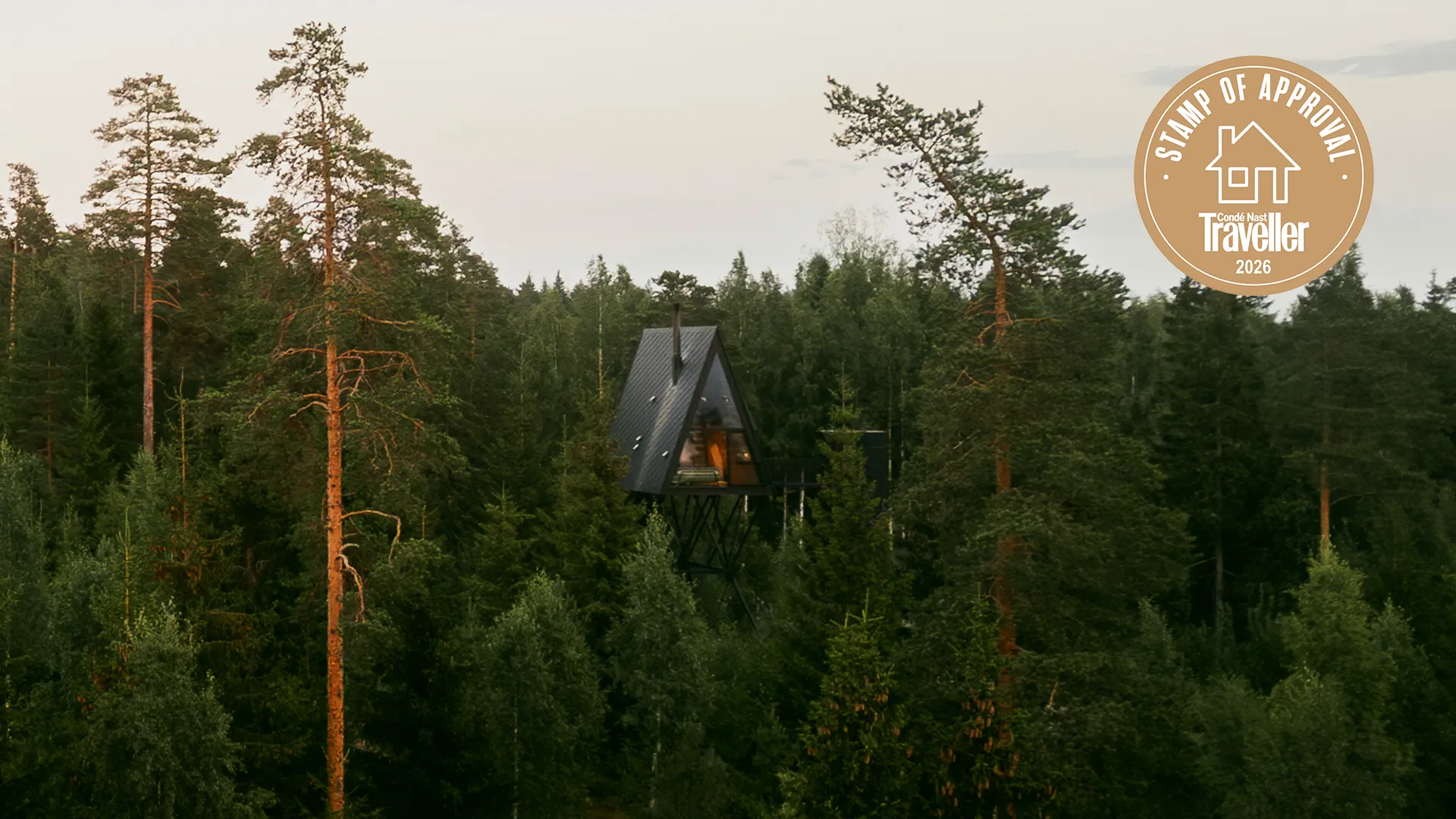
Christine and her husband Kristian Rostad built three treetop cabins on their private forest estate near Lake Gjessåsjøen. Designed by Norwegian architect Espen Surnevik, the cabins won the European Steel Design Awards in 2019 for sustainability and harmony with the landscape. The design minimizes environmental impact using local materials and avoids disturbing the forest.
Each cabin stands eight metres above ground on steel supports. Access is via a spiral staircase—a climb that feels tough but is worth it. The cabins feature clean lines, pine wood flooring, and comfortable furnishings. All materials are sourced locally, reinforcing regional sustainability.
Layout and Amenities
One cabin, Pan 2, spans 40 square metres. It has an open-plan layout divided into three areas: a living room with large windows showing birch, spruce, and pine trees, and Lake Gjessåssjøen in the distance. Natural light fills the space throughout the day.
- The bathroom includes Elm Organics products—shower, toilet, sink. These are eco-friendly and non-toxic, matching the cabin’s sustainable values.
- The kitchen is compact but functional: fridge, cooker, kettle, cutlery. It lets guests cook simple meals with local ingredients.
- The main floor has a double bed, a sofa, and two fold-out beds for children. The setup balances privacy and shared moments.
There are charging points and room for a small suitcase. The open layout encourages relaxed, unhurried conversations—more authentic when shared in nature.
Outdoor Experiences
Finnskogen is built for outdoor engagement. In summer, guests can cycle, kayak, or hike. The cabins have firepits, slate tables, and sheepskin rugs—perfect for outdoor dining.
Mowinckel and her friends borrowed mountain bikes from a nearby shed and cycled to Lake Gjessåssjøen, a nature reserve where geese descend in winter. Along the way, they stopped to pet two cute ponies on a roadside farm. The moment wasn’t just a photo—it was a connection to the land and animals.
Elk stew is a traditional dish, made from wild elk. It reflects local culture and the ecological sensitivity of the region.
Evening and Nighttime Activities
Back at the cabin, guests use an open-air hot tub. It’s enclosed in wooden walls for privacy and lit by candlelight. The Jacuzzi bubbles warm the body, and guests sip Baileys while chatting under the stars. The experience feels calm and grounded.
Next to the hot tub is a yoga platform. Mats are provided in each cabin. Mowinckel was ready to try a cobra pose, but instead swung in the trees, laughing in the sunlight. This moment shows how the cabin encourages play and spontaneity—qualities missing in commercial travel.
Guided Forest Experiences
Local tour operator Spreke Opplevelser took guests kayaking on the Kynna River. The river flows through grassy banks where beavers build dams and turquoise dragonflies hover. At one point, the group stopped on a sandbank to cook chocolate pastries on a small stove—a joyful, simple moment in nature.
Later, they met local storyteller and forest guide Marit Høvik. She led a hike that began almost at the cabin’s doorstep. The wind rustling through trees sounded like a waterfall. The forest floor was rich with moss and lichens. Marit taught guests how to spot safe berries and toxic ones—a practical lesson rooted in generations of local knowledge.
Local Culture and History
Guests met local huntsman Martin Løvtjernet. He spoke passionately about his life as a hunter and his deep connection to wildlife—elk, deer, capercaillie, wolves, bears, and lynx. His stories show hunting as a practice of respect, patience, and understanding.
During the visit, guests enjoyed moose sausages, flatbread, sour cream, chaga mushroom tea, and dandelion root. These foods reflect local traditions and seasonal availability. Using wild plants and animals shows how people live in harmony with nature.
Historical tensions remain between Finnish settlers and local communities. The 16th-century slash-and-burn farming practices introduced by Finnish immigrants still spark quiet resistance. This history adds depth to the region’s story—showing that nature is shaped by complex human histories.
Finnskogen has long been a place of cultural and ecological significance. Its folklore and natural beauty have not received the attention they deserve. For travelers seeking authenticity, connection, and a deeper understanding of place, this region offers a compelling alternative to the well-trodden paths of northern Norway.
Availability can be checked at the original source.
Sources & further reading
Featured image: original publisher image. Via original publisher. Image source