We’re pausing our live coveragepublished at 10:00 GMT 10 March
Thanks for staying with us so far – we’re pausing our live coverage of the Nepal election results for now.
As a reminder, election officials have said they expect counting to be finished by this evening local time, and it will take at least four days for the commission to formally declare the final results.
We’ll be back when we have more news on the results. In the meantime, if you would like to read more on this story – we’ve got you covered:
- How does the Nepal election work? We break it down for you
- The BBC’s South Asia correspondent, Azadeh Moshiri, explains the backdrop to Nepal’s Gen Z election
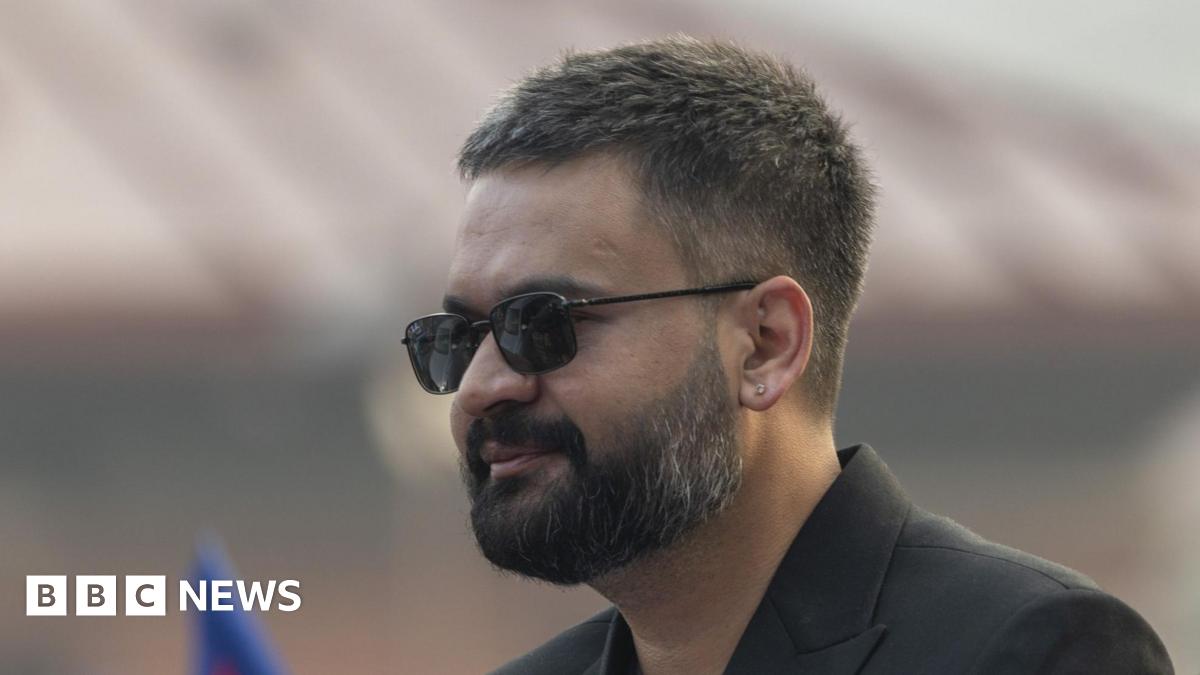
- A rap star turned politician may become Nepal’s next PM – here’s what we know about Balendra (popularly known as Balen) Shah
Winner proclaimed in disputed racepublished at 09:38 GMT 10 March
Nepal’s election commission has decided to go ahead and proclaim a winner in Dhanusha-1, the Nepal Communist Party’s Matrika Prasad Yadav.
The commission had disqualified the candidate of Balen Shah’s RSP, Kishori Saha, three days before election day. Some voters still picked Saha since the ballots were not revised in time.
Officials refused to count Saha’s votes, prompting him to file a protest before the Supreme Court.
Our BBC Nepali colleagues report that in the absence of an immediate injunction from the court, the commission decided to proclaim Yadav the victor and award him with a winner’s certificate.
The Supreme Court set a hearing on the protest on Friday.
How former PM Prachanda survived the electionpublished at 09:21 GMT 10 March
Phanindra Dahal
BBC Nepali, Kathmandu
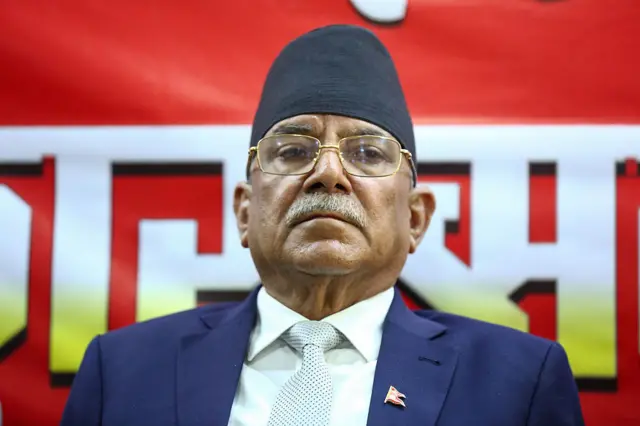

While leaders
of major political parties lost out in this election badly, Nepal’s former Prime
Minister Pushpa Kamal Dahal – also known as Prachanda – won by a hefty margin.
His
survival in the general elections is one of the trending
topics on social media in Nepal currently.
Most of the old guard suffered heavy defeat in the parliamentary
elections, leaving the 70-year old as the only former Prime
Minister to have won a seat in the upcoming House.
His Nepali Communist Party, which
won 32 seats in the last general elections, has this time won seven seats under
the first past the post electoral system.
Memes have been
shared on social media that he would return safely from any dangerous place in
the world. Many are describing the former rebel leader’s choice of constituency for this election as
his smartest move.
Prachanda’s
survival is attributed to his decision to contest polls from a mountainous
constituency called Rukum East, a traditional
stronghold of the Maoist party from the beginning of their decade-long armed
insurgency in 1996. The conflict ended in 2006 and cost around 17,000
lives.
Rukum was a
single district until a new constitution was proclaimed in Nepal in 2015, but it
was divided into Rukum East and Rukum West in the new federal structure.
Rukum, Rolpa,
Salyan and Jajarkot – the four districts in the western part of Nepal – were
considered to be Maoist bases during the insurgency. In previous elections, Prachanda shifted from one geographical
constituency to another to secure his victory.
This time his
choice to contest from Rukum East has paid off. He beat a leftist candidate from the CPN-UML party by a margin of over 6,700 votes.
But with Balen Shah’s
Rastriya Swatantra Party likely to secure a landslide victory, Prachanda will not have
any power that will impact the coalition formation or policy
decisions.
Traditional party leaders suffer heavy lossespublished at 08:55 GMT 10 March
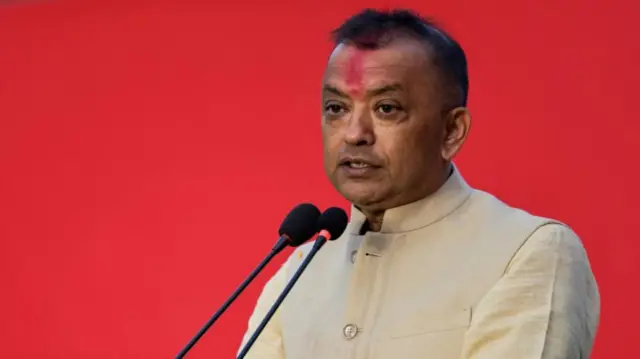

Gagan Thapa has lost his seat in in Sarlahi-4
Almost all senior leaders of the Nepali Congress and the CPN-UML have lost their races, according to local media reports.
Nepali Congress leader Gagan Thapa lost to his rival Amaresh Kumar Singh of Balen Shah’s RSP in Sarlahi-4.
The Nepali Congress is currently the country’s largest party, but that is expected to change once the results of this election become official. Six other Nepali Congress leaders have also lost their seats.
Thapa’s defeat mirrors that of former prime minister KP Sharma Oli, who leads the CPN-UML and lost to Balen Shah in Jhapa-5.
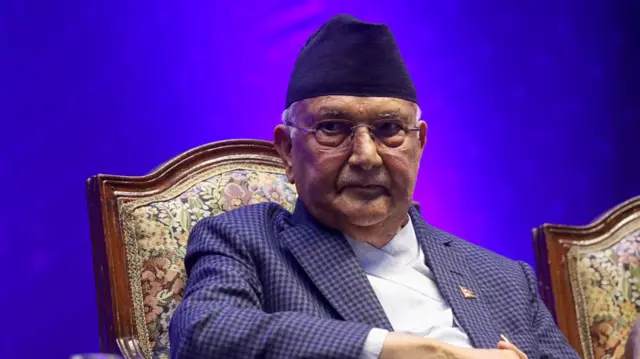

Former prime minister KP Sharma Oli lost his seat to Balen Shah
Several other senior leaders of the CPN-UML, including Vice-chairmen Bishnu Paudel and Gokarna Bista, general secretary Shankar Pokharel, and secretaries Mahesh Basnet, Bhanubhakta Dhakal and Rajan Bhattarai have all lost their House races.
The results could be seen as a verdict on what many critics describe as a culture of arrogance, impunity, lack of accountability and corruption that has marked the first decade of the Nepali republic and remained a persistent feature of the country’s politics, says Kathmandu-based analyst Amish Raj Mulmi.
According to him, the election is a moment for older parties to “return to the roots of their ideologies and methods, and to introspect about what delivered them to power over and over again and why they were rejected”.
Shot Gen Z protester says there is now ‘a small glimmer of hope’published at 08:31 GMT 10 March

South Asia Correspondent

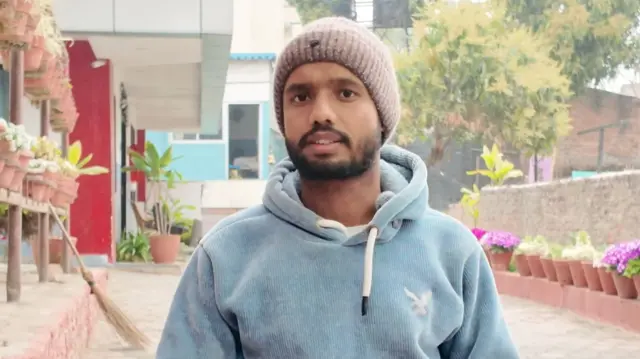

When 24-year-old Rakesh Mahto went out to protest in September, he was hoping for an end to corruption and long-lasting change in Nepal. But he paid a high price for it.
“A few of my friends were shot, and while I was trying to save one of them from behind a barricade, I was also shot,” he tells us.
More than five months after the protests, Rakesh is still in a wheelchair and in recovery at hospital in Kathmandu. He says his physiotherapy has been helping him slowly regain motion.
He tells us that because of the shooting, he was unable to leave the hospital to vote. “It was too expensive to travel to a polling station,” he explains.
If he could have voted though, he says he would have cast his ballot for Balen Shah. “For the past 35 years or so, only three parties have been ruling. Now, there is a small glimmer of hope that a new generation will lead us towards progress.”
“If the country still doesn’t change, then I don’t know what will,” Rakesh says.


What does this mean for Nepal’s political struggles?published at 08:04 GMT 10 March
Amish Raj Mulmi
Analyst based in Kathmandu
Firstly, the victory of several women candidates – by large margins – will give impetus to the discourse around gender equality, but will need to be translated into action before one can say women are represented equally in Nepali politics.
Secondly, Communism has been the ideology of choice for historically marginalised groups, but communist parties have never delivered on their promises. This verdict is a historic loss for the ideology, and the question now is will they be able to recover from here on out? If not, this election may mark the demise of communism in Nepal.
Third, the focus on better governance and anti-corruption by the RSP suggests the party sees economic reforms and growth as critical to both social and political uplifting of marginalised groups, a contrast to earlier parties which promised political representation as the panacea to marginalisation.
For now, hope has once again returned to Nepal. September’s protests and the killings of youths, the widescale rioting and destruction, and the ensuing political morass meant Nepal’s democracy itself was in danger.
The election and its results are a timely reminder that Nepal’s sovereignty democracy rests with its people, who have delivered a thumping message of optimism at the ballot box.
The RSP goes into government with high expectations, but they will be watched closely. If the party begins to behave like older parties did, it will once again raise questions about Nepal’s fragile republic. The onus is now on them to ensure this doesn’t happen.
‘No loud victory for RSP’published at 07:23 GMT 10 March
The BBC’s Azadeh Moshiri was at the RSP’s headquarters earlier, where things appeared quiet despite the party firmly on track to win the election.
BBC reports from HQ of party close to victory in Nepal election
Vote counting to be finished by this evening – officialpublished at 06:59 GMT 10 March
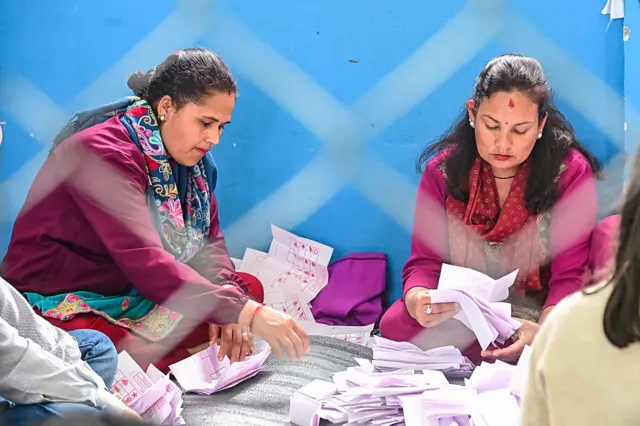
As of this morning, results for 164 of the 165 First-Past-The-Post (FPTP) seats have been announced, while counting for the proportional representation (PR) seats is still underway.
According to the Election Commission, 10,347,143 PR votes had been counted, with 500,000 to 600,000 more votes remaining to be tallied.
Suman Ghimire, an information officer at the Election Commission, said vote counting would be finished by Tuesday evening local time, and it will take at least four days for the commission to formally declare the final results.
Where will the new MPs be sworn into office?published at 06:24 GMT 10 March
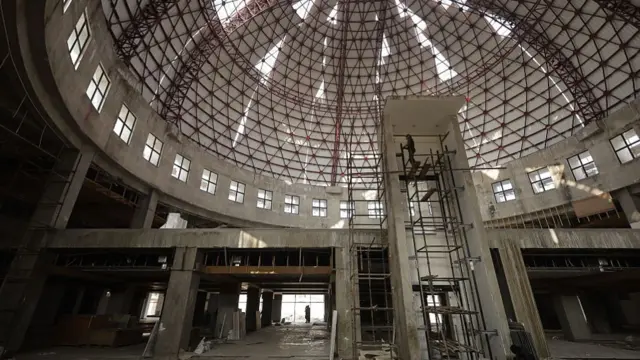

As we reported earlier, Nepal’s unfinished parliament building has been an issue as construction is behind schedule.
But for the new MPs’ oath-taking ceremony and opening day meetings, which is expected in a few weeks, a conference hall in the building should be ready for use, BBC Nepali reports.
Construction scaffolding and cranes can still be seen around the unfinished building as the RSP’s Balendra Shah heads to a landslide win.
The old parliament building was damaged by fire during last year’s Gen Z protests.
If the RSP gets two thirds majority, can it change the constitution?published at 05:48 GMT 10 March
The RSP looks like it is headed towards a two thirds majority in the election.
It so far has 125 of the 165 seats determined by direct voting as well as possibly 58 of the 110 seats decided by proportional representation.
A two thirds majority requires 184 seats, which means the party may only be short of this figure by one seat.
Conversation has now turned to whether this “super majority” means the party will be able to change the constiution – it had promised to make several changes to the constitution, including to the country’s federal structure and the way it elects its leaders.
But the truth is, it cannot do much to change the constitution as yet.
The main reason for this is that the RSP has won the elections held for the lower house of parliament.
The other house, known as the National Assembly, is elected separately through an electoral college comprising members of the provincial assemblies and local-level governments within each province – and not through a popular vote.
Changing the constitution requires a two thirds majority in both houses of parliament – which the RSP currently does not have.
In pictures: RSP politicians and supporters celebrate historic winpublished at 05:17 GMT 10 March
Over the weekend, RSP supporters across the country celebrated their candidates’ victories. Here are some images capturing those moments.
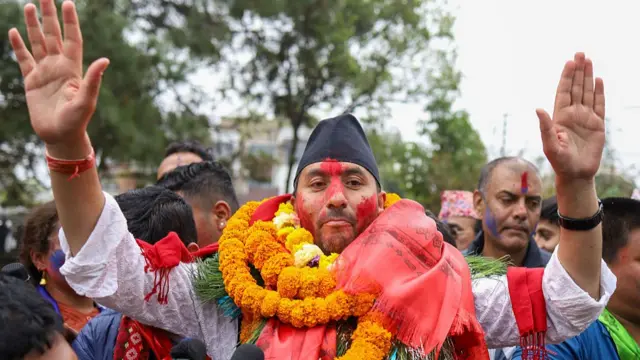

Jagdish Kharel, a candidate from RSP, waves at supporters after being elected as an MP in Lalitpur on 8 March
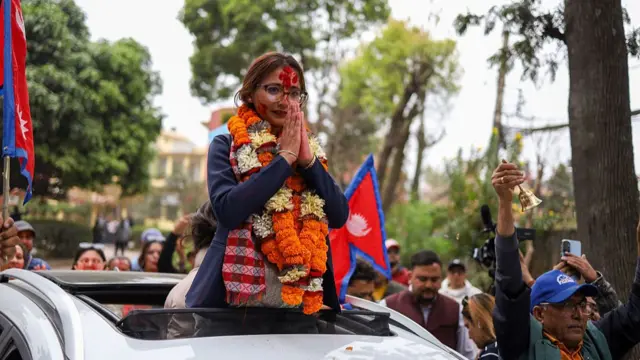
Toshima Karki at a celebration event in Lalitpur on 7 March
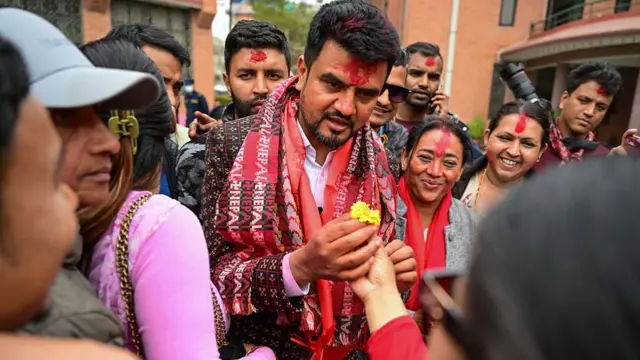

Rajiv Khatri receives a flower from a party worker after winning his seat in Kathmandu
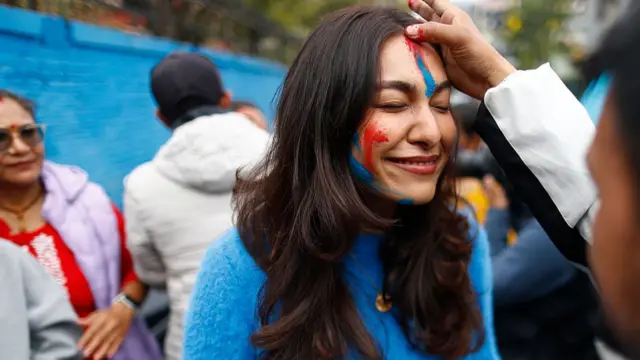
Supporters seen smearing colors on their faces as they celebrate the victory of RSP candidate Ranju Darshana
India’s Modi congratulates RSP and Balen Shahpublished at 04:05 GMT 10 March
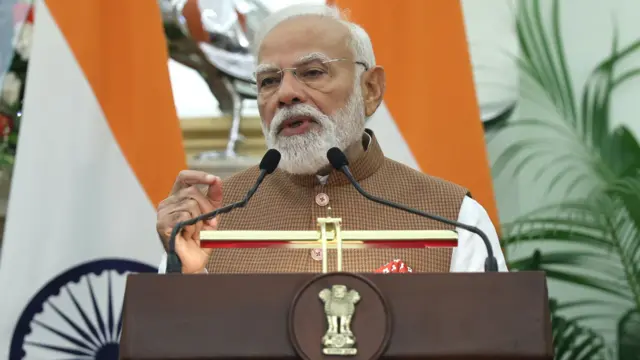

Indian Prime Minister Narendra Modi has congratulated RSP party leaders for their election win.
Modi said Monday that he had “warm telephone conversations” with Balendra Shah, the rapper-turned-politician who is tipped to lead Nepal after RSP is expected to win a two-thirds majority in parliament.
Modi also spoke with RSP chairman Rabi Lamichhane, congratulating both leaders “on their electoral victories and RSP’s resounding success in the Nepal elections,” according to a statement.
Counting continues with RSP on course to secure a two-thirds majoritypublished at 03:51 GMT 10 March
We are resuming our live page coverage of the Nepal election results. Just to recap, the party of rapper and ex-Kathmandu mayor Balendra Shah is on course to secure a two-thirds majority in the election.
The Rastriya Swatantra Party currently has won 125 of the 165 seats decided by first past by the post voting. It is also likely to capture at least 58 of the 110 seats allocated through proportional representation, according to BBC Nepali’s calculations based on the election commission’s latest data and formula.
This means the RSP could be just one seat short of reaching the two-thirds threshold.
If it does manage to get the two-thirds supermajority, this will mark the first time in decades that a single party has done that.
Stay with us as we bring you the latest.
Nepalese rapper-turned-politician on track for landslide election victorypublished at 11:58 GMT 9 March
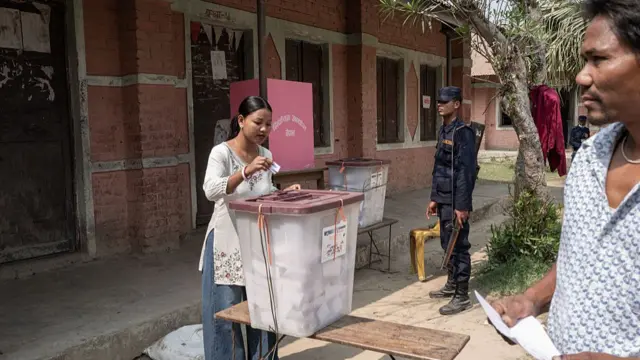
Nepali voters went to the polls on Thursday 5 March to choose a new leader
Former rapper Balendra Shah’s party is on track for a landslide victory during following last week’s elections in Nepal.
It was announced on Saturday that Shah, 35, had unseated four-time prime minister KP Sharma Oli in Jhapa 5, a traditionally safe constituency for the 74-year-old’s Communist Party of Nepal (UML).
But his was not the only victory for his Rastriya Swatantra Party (RSP).
These elections will choose 275 new representatives for Nepal’s lower house of parliament. Unlike parliamentary elections in countries like the UK, 165 of the seats are chosen directly while 110 are chosen by proportional representation (when seats in parliament correspond to total votes for each party).
Not all results are in yet, but so far Shah’s RSP has won 125 of the 165 direct-vote seats, and 58 of the 110 proportional representation seats.
In contrast, Oli’s party won eight of the direct-vote seats and 16 of the proportional representation seats at time of writing. A spokesman for the party called results “unexpected”.
But a sweeping verdict translates into high expectations, as people in Nepal look for solutions for their frustration and exhaustion, analyst Amish Raj Mulmi writes.
We’re pausing our live page here for today. If you would like to read more on this story – we’ve got you covered:
- The BBC’s South Asia correspondent, Azadeh Moshiri, explains the backdrop to Nepal’s Gen Z election
- A rap star turned politician may become Nepal’s next PM – here’s what we know about Balendra (popularly known as Balen) Shah
Quiet start to a new political erapublished at 11:23 GMT 9 March
South Asia Correspondent
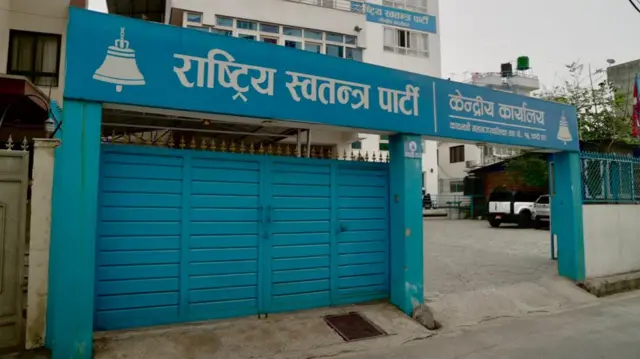

It’s a grey day in Kathmandu and eerily quiet for such an historic moment.
We’re at the RSP headquarters, and it’s practically empty.
That’s because the party has requested no celebrations, no big parades for their apparent landslide victory.
These elections only happened because of the Gen Z protests in September. In remembrance of the 77 people who died – many of them young protesters shot by police – the party has asked for a solemn start to this new political era.
The decision won’t stop some jubilant crowds from gathering across Nepal, but it isn’t the festive atmosphere you’d expect in the capital.
What’s next for Oli and his party?published at 10:57 GMT 9 March
Phanindra Dahal
BBC Nepali, Kathmandu
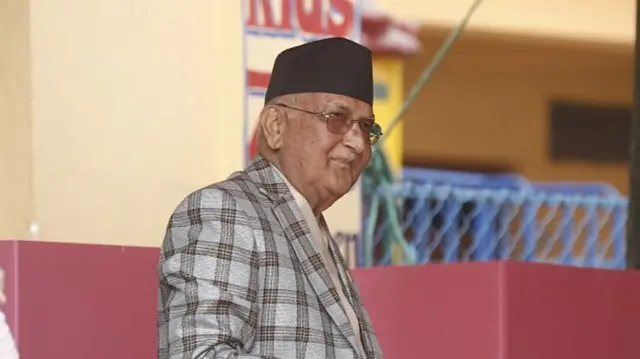

Until recently, former prime minister and CPN-UML leader K P Sharma
Oli was saying he would remain active in politics for another two
decades.
The 74-year-old political leader has been a key political figure in Nepal since 1990, becoming prime minister four times.
But his defeat and the party’s worst performance in the parliamentary
elections now has raised serious questions over his leadership.
UML senior leaders have told BBC Nepali that they would make a “brutal review” and assess what went wrong.
Many leaders are saying that they are even ready to reorganise the
party leadership, if required.
CPN UML vice-chairman Raghuji Panta told BBC Nepali: “In the parliamentary system, there are many instances in
which the prime ministerial candidate or a party leader resigns in the case of
failure to secure desired outcome.
“Our own party leader Madhav Kumar Nepal had
resigned when our party did not get a satisfactory result in the 2008 Constituent
Assembly elections.
“I think it will be better if the party chairman takes a decision for himself regarding his future.”
But political analyst Rajendra Maharjan said he does not believe that Oli will voluntarily resign.
“If the UML wants to revive itself the party needs a serious transformation. I don’t see that happening under Oli,” he said.
“The UML has no option other than to reorganise the party. If they don’t do so, they will have a similar fate as the communist parties in west Bengal.”
New parliament building could start hosting sessions by end Marchpublished at 10:30 GMT 9 March
Phanindra Dahal
BBC Nepali, Kathmandu
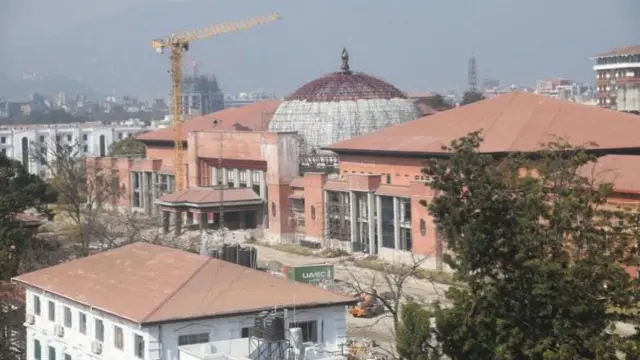

As we reported earlier, Nepal’s new parliament building is still being built – although officials have said they are hopeful it will be available to conduct House sessions by the end of this month.
Ananta
Prasad Koirala, the assistant spokesperson of the Parliament Secretariat, told BBC Nepali that the Ministry of Urban Development
and the construction team had “made a commitment to handover a
multipurpose hall and an assembly hall by 28 March”.
Koirala said they have been told that nearly 90% of the construction has been completed. “We plan to use rooms that are now in the nearby parliament secretariat premise to carry out our routine work. Only the House sessions will be conducted from the [new building].”
Construction of the new parliament building started seven years
ago. It will house both bicameral legislatures, the office of the
secretariat and the office of the parliamentary parties.
The new building was expected to be completed about three years ago, but officials said the contractor blamed the Covid-19 pandemic among other factors for the delay, receiving six deadline extensions.
Angry protesters burnt down Nepal’s previous parliament building
that operated from a hired Chinese-built convention centre during the Gen Z protests last September.
Since then the 59-member Upper
House, known as the National Assembly, has convened its sittings in a hall inside
the Parliament Secretariat located at Singhadurbar, the
country’s administrative centre.
Voter says he feels ‘optimistic’ – but also wants questions answeredpublished at 09:57 GMT 9 March
South Asia Correspondent
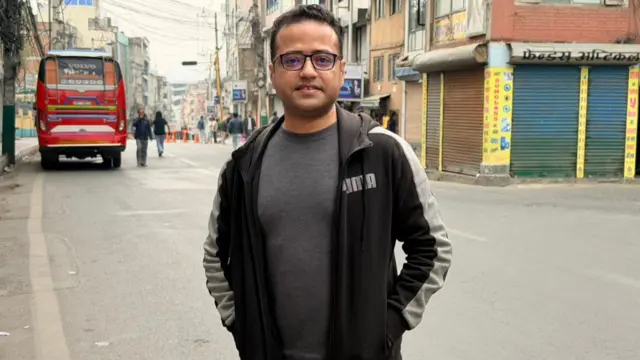

“Many Nepalis, including me, are very happy about this,” 40-year-old Raghunath Neupane told me. “I’m feeling very optimistic.”
Raghunath said seeing Balen Shah and the RSP on track to win a two-thirds majority has given him hope that Nepal will be steered by a more stable government than the fragile coalitions of the past.
“I feel Balen is capable of eradicating corruption and moving the economy forward,” he said.
But Raghunath does have some concerns.
As mayor, Balen was criticised by rights groups of using the police against street vendors in a heavy-handed manner, as he worked to keep roads clear in the capital and crack down on unlicensed businesses. Shah’s campaign has not responded to the BBC’s request for comment.
Despite feeling hopeful about the result, Raghunath would like to see Balen “control the aggression” in these alleged tactics and offer a public explanation.
Rejection at ballot box presents opportunities for Nepal’s old partiespublished at 09:31 GMT 9 March
Amish Raj Mulmi
Analyst based in Kathmandu

The primary message of Balendra Shah’s party has been good governance and no corruption, and that they represent alternative politics. The RSP gave a clear message that they are not like the old parties.
A fatigue had set in Nepali politics because of the constant machinations of the three major parties and the party systems, with very little incentive to reform or an alternative to choose from.
This election’s results could be seen as a vote against the old parties. The low turnout and high numbers for RSP suggests supporters of the old parties did not turn up at the polling booth.
For the older parties, this result could bring absolute changes to their politics and organisational structures. But it will be difficult for them to regain the trust of the people, particularly the younger Nepalis.
Nepali parties have survived worse vicissitudes, not least the three-decade-long royal autocracy and a civil war. Here is a moment for the older parties to return to the roots of the ideologies and methods to introspect about what delivered them to power over and over again – and why they were rejected this time.
Young Nepalese gain foothold in parliamentpublished at 08:55 GMT 9 March
Keshav Koirala
BBC Nepali
In the wake of the Gen Z protests, one significant development in the latest elections is that 12 candidates aged 30 and below have secured seats in the House of Representatives through the first past the post system.
Eleven are from the Rastriya Swatantra Party (RSP) that is on the verge of bagging a landslide victory in the elections. One is from the newly formed Shram Sanskriti Party.
The RSP’s Prashanta Uprety, 25, stands out as the youngest member of the newly elected House.
Two prominent women have also successfully transitioned from party-nominated seats to direct public mandates: Nisha Dangi, 29, and Shovita Gautam, 29. Both have now been re-elected through direct votes, effectively solidifying their grassroots support.
The election also produced notable “giant-killers,” such as 28-year-old Sulabh Kharel, who defeated veteran CPN-UML leader and former minister Bishnu Paudel by a wide margin. He is joined by forrmer minister Bablu Gupta, 28, who resigned from the interim government specifically to contest these elections.
Other victors include Ranju Neupane, Shivashankar Yadav and Ramjee Yadav, all aged 30. Neupane’s journey is particularly symbolic, having balanced her campaign with new motherhood. She first gained national prominence as a college student in 2017 during her run for mayor of Kathmandu with Bibeksheel Nepali, an activist group that pioneered youth socio-political awareness in the country.
This youth surge is expected to expand even further once the final proportional representation results for the remaining seats are declared, with additional young leaders from the RSP anticipated to join the legislature.
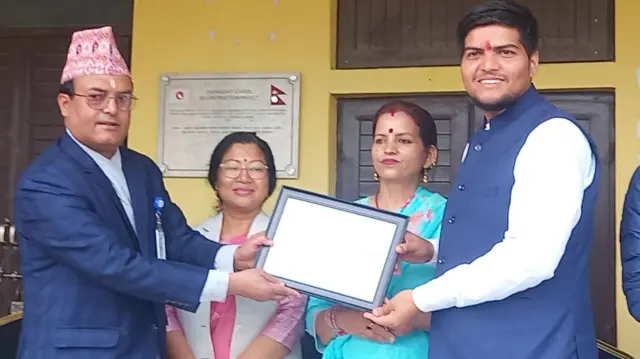

Prashanta Uprety is the youngest member of the newly elected House