Match Action: A Dynamic Front Three
Charles Antaki, writing for The Guardian, observes a recurring pattern in Arsenal’s front line. He notes that among Eze, Havertz, and Madueke, one player typically performs well in any given game while the others struggle. Source: theguardian.com.
Antaki describes how in a single match, one player may score, while the other two are inconsistent—some playing with energy, others drifting off the ball or failing to make decisive contributions.
He adds that the third player on the bench, though not in action, often remains a source of uncertainty. Antaki admits personally that he would prefer three fully functioning goal-scoring threats, but acknowledges the current setup is a reality.
Key Moments in the Game
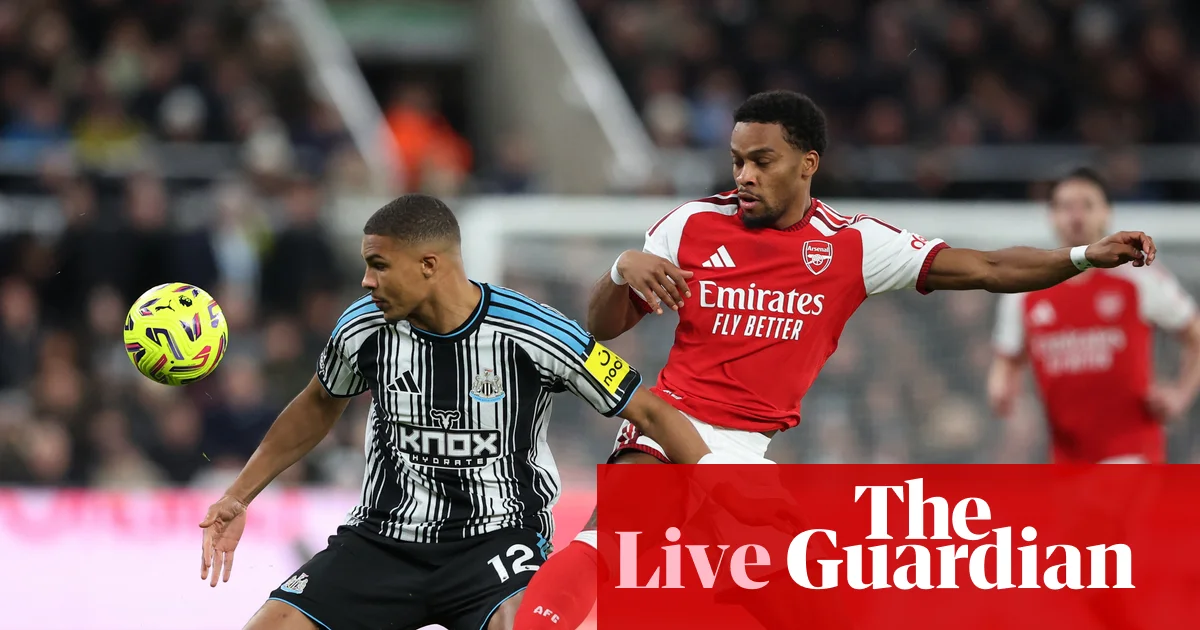
Early in the match, Raya delivers a long ball from the edge of the Newcastle defence. The ball is controlled precisely by Eze, who then turns and passes to Madueke on the right flank.
Madueke cuts inside Burn and drives a low shot. The effort strikes the outside of the near post. Hornicek, the goalkeeper, was in position to block it, but the ball still hits the post.
The incident illustrates a moment of tactical execution and positioning. It also highlights the challenge of maintaining consistent performance from multiple attacking players.
Emotional Preparation and Tactical Readiness
According to the source, Arsenal’s manager is emotionally prepared for the match. He understands the need to dominate emotionally to attack Newcastle effectively.
He has adjusted his team’s mindset to meet the challenge. This emotional readiness is seen as critical, especially when facing a defensively structured opponent like Newcastle.
The source does not confirm whether this emotional preparation translates into on-field results. It remains a tactical observation, not a performance outcome.
Context and Background
The Premier League is a high-intensity competition where team dynamics, player form, and tactical setups are closely monitored.
Front-line consistency is often a key factor in determining match outcomes. Arsenal’s rotation of three attacking players reflects a common strategy to manage fatigue and maintain versatility.
However, the source does not provide data on how often such rotations occur, or how frequently one player dominates over the others. This detail is missing from the original content.
Limitations and Uncertainties
The source offers limited detail on the full progression of the match. It focuses on one sequence of play and one player’s performance.
No official score, final result, or broader tactical analysis is provided. The account stops at a single moment of action.
There is no mention of Newcastle’s defensive response, or how the match unfolded beyond that point.
What to Watch Next
As the match continues, attention will focus on whether Arsenal can maintain pressure or whether the front three will deliver more consistent performances.
Any further goals or defensive breakthroughs will be critical indicators of the team’s overall form and cohesion.
For live updates, readers can follow the Guardian’s live coverage at https://www.theguardian.com/football/live.
For the current Premier League standings, visit https://www.theguardian.com/football/premierleague/table.
For a detailed analysis of another match in the league, see our live report on Manchester City vs Fulham.
Sources & further reading
Featured image: original publisher image. Via original publisher. Image source