
Niccoló Pasqualetti approaches garments the way a sculptor approaches clay: first come the volumes and textures, the rest follows later. “That’s where it always begins,” they noted backstage before the show. This season, the raw material was a lineup of archetypes from the Italian wardrobe: coats, trench coats, white shirts, T-shirts. The kind of pieces that live quietly in everyone’s closet. Pasqualetti had other plans for them.
These familiar templates were dismantled and recombined with what the designer described as “deliberate ingenuity, with a hint of naïveté in the way things are constructed”. There was a balance between thoughtful engineering and subversion. From a distance, many looks read as confidently avant-garde silhouettes. Up close, they revealed their trickier, complicated side: garments that twist, fold, and occasionally outsmart your expectations.
Sculptural skirts with draped folds at the back were paired with reinterpreted white shirts, while several looks turned everyday staples into modular, slightly experimental propositions. One standout dress, assembled from an askew T-shirt and a skirt that can be worn open or closed, proved particularly versatile. It could operate as a dress, transform into a coat layered over trousers, or hover somewhere in between. The underlying idea, Pasqualetti suggested, is a wardrobe that invites a kind of fluid choreography: clothes designed not just to be worn, but to move, shift, and negotiate their form with the body.
Body jewels, an ongoing theme in Pasqualetti’s parallel practice as a jewelry designer, returned here as integral parts of the garments. Flexible metal adornments wrapped themselves around fabric: a metallic curl climbing the sleeve of an asymmetrical dress, another gliding across the bodice of a shirt-dress, while a delicate silver structure cinched the waist of a white poplin pleated skirt and matching chemise. The effect underscored the designer’s continuing “fascination with materiality and light.”
Elsewhere, aluminum plates could be detached and reinserted into garments : objects that read a little like armor, yet gleamed with a strangely fragile sheen. Pasqualetti seems to enjoy nudging clothing beyond its usual definitions, turning classics into something closer to a puzzle. Dresses were layered over dresses like accessories; foam-filled, chain-inspired pieces hung loose like mobiles over tunics and tailored skirt suits: hybrid objects that resist tidy categorization.
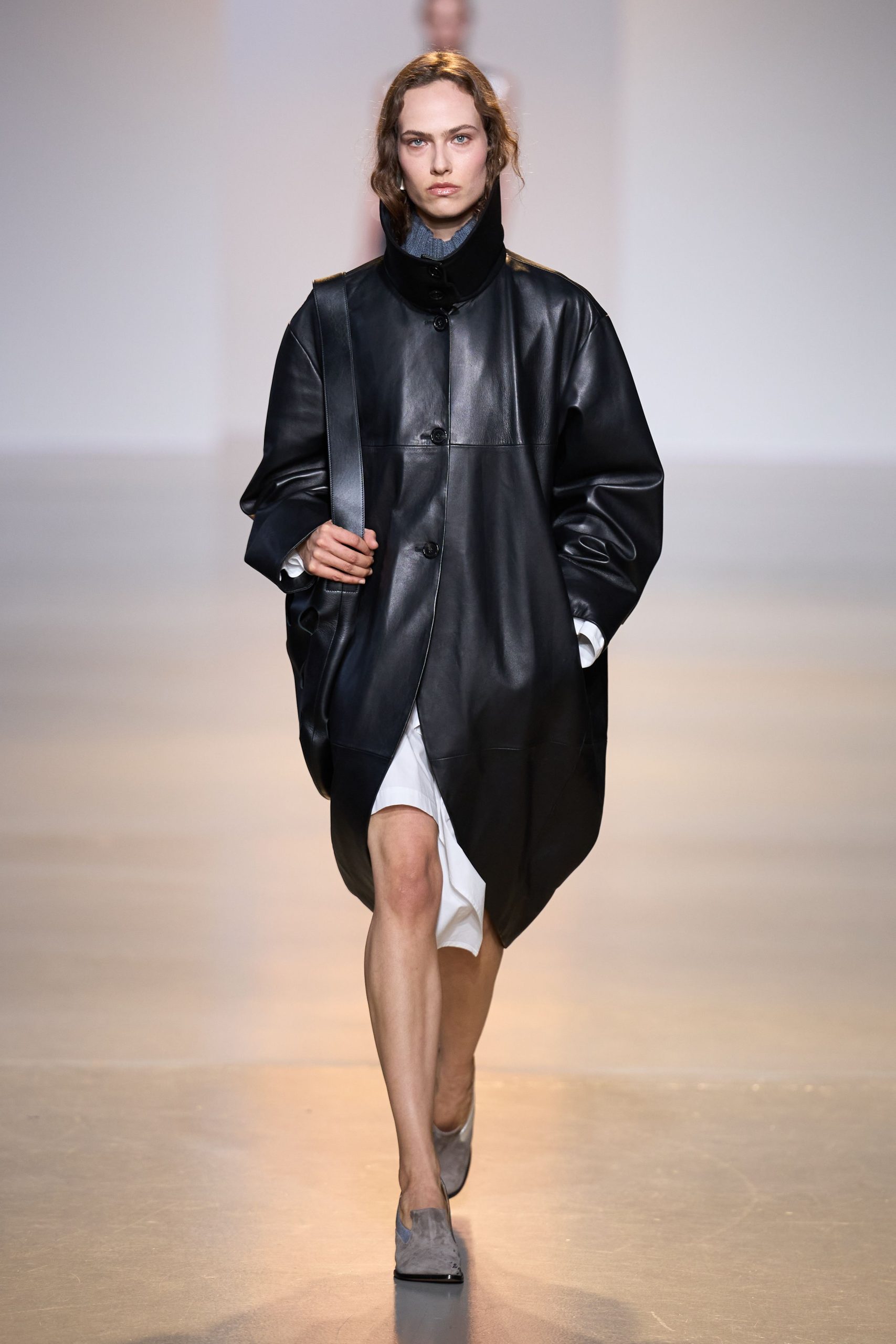
Pasqualetti grew up in Tuscany, a region steeped in leather craftsmanship, and the material inevitably threaded its way through the collection. Sculpted leather pieces included a black cocoon-like cape-coat and a rounded, zippered blouson, both shaped with architectural verve. Some garments were produced using existing stock leather, reinforcing the commitment to reuse while honoring artisanal continuity. Soft black leather boots, finished with side zippers and a slanted toe, were a standout.
Pasqualetti’s Italian roots may not be loudly proclaimed, but they anchor the whole vision. “People who come to Italy are often surprised by the care we put into how we dress, even just to go to a café,” they reflected. “For us it’s normal. Italians naturally construct an idea of themselves through how they appear.” That sensibility, and an instinctive respect for fabric, craft, and the small rituals of dressing, permeates the work. In Italy, they noted, these things are so embedded in daily life that they’re almost taken for granted.
At a moment when fashion seems increasingly preoccupied with dressing up, Pasqualetti proposes a subtler route to polish. By slyly manipulating the classics, they arrive at something off-kilter, but also more intriguing and modern. In their hands, the familiar turns just unfamiliar enough to feel new.
