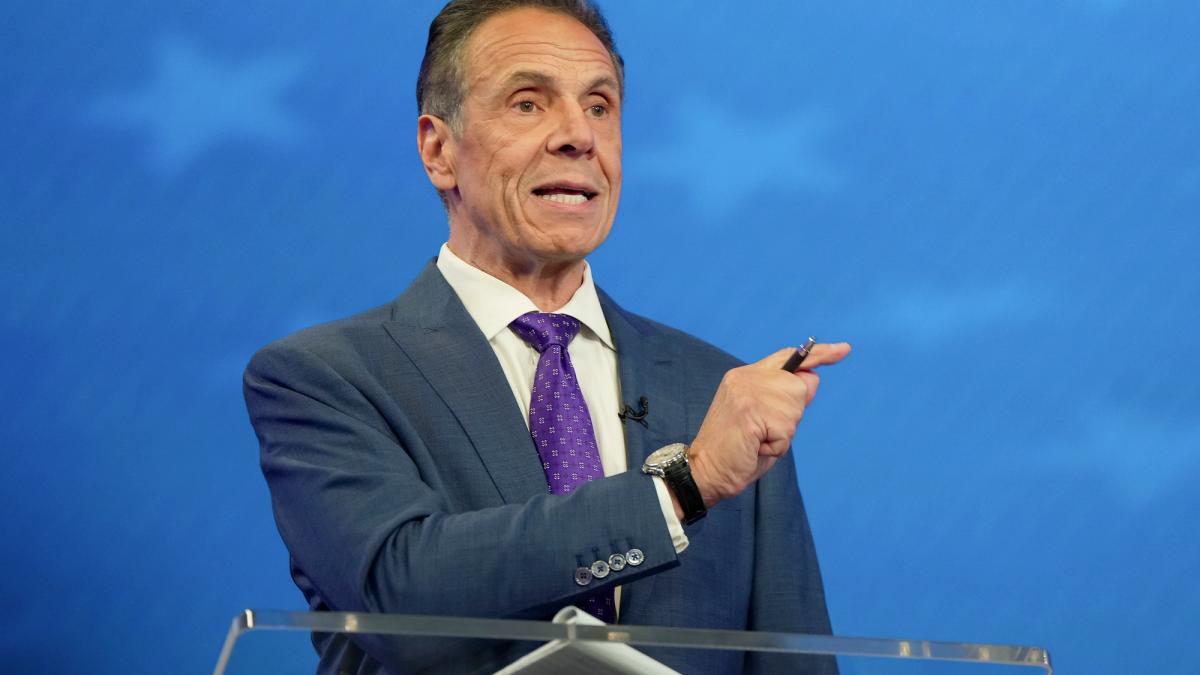
Andrew Cuomo, co-chair of the OKX-ICE joint venture, has called corporate objections to tokenized stock trading a ‘natural response.’ This reflects a cautious approach by major firms as they evaluate a new financial model. Source: coindesk.com.
Corporate Objections to Tokenized Stock Plans
Companies including Microsoft, Alphabet, Goldman Sachs, Qualcomm, Caterpillar, McDonald’s, and Western Digital have objected to trading on OKX-ICE.
These objections were revealed in a public notice on Monday. The list shows how institutional firms are carefully assessing the implications of blockchain-based equity trading.
Why Companies Are Waiting
At a press call on Tuesday, Cuomo said: ‘This is a very natural response. The model was designed to give companies the right to opt in or opt out.’
Many firms prefer to wait and see before adopting a revolutionary change that could alter how equity is traded and managed.
Legal experts note that such resistance isn’t opposition to innovation. It’s a demand for clarity on investor protections, governance, and regulatory compliance.
What the SEC’s Innovation Exemption Allows
The SEC launched a five-year ‘Innovation Exemption’ about a month ago.
It allows qualifying venues—like OKX-ICE—to test new trading models, such as automated market makers and liquidity pools.
Crucially, issuers can choose whether to participate. The model gives companies control over how their shares are structured and distributed.
Participation is capped in both number of companies and trading volume. This ensures the initiative remains a controlled experiment—Cuomo called it a ‘sandbox’.
Issuers Raise Key Concerns
Carlos Domingo, CEO of Securitize, said it’s reasonable for issuers to ask about pricing, investor protections, and shareholder rights.
Tokenized shares could trade outside regular hours. This may affect dividend schedules or voting rights.
There’s also no clear path for ownership transfers or dispute resolution. These gaps raise governance concerns.
Domingo noted companies have options—like issuer-sponsored platforms—to test tokenization without full exposure to decentralized risks.
Infrastructure Gaps Remain
Dave Hendrick, CEO of Vertalo, said there’s no system that synchronizes trading between traditional exchanges and tokenized venues.
Without such a system, price discrepancies and settlement delays could occur. This undermines trust in the market.
He said the 30-day objection window is exactly what the SEC built in. ‘Issuers are using it,’ he added.
As real-time data and settlement protocols develop, many objections may shift to reconsiderations.
What This Means for the Future
The objections do not mean the model fails. They show a methodical, evidence-based process for integrating blockchain into finance.
As infrastructure improves, firms may reevaluate their positions. The Innovation Exemption allows testing without disrupting current markets.
Participation remains voluntary, with strict limits on scale. OKX-ICE continues working with regulators and stakeholders to build a transparent, compliant ecosystem.
For now, innovation and investor confidence remain the core balance in equity trading.
- 16 companies have objected to tokenized trading on OK-ICE.
- Microsoft, Alphabet, and Goldman Sachs are among the objectors.
- Andrew Cuomo described the objections as a ‘natural response’ to a revolutionary change.
- The SEC’s Innovation Exemption allows limited testing of tokenized equity trading.
- Key concerns include pricing, investor protections, and shareholder rights.
- There is currently no system that harmonizes trading between traditional exchanges and tokenized venues.
Sources & further reading
Featured image: original publisher image. Via original publisher. Image source