After four women and nine children associated with Islamic State returned to Australia from Syria last week, the Australian Federal Police indicated some would be referred to community reintegration and countering violent extremism programs.
Australia is not starting from scratch. Thirty-one Australian women and children have previously returned from Syria, all but six of them with government assistance. None has been linked to criminal acts since coming home.
The pressing question, then, is not whether Australia has the institutional capacity to support these returns, but what makes reintegration succeed or fail.
This is where Australia can learn from the lessons of dozens of other countries that have repatriated women and children linked to ISIS.
I’ve conducted research on these repatriations across 69 countries, conducting interviews with ISIS returnees, practitioners and policymakers. And I’ve identified a consistent pattern. States that invest in well-designed rehabilitation programs can achieve better long-term outcomes for both communities and returnees.
What the research shows
First, most rehabilitation programs globally are designed for men. They neglect women’s experiences and reinforce stereotypes about women’s lack of agency or assumed victimisation.
For instance, in the United Kingdom, Nigeria, Kazakhstan, Kosovo and parts of Southeast Asia, these programs provide vocational training for women based on gender-stereotypical roles, such as sewing classes. Such choices are not inherently problematic, but applying the same template globally reflects gendered assumptions rather than a tailored response to the local economy and individual needs.
Second, women often face a “double stigma”. They are penalised for their association with a violent extremist group, and for transgressing conventional gender norms by joining the group.
Women and children from ethnic and religious minority groups face the greatest stigma.
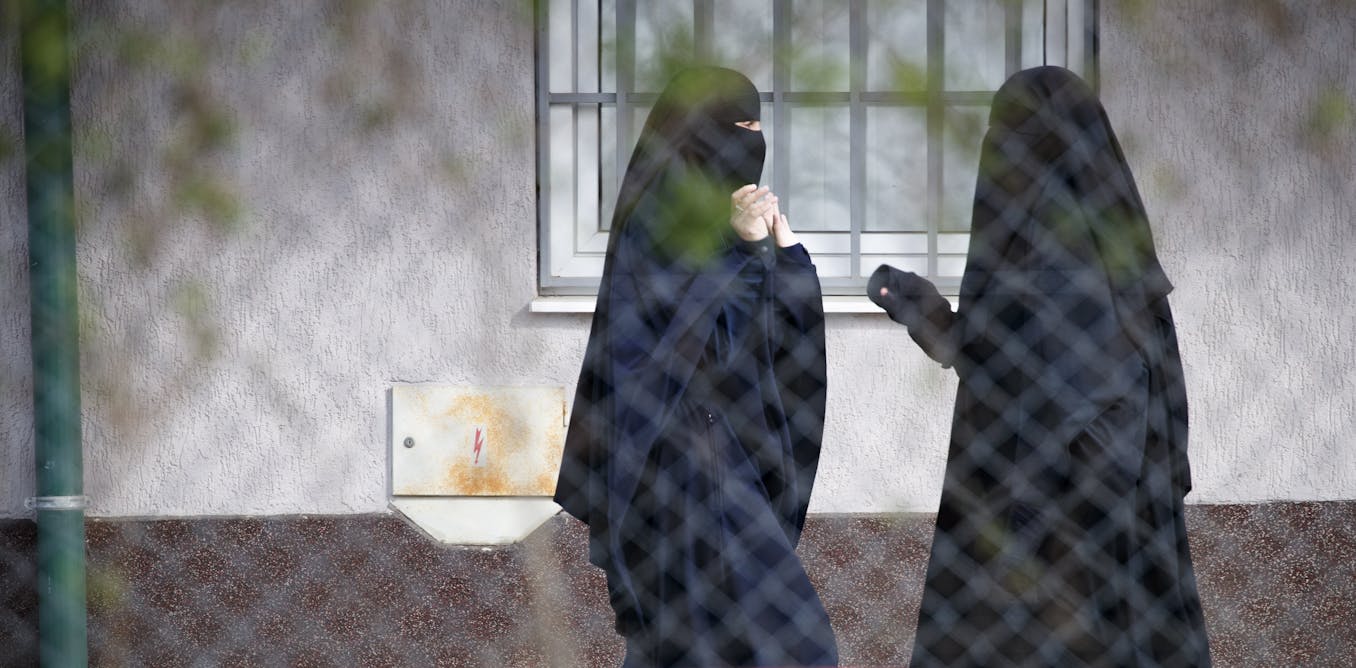
The public understanding of ISIS returnees in non-Muslim majority countries, in particular, has been shaped by Islamophobia. Returning to a society that discriminates against women for wearing a hijab, for instance, can undermine the sense of belonging that reintegration requires.
This matters because the way a country talks about its returning citizens directly influences how successful they are in finding a place in society again.


Joel Carrett/AAP
A holistic approach
Several countries, such as France and the United Kingdom, have faced criticism for their hardline approach to repatriations.
One country that has done a better job – and has received far less attention – is Kosovo.
When Kosovo repatriated more than 100 of its citizens from Syria in 2019, it became the first country in the world to establish a government department dedicated to rehabilitating its returning citizens. The justice minister declared the government would not stop until every citizen had been brought home.
This department within the Interior Ministry provides medical and psychiatric support, counselling, housing, social services, vocational training and free legal advice to returnees. It also includes female religious leaders from the Islamic Council of Kosovo, who play a central role in working with women and their communities.
What stands out about the Kosovar example is the deliberate work to reduce stigma that returnees face.
The government’s official narrative was that Kosovo had a responsibility to care for its citizens and reintegration was the best approach to public safety.
And before Kosovar citizens returned, civil society organisations and authorities engaged extensively with communities to address people’s concerns and reassure them that safety was a priority. Religious and community leaders were also involved to counter stigma directly.
Kosovo’s approach was not without challenges. Some of the rhetoric framing the women who returned, for instance, seemed to underplay their culpability.
What this means for Australia
The situation in Australia is different, with three of the four women who returned last week having been charged with serious crimes against humanity. This includes alleged enslavement of a Yazidi woman.
However, the underlying lesson stands, especially for the children who may now be separated from their mothers.
A holistic approach that includes gender-responsive community engagement makes successful reintegration possible. Relying solely on securitisation and “othering” the returnees makes it more difficult. Two lessons follow from this.
First, programs built for men do not automatically work for women. Victoria’s rehabilitation program is a strong community-led model – it’s run by the Board of Imams Victoria, in cooperation with authorities.
The Kosovo experience suggests that engaging female religious leaders alongside organisations like the Board of Imams Victoria can be particularly effective for women returnees. They can offer women guidance grounded in shared experience and provide gender-sensitive religious teachings.
Second, programs achieve better outcomes when communities are engaged as carefully as the returnees themselves and address stigma directly.
Special attention must be paid to how communities engage with the girls and boys returning from the camps. These children are Australian citizens who had no choice in their parents’ decisions and have spent their formative years in detention camps. Trauma-informed care is vital for their successful reintegration.
How Australia responds to the reintegration of these women and children will be a litmus test for social cohesion. These returns could lead to increased Islamophobia. Failing to confront that risks compounding the marginalisation that both Islamist and far-right extremists can exploit.
Getting this right matters not just for the women and children who returned last week, but for the Australians that remain in the Syrian camps. Australia has the resources to bring them home and give the children a path to recovery they cannot have in Syria.