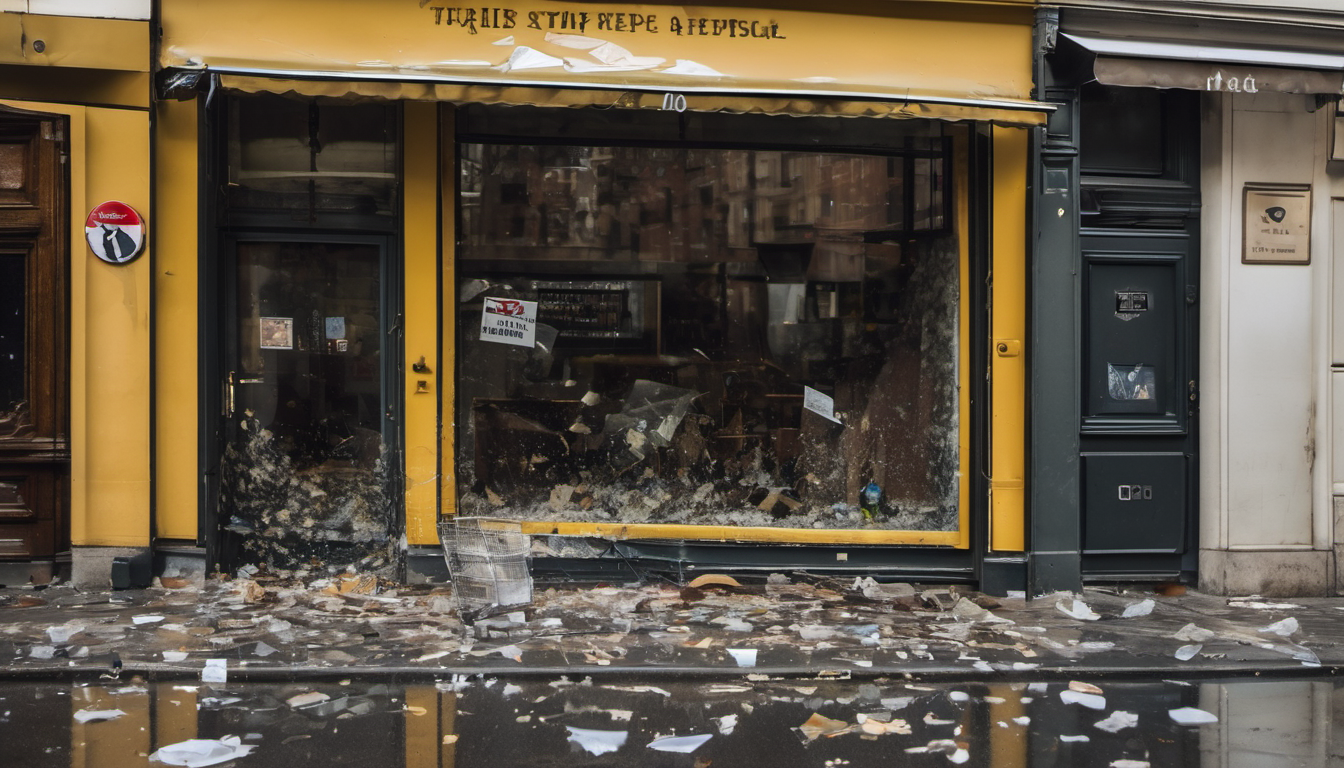
Featured image: The image shows a storefront with shattered windows and a damaged door. AI-generated image; not a photograph of the reported event.
France faced unrest on Saturday. Protests over rising fuel prices and failing public services turned violent. The initial demonstrations were largely peaceful, with about 550,000 people joining. Source: bbc.co.uk.
What Happened in Paris and Other Cities
Paris awoke to destruction. Shopfronts were shattered. Cars and bikes were set on fire. Glass and debris covered city streets. The scene near Place de la République and Champs-Élysées was especially severe.
Some demonstrators wore black clothing and masks. They clashed with riot police. Police used tear gas and water cannons. In central Paris, riot officers charged into crowds and struck people with batons.
Residents described the situation as resembling a war. Mehmet Ozeden, a Paris resident, told news agency AFP: ‘It’s like we had a war.
‘ Anita GrasIt said it was ‘terrifying’ to see groups of young people ‘smashing everything, with total impunity’.
Damage Across Key Cities
- Marseille: Protesters broke into city hall using a metal fence as a battering ram. Officials condemned the act as a breach of civic order.
- Lille: A McDonald’s was set on fire. An Apple store was broken into and looted. Items were taken in a coordinated way.
- Lyon: The historic tourist office was burned. Mayor Grégory Doucet called it a ‘tragedy.’ The building was iconic and culturally significant.
- Limoges: A fire at the town hall caused partial collapse. The 143-year-old building was largely lost. Officials said a ‘wild horde’ deliberately set it ablaze.
- Other cities: Damage occurred in Grenoble, Avignon, Pau, Montpellier, and Valence. Broken windows, looted shops, and fires were reported.
Key Facts and Responses
France’s interior ministry said 1,800 people were arrested. Over 500 police, gendarmes, and firefighters were injured. The Retail and Trade Federation reported more than 1,500 shops damaged.
Interior Minister Laurent Nuñez said that while demonstrating is a fundamental right, there were ‘outrages’ committed by ‘several thousand far-left individuals’ who targeted public buildings and confronted the police. He also identified ‘delinquents’ who looted and ransacked businesses in Rennes, Toulouse, and Angers.
Residents and Shopkeepers Speak Out
Mehmet Ozeden said it felt like a war. Anita GrasIt said young people smashed things with no accountability.
Maryse, a woman living nearby who gave only her first name, told the BBC: ‘The looters were proudly carrying supermarket baskets filled with goods and laughing about their thefts.
‘ This suggests a normalization of criminal behavior.
A clothes shop near Place de la République was ransacked. The owner said looters stayed for over an hour and a half. No police were seen. He believes they were not genuine protesters against school conditions or the cost of living but were exploiting the event.
CCTV and Public Accounts
CCTV footage shown on France’s Channel 2 shows groups of teenagers, mostly wearing masks, in a shop selling mobile phones helping themselves to items from the shelves. No payment was made. The footage suggests unregulated access to goods during protests.
The Good Vibes bakery and Nicolas wine store had shattered glass. The smell of alcohol lingered, showing stolen goods were consumed.
Background: The Student Protests
Student protests began in late October. Students demanded better schools. They cited overcrowded classrooms, staff shortages, and run-down buildings as key issues.
Protests grew as frustration over fuel prices and rising living costs increased. Students organized through unions and civil groups. Economic hardship was a central motivator.
Why This Matters
The unrest shows deep tensions between public demands and government responses. Gaps in policing and crowd control are evident. Damage to historic and commercial buildings raises safety and heritage concerns.
Limitations and Open Questions
It’s unclear if violent acts were planned or emerged spontaneously. The number of looters and their affiliations is not known. There’s no official breakdown of involved groups. The claims about ‘far-left individuals’ and ‘delinquents’ lack data or evidence.
It’s uncertain if looting was coordinated or a result of chaos. No official investigation has been launched. This limits public understanding of the full events.
What to Watch Next
Police and government actions will be closely watched. An investigation into fires and looting may reveal deeper social divides. Public trust in institutions could weaken if the state fails to protect citizens or manage protests.
Debates over school funding and public services may grow. France could face legal actions for arson and property damage. The government may need to rethink how it handles large public demonstrations.
For more on protest movements in Europe, see Albanian Protests Turn Violent: What We Know.
Source: BBC News