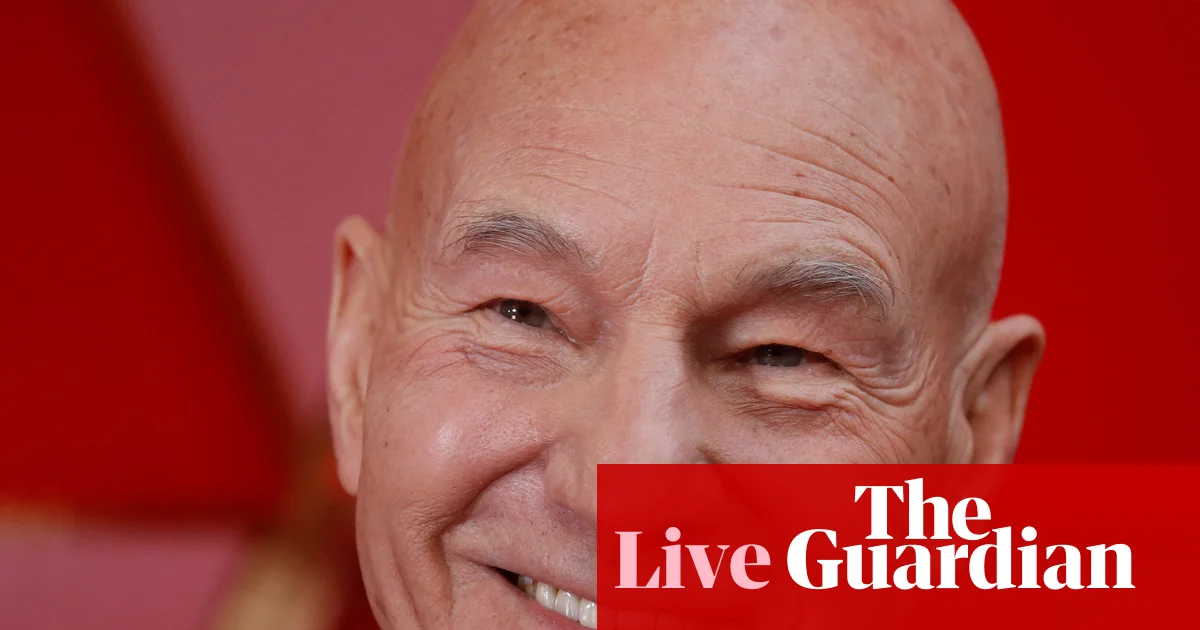
Patrick Stewart, the celebrated British actor known for his work in Shakespearean theatre and science fiction, has died at 86. Source: theguardian.com.
What Happened
He passed away on Wednesday at his home in Los Angeles.
Kelly Bush Novak, his longtime spokesperson, said the cause was a brief and poignant journey with Alzheimer’s disease and Lewy body dementia.
She described his final days as peaceful, filled with family, friends, music, prayer, and laughter.
Key Facts
- Patrick Stewart died at 86 after a long and influential career in theatre and film.
- He is best known for playing Captain Jean-Luc Picard on Star Trek: The Next Generation and Wolverine in the X-Men film series.
- His stage performances of plays like Hamlet and King Lear earned widespread acclaim.
- He was a respected stage actor with a career spanning decades.
Background and Career
Stewart began his career in the 1960s with British theatre and television roles.
His breakthrough came in the 1970s with powerful stage performances that showed emotional depth and range.
He gained international fame in the 1980s and 1990s, especially for his role as Captain Picard on Star Trek: The Next Generation.
He later starred as Wolverine in the X-Men films, bringing intensity and authenticity to the role.
His performances were praised for their emotional truth and strong character presence.
Personal Tributes
Bryan Batt, who co-starred with Stewart in the 1990s film Jeffrey, shared a personal reflection on social media.
He wrote: He was one of the most talented, kindest, and generous actors I’ve ever had the honor of working with.
Batt recalled learning Shakespeare soliloquies at age 14, memorizing them because they were compelling.
That experience stayed with him, making memorization a lasting part of his career.
He said learning lines has become a ‘curse’ in his profession—proof of how deeply Stewart influenced him.
Why It Matters
Stewart’s career bridges classical theatre and modern science fiction.
He helped define how actors build emotional depth and authenticity in performances.
His passing marks the end of an era in British and global acting.
Limitations and Open Questions
The source does not cover his full personal life or private struggles beyond medical conditions.
There are no public statements from his family or production companies.
It does not explain how his illness affected his later years or public appearances.
No interviews with fellow actors or critics discuss his impact on the craft.
What to Watch Next
No public tributes or announcements have been made by studios or theatre groups yet.
Future retrospectives may explore his influence on younger actors and character-driven performances.
Academic or cultural analyses could further examine his role in British theatre and sci-fi storytelling.
For fans, his presence remains in performances, interviews, and the films he brought to life.
His impact on acting—especially in blending emotional truth with dramatic structure—will endure.
Sources & further reading
Featured image: original publisher image. Via original publisher. Image source