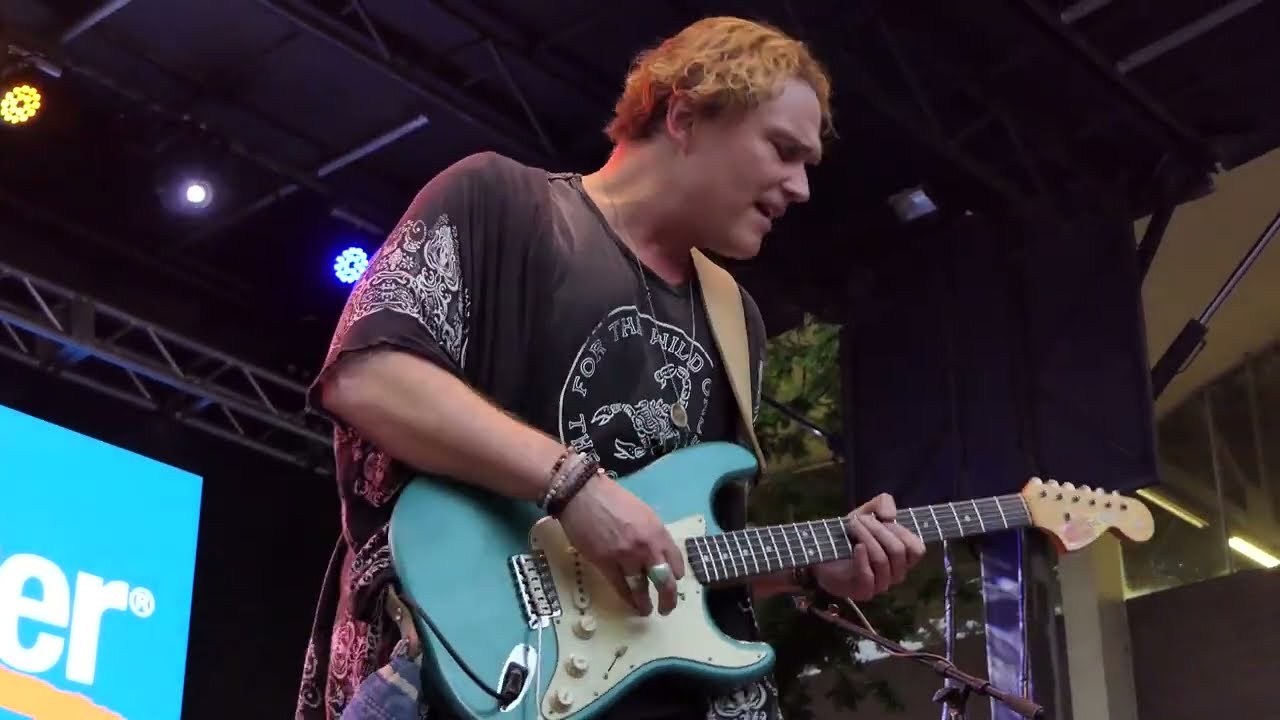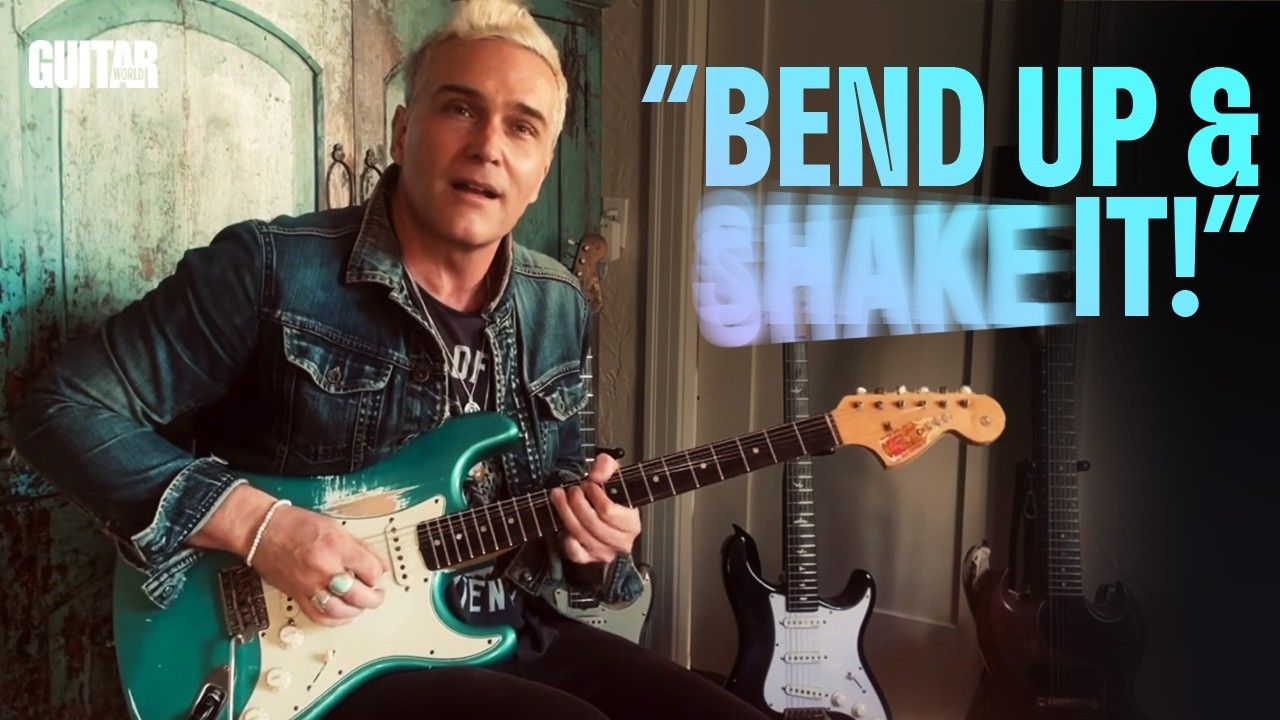
Few blues guitarists are as fiery on the fretboard as Philip Sayce. Having worked with many great artists (from Jeff Healey to Jimmy Barnes) and been influenced by more (SRV, Hendrix, the three Kings all spring to mind), Philip has recorded 11 outstanding albums as a bandleader and stuns wherever he plays.
Throughout, Philip is in Eb tuning (Eb Ab Db Gb Bb Eb) for the video performance – like standard tuning (E A D G B E) but detuned by one semitone. This provides a fat Stratocaster single coil tone and reduces the string tension – an approach favoured by many greats including Jimi Hendrix and SRV.
In the video, the licks are played in free time with no backing track or metronome click. We have used a 4/4 time signature with all the rhythms ’rounded up’ so it’s easier to learn from. If you’re keen to duplicate Philip’s micro rhythmic nuances after referencing the tab, consult the video.
The five core elements are based around various tonalities including C# and B. He skilfully combines the major and minor pentatonic scales with color tones added. Throughout, you’ll see how he combines these with fretting hand slurs, bends and vibrato with hybrid picking that blends pick attack with snappy finger picking.
Philip tours the UK from May 19th to June 3rd.

Jon Bishop wears many hats as a guitarist from articles for guitar magazines to transcribing video tutorials for GuitarWorld.com. He tours with UK rock and roll legend, Shakin’ Stevens and various film and orchestra performances including Love Actually, Toy Story, Twilight and Labyrinth. As a fan of rock and blues styles, Jon is an ideal transcriber for Philip’s video feature.

Example 1. Warm-up stretching (0:46 in the video)
While Philip is in Eb tuning for all examples, we’re presenting in standard E tuning as E major or E minor is easier to read than Eb major or Eb minor. The tab is exactly as Philip plays on the fretboard so detuned or in standard, the examples should prove very beneficial to work from.
If you are a pro athlete you always stretch, and guitar playing is no different. Here, Philip demonstrates his favorite warm-up stretching. This comes in the form of a five-string chord that is played over an open sixth string pedal note. The chord is first played high up the neck and then as the fingering is moved down the neck the stretch increases.
We recommend pointing the headstock up in the air so the neck is at 45 degrees – this will help promote good posture.

Example 2. Singing vibrato (2:00 in the video)
Here, Philip demonstrates how he uses a singing finger vibrato to grab the ear of the listener. The finger vibrato can be added to a string bend or to a normally fretted note. Adding finger vibrato whilst bending can be tough initially (ie speed of bend, when to apply vibrato), so we recommend developing your finger vibrato technique on a normally fretted note first. The action of rubbing the string against the fretwire aids sustain – explore how hard you press down and the results of different finger pressures.

Example 3. Enhanced singing vibrato (3:09 in the video)
Here Philip demonstrates an Eric Clapton style singing finger vibrato. For this one the whole of the fretting hand grip can be removed from the neck, so the only point touching the neck is the finger on the fretted note.
This allows for a free flowing, vocal style vibrato. The only issue with this technique is it can be difficult to maintain control and consistency during the early stages.

Example 4. Galloping rhythmic lead (4:06 in the video)
This one is inspired by guitarists like Jimi Hendrix and Stevie Ray Vaughan, and is a combination of rhythm and lead. Philip uses a great sounding fingering for C#7#9 with an octave in the bass. The thumb of the fretting hand can be used to fret the sixth string.
The galloping rhythm is the key here and we’d recommend building this up slowly so you can build stamina and be accurate at higher tempos.


Example 5a. Burning blues lead (pick only) (4:38 in the video)
These two examples are closely linked. Philip plays the first fully picked example to provide an example of how the phrase sounds with all picking.

Example 5b. Burning blues lead (pick and fingers) (4:51 in the video)
The second version uses hybrid picking (pick and fingers together), so Philip uses the the picking hand’s second finger (shown as ‘m’ under the tab) to pluck various notes, especially for string crossing moments. This provides some tonal light and shade and helps the notes to pop out. We have notated sections of picking (shown under the tab) so you can duplicate what Philip plays.

Philip Sayce in action
Philip Sayce – Morning Star
Taken from Philip’s new live album, Morning Star features his trademark tone, burning bends and singing vibrato. As for the solo at 2:43 – phew, what a scorcher!
Philip Sayce – Morning Star (Live) [Lyrics/Lyric Video] – YouTube
![Philip Sayce - Morning Star (Live) [Lyrics/Lyric Video] - YouTube](http://img.youtube.com/vi/f1KbgL_FNfY/maxresdefault.jpg)
Philip Sayce – Morning Star and Spanish Castle Magic
This two song mashup showcases his stunning guitar chops that blend Jeff Healey, Hendrix, SRV and Freddie King influences to create his own arresting style. Tone, taste and fire in equal measure!
Philip Sayce – Morning Star/Spanish Castle Magic – 4/30/22 Dallas International Guitar Festival – YouTube