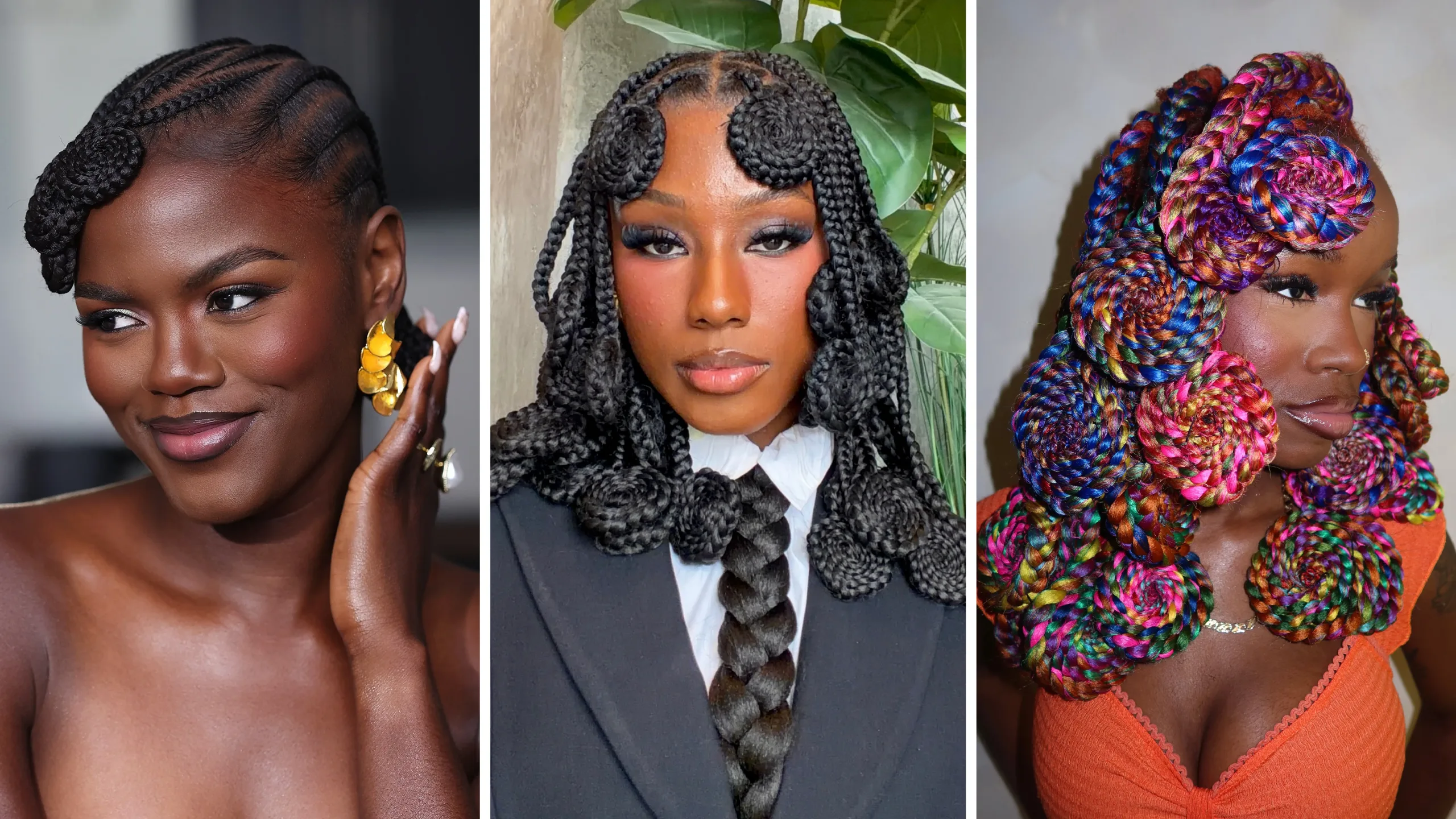
Pinwheel braids are a sculptural hairstyle blending African traditions. They feature swirling, pinwheel-shaped patterns that have gained popularity in recent years.
What Are Pinwheel Braids?
Pinwheel braids, often called Koroba braids, combine two African hair traditions. The Yoruba crown braids from Nigeria and the Kipetaka swirls from Madagascar are both part of the design.
Merryday Irabor, a Dallas-based braider and salon owner, explains the origins. She says Koroba braids have been part of Nigerian culture for centuries. These braids were historically used to show status and class among women.
When braided from the face down to the nape of the neck, the style is considered a Koroba braid. Modern versions mix this with Madagascar’s Kipetaka swirls, creating the current pinwheel look.
Historical Roots and Cultural Revival
The modern resurgence of pinwheel braids traces back to Nigerian photographer J.D. Okhai Ojeikere. Beginning in 1968, he documented hundreds of traditional hairstyles in Nigeria, including Yoruba crown braids.
His archive was later exhibited in major U.S. museums during the early to mid-2000s. These exhibitions introduced African hairstyles to international audiences.
Stylists in the U.S. began adapting these images into new styles. Felicia Leatherwood, a Los Angeles-based hairstylist, compares this process to a game of telephone. She says the original photos were taken and reinterpreted in American salons, leading to a new style.
Why the Trend Is Growing
Searches for ‘Koroba braids’ on Pinterest have increased 54% year over year. Searches for ‘Koroba cornrows’ rose 694%. Searches for ‘pinwheel braids’ increased by 29%.
On TikTok, ‘Koroba braids’ average 161,300 weekly views with a 7% engagement rate. This shows strong digital interest.
Renée Brutus, a Brooklyn-based hairstylist, notes a visible confidence boost in clients. She says the difference between arrival and departure is significant. Clients often hold their heads higher and stand straighter after the style.
Sophia Paul, a Houston-based braider, says the trend reflects a deeper cultural desire. Women want to connect with their heritage and express authentic Black identity through their hair.
Leatherwood agrees. Wearing Koroba braids represents a lineage and a past brought into the present.
How to Create Pinwheel Braids
Pinwheel braids can be added to any protective style. The process starts with a single braid.
Merryday Irabor recommends braiding hair all the way to the ends. The longer the braid, the more dramatic the swirls appear.
Next, the braid is rolled into a flat pinwheel shape and secured. Felicia Leatherwood suggests using a straight needle and thread for anchoring. A straight needle makes it easier to weave through the pinwheels.
Brutus says she goes through the braid several times to ensure it is secure. For synthetic hair, Irabor offers a simple fix: tie the ends with a small piece of braiding hair to seal them.
Setting and Maintaining the Style
After securing the pinwheels, Sophia Paul recommends a setting routine. She applies Vigorol Super Hold mousse before a client leaves, warning against daily reapplication to avoid buildup.
She uses Kenra Professional Volume Spray 25 and Bronner Brothers Pump It Up for holding power.
For flat styles like straight-back cornrows, Paul suggests using black wrap strips and a wig cap. A cap helps prevent the style from flattening. She recommends the Red by Kiss Stocking wig cap and wrap strips for durability.
For updos, the cap can be skipped to avoid distorting the shape. The hairstyle should then be dried under a hooded dryer or with a handheld blow-dryer for two to five minutes.
Paul believes the braids are bold and detailed. They make a statement without beads or accessories. If beads or cuffs are added, Brutus recommends buying them from craft shops like Michaels or jewelry districts. Amazon is a good option if in-person shopping isn’t possible.
Maintenance and Longevity
Scalp hydration is key to maintaining pinwheel braids. Brutus recommends Cécred’s Scalp Refresher Spray and a leave-in conditioner like Amika Hydro Rush Intense Moisture Leave-In Conditioner.
Irabor suggests using Design Essentials Anti-Itch and Tension Relief Oil to seal moisture and soothe the scalp. She warns against overuse, as oil can clog hair follicles.
Oil should only be applied when the scalp feels dry, flaky, or itchy.
Paul advises keeping hands out of the hair during the day. Playing with the swirls can shift their shape.
At night, Irabor recommends wrapping the hair with a satin scarf, like Cantu’s Satin Sleep Scarf. This minimizes friction and prevents flyaways.
Irabor advises against wearing pinwheel braids for more than four weeks. The weight of the folded braids can cause damage, especially with braiding hair.
If the braids are made with natural hair, the style can last up to six weeks.
How to Wear the Style
Pinwheel braids can be styled in many ways. Options include:
- Mohawk
- Crown or tiara
- Bun with bangs
- Straightbacks with bangs
- Afro hybrid
- Jumbo box braids
- Layered box braids
- Traditional Koroba style
- Lemonade cornrows
- Multicolored
- Space buns
These variations show the style’s versatility and adaptability to different looks.
The trend reflects both aesthetic appeal and cultural pride. It is not just a passing fashion. It connects people to their roots and strengthens identity.
For more on current hair trends, see the original source.
Sources & further reading
Featured image: original publisher image. Via original publisher. Image source