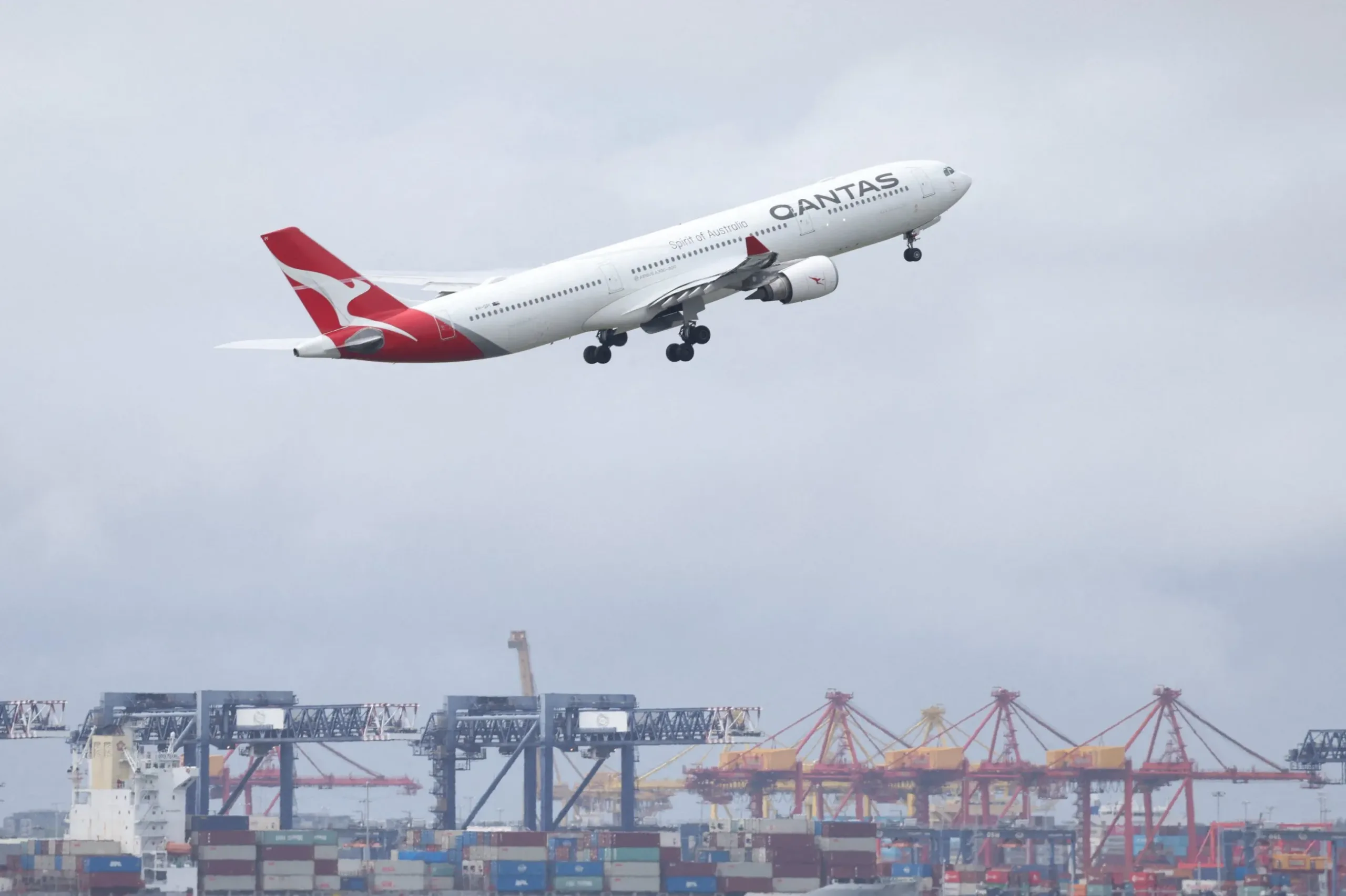
A Qantas Boeing 787-9 Dreamliner flew for four hours before its crew discovered that part of the aircraft had fallen off. Source: metro.co.uk.
What Happened
The flight, QF21, was scheduled to travel from Melbourne Airport to Dallas on Saturday.
Shortly after takeoff, an airside safety vehicle at Melbourne Airport found debris on the runway.
Initial reports suggested the debris might be from the departing aircraft. Only after reviewing CCTV footage did officials confirm it originated from the Boeing 787-9.
At that point, the plane was already flying at 35,000 feet and had been airborne for four hours.
Flight crew were informed by air traffic control about the discovery.
Instead of diverting to a nearby South Pacific airport, the pilots chose to return to Melbourne.
The flight took over eight and a half hours to complete before landing back in Australia.
Key Facts
- The aircraft was a Qantas Boeing 787-9 Dreamliner.
- It departed Melbourne on Saturday and returned after flying for four hours.
- Debris was found on the runway shortly after takeoff.
- CCTV confirmed the debris came from the departing Boeing 787-9.
- Flight QF21 was rerouted back to Melbourne for engineering inspection.
- The same route was later cancelled on Sunday, as shown by FlightRadar data.
- Qantas confirmed the return was due to a mechanical issue.
Response and Customer Support
Qantas stated that passengers were provided with accommodation, transport, and meal vouchers.
Customers were rebooked on a replacement flight.
The airline has not issued a public statement about the nature of the mechanical failure or the specific part that detached.
Background: How Aircraft Debris Can Be Detected
Modern airports use CCTV and airside monitoring to detect unusual objects on runways.
When debris is found, authorities review footage to determine its origin.
If the object is suspected to be from an aircraft, air traffic control alerts the flight crew.
Once confirmed, the flight may be diverted or returned, depending on safety protocols.
Why It Matters
This incident highlights the importance of real-time monitoring and communication between airport operations and flight crews.
It also shows how a mechanical issue can go undetected until a significant portion of the aircraft is airborne.
Such events underscore the need for robust aircraft integrity checks and emergency response procedures.
Limitations and Open Questions
There is no public explanation of what caused the part to detach.
It is unclear whether the debris was a small component or a larger section of the aircraft.
No official report has been released by Qantas or aviation authorities.
The same route was cancelled on Sunday, suggesting a wider operational impact.
Further investigation is needed to understand the full scope of the incident.
For more on aviation safety and airport operations, see our coverage at Metro Australia and AirLive.
Sources & further reading
Featured image: original publisher image. Via original publisher. Image source