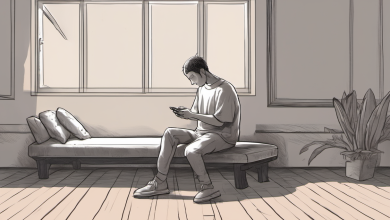

Featured image: A young woman with curly dark hair is sitting on a wooden park bench. AI-generated image; not a photograph of the reported event.
At the American Psychological Association’s annual convention in Washington D.C., psychologists called for a return to basics: tending to our bodies, connecting in person, and caring for each other and the most marginalized. Source: greatergood.berkeley.edu.
What Happened at the Convention
Joy D. Calloway, president of the Black Women’s Health Imperative, said people can function at work and home without feeling fulfilled. Chronic stress builds up and becomes biological harm, she said, citing Arline Geronimus’s weathering theory from the University of Michigan.
Ali Mattu noted a shift in client needs. Decades ago, people sought stress relief. Today, many under age 50 search for meaning, connection, and hope amid global disruption.
Roots of Overwhelm
Thomas Curran of the London School of Economics linked emotional strain to perfectionism and the paradox of choice.
He compared it to swimming in an endless ocean with no dock—feeling constantly inadequate, no matter what is done.
His solution: ‘microdose’ small, intentional discomforts into daily life to build resilience.
Technology and Social Isolation
Nikki Iyer, a UC Berkeley undergraduate, said young people are the most connected yet loneliest generation.
She observed that people on trains, in parks, and in cafes often look down at phones, creating a culture of alienation.
She noted that tech firms invest heavily in lobbying—proof of growing public resistance to AI and social media dominance.
Brendesha Tynes of the University of Southern California said AI models are trained on data that reflects mostly white male experiences.
She called this ‘anti-Blackness as the default setting’ and urged young people to learn how to identify, critique, and reshape algorithmic bias.
Building Resilience in Marginalized Communities
Researchers shared models for building resilience among LGBTQ+ youth, disabled individuals, and racially marginalized people.
Joshua Parmenter from Arizona State University presented a resistance-resilience model for sexual- and gender-diverse people of color.
Jules Soper from Oklahoma State University studied how trans and gender-diverse people respond to anti-trans legislation.
Alvin Thomas of the University of Wisconsin said anyone can support others—through mentoring or calling themselves a ‘father’ to nieces or nephews.
Clare M. Mehta from the University of London encouraged people to become ‘villagers’—seeking connection in third spaces like pubs.
She stressed that not connecting socially is worse for health than drinking alcohol.
Humanity and Technology
Eva Telzer of the University of North Carolina said young people are naturally wired to care for others and take risks for social good.
She sees them as a powerful force for positive change.
Ali Mattu urged AI to serve as a ‘co-intelligence’—enhancing human abilities, not replacing them.
He suggested three criteria to avoid replacing with AI: what you love, what you have expertise in, and what you hold high standards for.
Psychologist Jacqueline S. Mattis concluded with a simple truth: ‘We start as a passel of cells, and then we end up laughing—that’s amazing. You get to feel affection for another human being so deeply that you’d sacrifice everything for them. That’s what makes life worth living.’
The event showed a growing consensus: mental wellness is not just personal—it is built through community, systems, and shared responsibility.
For more on balancing life through philosophy, see Zen, Feng Shui, and Other Life-Balancing Philosophies.
Learn more about the APA convention at convention.apa.org.