Some workers are doing the bare minimum to get by. They still show up, complete basic tasks, and leave. But they do not go beyond that. This behaviour is known as ‘quiet quitting’. It is not a sign of laziness or disloyalty, but rather a response to a deeper shift in how people perceive work, identity, and personal wellbeing.
What Is Quiet Quitting?
Quiet quitting means doing only what is required to keep your job. It is not about laziness. It is about setting boundaries. The idea is to stop working for the sake of work. Instead, employees focus on fulfilling their core responsibilities without investing additional time, energy, or emotional effort.
It started as a social media trend in 2022, gaining traction through hashtags like #QuietQuitting and #WorkLifeBalance. Initially, it was a form of self-expression among young professionals who were experiencing burnout after years of overwork, especially during the pandemic. People used these hashtags to signal their desire to stop overextending themselves and to reclaim personal time.
Over time, the trend evolved from a social media phenomenon into a widespread workplace practice. Today, quiet quitting is observed across industries, age groups, and job levels. It reflects a broader cultural shift in which work is no longer seen as a path to identity, stability, or personal fulfillment.
One person writes: ‘I watch YouTube for six hours, then go home. I still get the work done, but I’m not trying to impress anyone.’ This statement captures the essence of quiet quitting — completing essential duties without seeking recognition, ambition, or personal growth.
How Do Workers Practice Quiet Quitting?
Many quiet quitters adopt a range of strategies to appear busy while doing minimal actual work. These tactics are designed to maintain the appearance of productivity without sacrificing personal time or mental health.
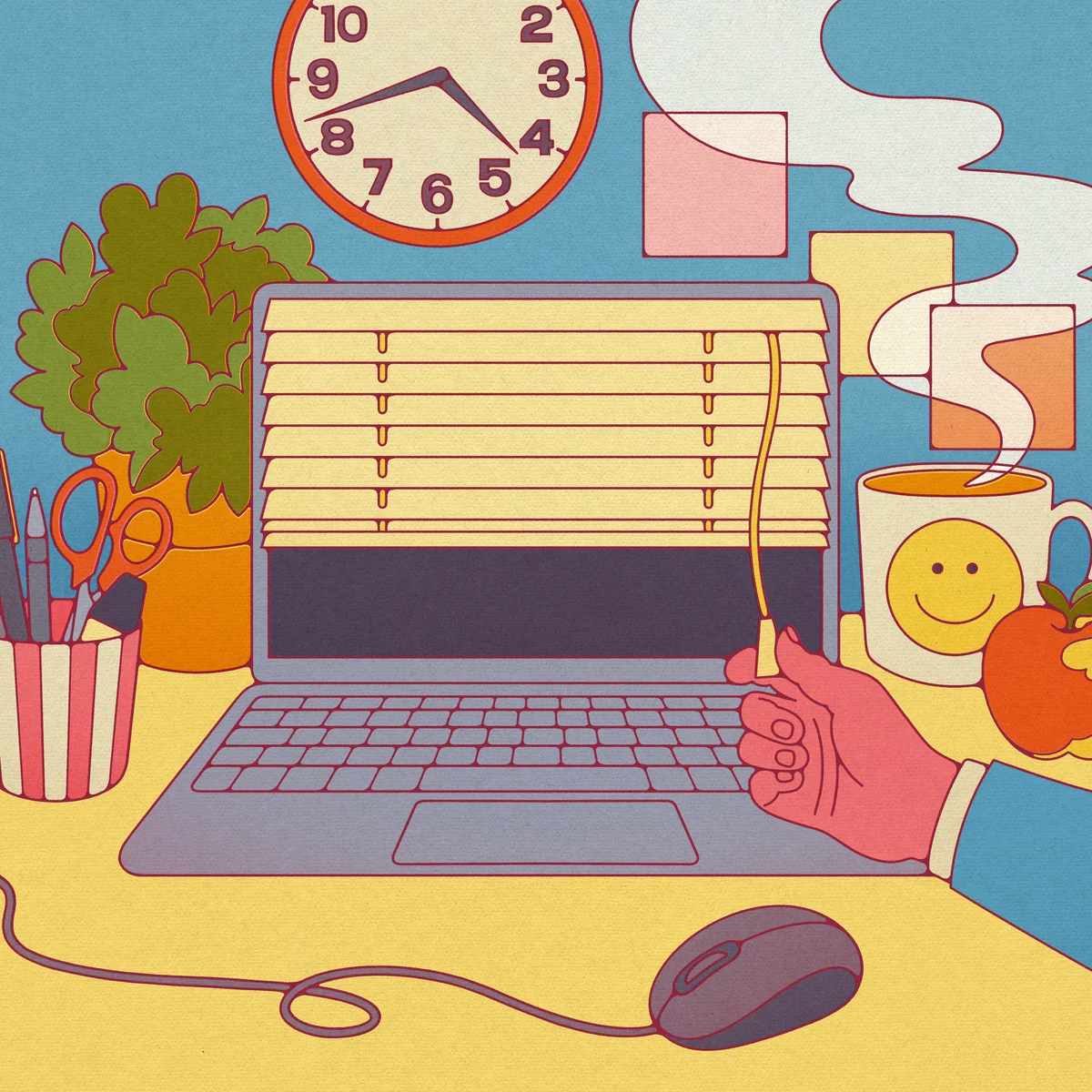
One common method is using tools like mouse jigglers. These devices prevent a computer from entering sleep mode, creating the illusion that someone is actively working. While not a new invention, its use has surged in recent years as employees seek to avoid being perceived as disengaged or unproductive.
Others schedule fake meetings with non-existent clients. These are not real engagements, but rather carefully planned appointments that appear on calendars and are used to justify time away from actual tasks. These meetings are often scheduled in the morning or during lunch breaks, allowing individuals to use work hours for personal activities such as studying, exercising, or relaxing.
Some employees meditate while pretending to work. They stare blankly at spreadsheets or documents, maintaining a passive posture that mimics concentration. This technique was popularized by the character George Constanza from the TV show Seinfeld, who famously claimed, ‘I always look annoyed. When you look annoyed all the time, people think you’re busy.’ This subtle performance of disengagement has become a widely recognized form of workplace resistance.
Another strategy involves joining with a like-minded colleague to book imaginary meetings. By coordinating with a peer, both can appear to be working on shared projects, even though no real work is being done. This creates a shared narrative of productivity, reducing the risk of being perceived as a lone outlier.
These practices are not just about avoiding work — they are about reclaiming autonomy. In a workplace environment where performance is constantly monitored and evaluated, quiet quitters are asserting their right to prioritize personal wellbeing over organizational expectations.
Who Is Most Affected?
Quiet quitting is not limited to one generation. A study by the London School of Economics found that millennials worked the fewest hours overall, followed by Generation Z, and then Generation X. This suggests that the trend is not simply a generational issue, but a reflection of broader societal changes.
One man, Gary, 55, works in marketing. He used to work long hours, often from 8am until 7.30pm or later. But as the industry has become leaner — due to automation and rising costs — and his boss has become more demanding, he has lost motivation. His priorities have shifted to family and personal wellbeing.
He says: ‘I get up at 6.45am. My focus is on domestic chores — driving the children to school, walking the dog, putting clothes away. Eventually I will get to my desk, but there is a shortening of the working day when the kids arrive home at 4.15pm. That’s another excuse to abandon work.’

Interestingly, the phenomenon is not confined to younger workers. The study by Grace Lordan, co-author of the LSE research, reveals that boomers — despite being the most experienced — are the only group not significantly affected by quiet quitting. This may be because older workers have long histories of workplace resilience, or because they have already adapted to the realities of job insecurity and changing work environments.
However, even among older employees, there is a growing trend of disengagement. As job security declines and career paths become less predictable, people are reevaluating what work means to them.
Why Has Quiet Quitting Grown?
The pandemic was a pivotal moment in the rise of quiet quitting. It changed how people viewed work, especially in terms of flexibility and autonomy. Many employees moved to remote work and discovered that they could be just as productive — or more so — from home than in an office.
Remote work allowed people to better balance their personal lives with their professional responsibilities. They could work during their peak hours, avoid long commutes, and manage household duties without interruption. This newfound flexibility created a sense of control that many had not experienced before.
When offices reopened, many employees resisted returning. They saw the office not as a place of productivity, but as a symbol of outdated structures — rigid hierarchies, surveillance, and performance culture. The return to physical workplaces was perceived as a loss of autonomy, and many felt that their personal lives had been sacrificed in the process.
Over the past decade, people have increasingly questioned their relationship with work. Keyboard monitoring, performance reviews, and constant performance metrics have left many feeling powerless. They no longer see work as a place of growth or achievement, but as a transactional activity — one that demands effort in exchange for a paycheck.
Anthony Klotz, an organisational psychologist at University College London and author of Jolted: Why We Quit, When to Stay, and Why It Matters, explains that people have realized work has lost much of its autonomy. ‘Over the past decade, people have been questioning their relationship with work — basically they realise it has decreased in autonomy in many ways.’
During the pandemic, many workers felt they had regained control over their schedules and work-life balance. They discovered that they could work from home, set their own hours, and manage their time without constant oversight. Now, with job security declining and many industries facing economic downturns, that sense of control has been eroded.
As a result, work is no longer seen as a central part of identity. In the past, long hours were associated with stability, pensions, and future security. Now, those benefits are less common, and people are less willing to invest their time and energy into jobs that offer little return in terms of personal or financial growth.
Types of Quiet Quitters
Not all quiet quitters are the same. There are three main types, each reflecting a different motivation and set of circumstances.
Self-Care Quitter
This person values wellbeing over career advancement. They see work as a part of life, not a core identity. They may still show up for work, but their focus is on rest, hobbies, and family. Work does not bring them joy or fulfillment.
For example, a teacher might continue to attend school each day, but only complete the minimum required tasks. Their energy is directed toward personal activities such as exercise, reading, or spending time with loved ones. They do not seek promotions or additional responsibilities because they believe that personal wellbeing should take precedence over professional ambition.
Plan B Quitter
This person is preparing to leave the job. They use work time to study for exams or train for a new career. Their goal is not to stay in the current role, but to transition into a different field or profession.
For example, Martin works in IT but is doing accountancy exams on the side. He uses fake client meetings and urgent calls to create study time. He says: ‘Imaginary client meetings and fake urgent calls are the default for my working week now — all giving me valuable study time.’ This is not about laziness, but about strategic use of time to prepare for a future career shift.

Such individuals often have a clear exit plan. They may be waiting for a specific opportunity, such as a job offer in a different field, or they may be preparing for a career change through education or certification. Their quiet quitting is a method of managing time efficiently while building skills for a future transition.
Revenge Quitter
This person quits in response to unfair treatment. Nina, an office administrator, says her boss refused to allow her to work from home on Fridays. She also asked for a four-day week with a pay cut, which was denied. She says: ‘Clearly they don’t care about me, so why should I knock myself out for them?’
She believes the job market is weak, so she does not expect to leave soon. Her quiet quitting is not about disengagement — it is a form of resistance. It reflects a growing frustration with workplace culture, where decisions are made without employee input or consideration of personal needs.
Research indicates that people consider flexible working to be worth on average 8% of their salary. When employers deny such requests, employees may feel that their personal needs are being ignored. This can lead to resentment and a sense of betrayal, which in turn fuels quiet quitting as a form of emotional and professional retaliation.
How Does This Affect Teamwork?
Quiet quitting does not affect only the individual. It has ripple effects on team dynamics and workplace culture. When one employee disengages, others may feel pressured to do the same, especially if they are already under stress or facing similar challenges.
Lauren, a hospitality worker, says her colleague does not care about team duties. She makes life harder for others because they have to pick up the slack. ‘We rely on teamwork to make it to the end of the day. This person doesn’t seem to care that she is making life much harder for the rest of us.’
When one person stops contributing, it creates a sense of imbalance. Team members may feel overburdened, leading to increased stress, reduced morale, and a decline in overall performance. In some cases, this can lead to a breakdown in communication or even a loss of trust among colleagues.
Moreover, quiet quitting can create a culture of passive resistance. If one employee begins to disengage, others may follow, especially if they see no consequences or rewards for their own efforts. This is particularly true in environments where leadership is weak or where performance evaluations are inconsistent.
What Should Colleagues Do?
Experts advise caution when addressing quiet quitting. It may stem from personal hardship, such as mental health issues, financial stress, or family problems. It is not always a sign of disloyalty or poor performance.
Life coach Selina Barker says: ‘Who knows what’s really going on for that person? They might have trouble at home, or mental health issues. Ask them if they’re OK and tell them you’re there if they want to share what’s going on.’ This approach emphasizes empathy and support over judgment.
Organisational psychologist Anthony Klotz warns that emotions and behaviours at work are contagious. ‘Pretty much all emotions and behaviours at work are contagious. Just be aware that you will be more vulnerable to quiet quitting yourself if you are surrounded by other quitters.’
If one high performer quits, it’s more likely that other high performers will too. The same applies to low performers. This creates a cycle of disengagement that can spread through teams and departments.
Therefore, it is important to avoid public confrontation or criticism. Instead, colleagues should focus on building supportive relationships and fostering a culture of mutual respect and accountability.
What Should You Do If You’re Overburdened?
If you are doing more work than others, you need to protect yourself. Do not let someone else’s decisions at work affect your own performance.


Work hard in a way that your boss notices. This is known as impression management. For example, if you complete tasks ahead of schedule or deliver high-quality results, your efforts will be visible and may lead to recognition.
Klotz suggests: ‘Use your visibly increased workload as a way to leverage a raise or a promotion.’ If you are consistently taking on more responsibilities without being rewarded, it may be time to consider joining the quiet quitting club yourself.
However, this should not be done lightly. It is a personal decision that reflects one’s values and priorities. If work no longer nourishes you or brings you joy, it may be time to reevaluate your career path or seek a role that aligns with your personal goals.
Why Does This Matter?
Quiet quitting reflects a deeper shift in how people view work. It is not just about effort. It is about identity, control, and wellbeing.
Work used to be seen as a path to stability. Now, it is often seen as a side activity. People are choosing to invest less in their jobs because they no longer see them as a source of personal growth or fulfillment.
One expert says: ‘Work doesn’t need to be your passion but it should nourish you in some way.’ Without satisfaction, work can become a burden. It may affect other areas of life, such as relationships, mental health, and personal happiness.
Experts suggest finding joy in daily activities — like problem-solving, data analysis, helping others — outside of work. These can be hobbies, volunteering, or side projects. When work does not bring joy, individuals must find alternative sources of meaning and satisfaction in their daily lives.
Quiet quitting may not be a temporary trend. It reflects deeper changes in how people relate to work — changes driven by economic uncertainty, technological disruption, and evolving expectations about personal freedom and autonomy.
As job security declines and work becomes less stable, people may continue to withdraw from effort. Employers may need to rethink how they manage workloads, performance, and employee expectations. Some may respond by offering more flexibility. Others may face rising dissatisfaction and turnover.
For now, the trend shows that work is no longer seen as a central part of identity for many people. It is no longer a guarantee of stability or personal success. Instead, it has become a choice — one that individuals must carefully weigh in light of their personal values and life goals.
Names and identifying details have been changed.
For more on flexible working, see British Bosses Must Meet Employees Requesting Flexible Working.
For insights on tech workers quitting to raise alarms, see When Tech Workers Have to Quit Their Jobs to Raise the Alarm, It’s Time to Worry.
Sources & further reading
Featured image: original publisher image. Via original publisher. Image source