When we see something complex—like a human eye or a watch—we often assume a designer. This idea has long shaped how humans understand nature and intelligence.
Spinoza’s Inversion of Reason
Baruch Spinoza, a 17th-century philosopher, challenged this assumption. In his work The Ethics, he argued that final causes—like purposes or goals—built into nature are not real. Instead, they are human illusions.
Spinoza claimed that when people see the structure of the human body, they are struck by ‘foolish wonder.’ They don’t understand how such complexity arises, so they infer a supernatural designer. To Spinoza, this is a mistake. Nature does not operate with purposes; it unfolds through necessary laws and interactions.
He described this as an ‘inversion of reasoning’: treating what is prior as an effect, and what is an effect as a cause. This idea runs counter to the common belief that nature is designed with intention.
Dennett’s Modern Version
Over three centuries later, Daniel Dennett, a contemporary philosopher, revived and expanded this idea. In his 2009 paper, he introduced the concept of ‘Darwin’s strange inversion of reasoning.’
Dennett argued that intelligence and complexity do not arise from minds at the beginning. Instead, they emerge from uncomprehending systems—like bacteria or simple organisms—that evolve over time through natural selection.
He used the example of a caddis larva’s food sieve and a lobster trap. Both work for the same functional reasons, but only the lobster trap has a designer who represents those reasons. The caddis larva’s sieve, however, is a product of evolution, not design. It functions well without any intentional mind.
Dennett emphasized that natural selection can generate ‘adaptive rationales’—reasons for behavior that are useful, even if not understood or represented by any mind.
Similarities Between Spinoza and Dennett
Despite the centuries between them, Spinoza and Dennett share a striking philosophical alignment. Both reject the idea that intelligence or purpose must be present in nature from the start.
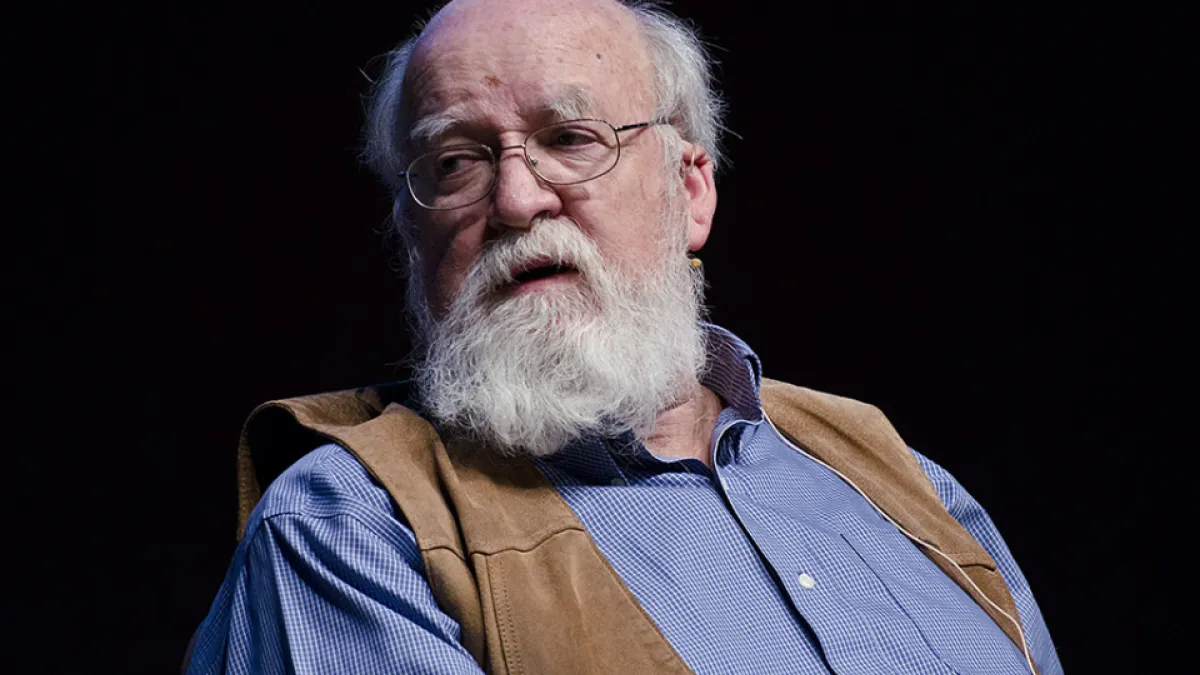
Spinoza saw reason as embedded in nature, not confined to human minds. Dennett saw competence—like problem-solving or adaptation—without comprehension as possible and natural.
Both philosophers recognized that imagination plays a key role in understanding nature. They believed that humans use imagination to reverse-engineer systems, to reconstruct how things work, even when they don’t fully grasp them.
Why This Matters
These ideas shift how we interpret intelligence, design, and explanation in the natural world.

They suggest that complex systems—like brains or ecosystems—can emerge from simple, unthinking processes. This undermines the need to assume a designer or a mind behind every feature of nature.
It also supports a view of reason not as something only humans possess, but as something that can be found in and through nature itself.
Limitations and Open Questions
While Spinoza and Dennett offer powerful insights, their ideas remain controversial. Critics argue that they downplay the role of intention, consciousness, or purpose in shaping behavior.
Spinoza’s view of God as a unified, natural reality is not widely accepted. Dennett’s claims about free will and consciousness have also drawn skepticism.
Moreover, the idea that all ‘reasons’ exist without a ‘reasoner’ does not explain how human minds develop or how moral decisions arise. These remain open questions.
For instance, Spinoza did not deny the existence of human emotions or moral values—he reinterpreted them as expressions of natural laws. Similarly, Dennett does not deny the reality of human thought or intention; he redefines them as emergent properties of complex systems.
Veit’s 2021 work on agential thinking further explores how human beings construct rationality in the absence of a central, conscious agent. In that paper, he observes that people often attribute intention to systems they do not fully understand—such as a machine or a social institution—only because they lack a deeper explanation. This mirrors Spinoza’s insight that people imagine purposes where there are only mechanical causes.
Similarly, in the 2019 paper The Rationale of Rationalization, Veit and colleagues show how humans generate and interpret ‘free-floating rationales’—explanations that function well in practice, even if they are not grounded in a conscious mind. These rationales are not invented by a designer; they emerge through adaptation and use, much like the food sieve of a caddis larva.
Spinoza’s recognition that people judge things according to the disposition of their brains, and imagine rather than understand them, might very well be equated with Dennett’s recognition that there can be competence without comprehension. As Eric Schliesser has pointed out, this schema is already present in Spinoza. The idea that final causes are illusions, and that nature unfolds through causes rather than purposes, is a foundational element of both thinkers’ views.
Spinoza wrote of people who, seeing the structure of the human body, are struck by foolish wonder. Because they do not know the causes of so great an art, they infer that it was made by supernatural rather than mechanical means. Had he lived around the time of Darwin’s strange inversion, Spinoza might very well have turned out to be a “prehistoric Dennett”.
Both philosophers emphasize that explanation does not require a mind to be present. The function of a system—like a biological structure or a cognitive process—can be understood through its adaptive success, not through a designer’s intention. This perspective allows us to see that intelligence and complexity can arise from processes that are indifferent to purpose, yet still produce highly effective outcomes.
As Dennett puts it in From Bacteria to Bach and Back, the evolution of minds is not a story of increasing complexity guided by a central intelligence, but a story of layered, emergent systems that gradually develop competence through trial and error. This view aligns closely with Spinoza’s understanding of nature as a self-consistent, rational whole that unfolds through necessary connections, not through purposeful design.
These ideas are not merely philosophical curiosities. They have real implications for how we approach science, education, and ethics. If intelligence and rationality can emerge without a designer, then our understanding of human cognition, moral behavior, and even social institutions must be reevaluated in light of natural processes.
For readers interested in the intersection of philosophy and science, the original source is available at Psychology Today.
Sources & further reading
Featured image: original publisher image. Via original publisher. Image source