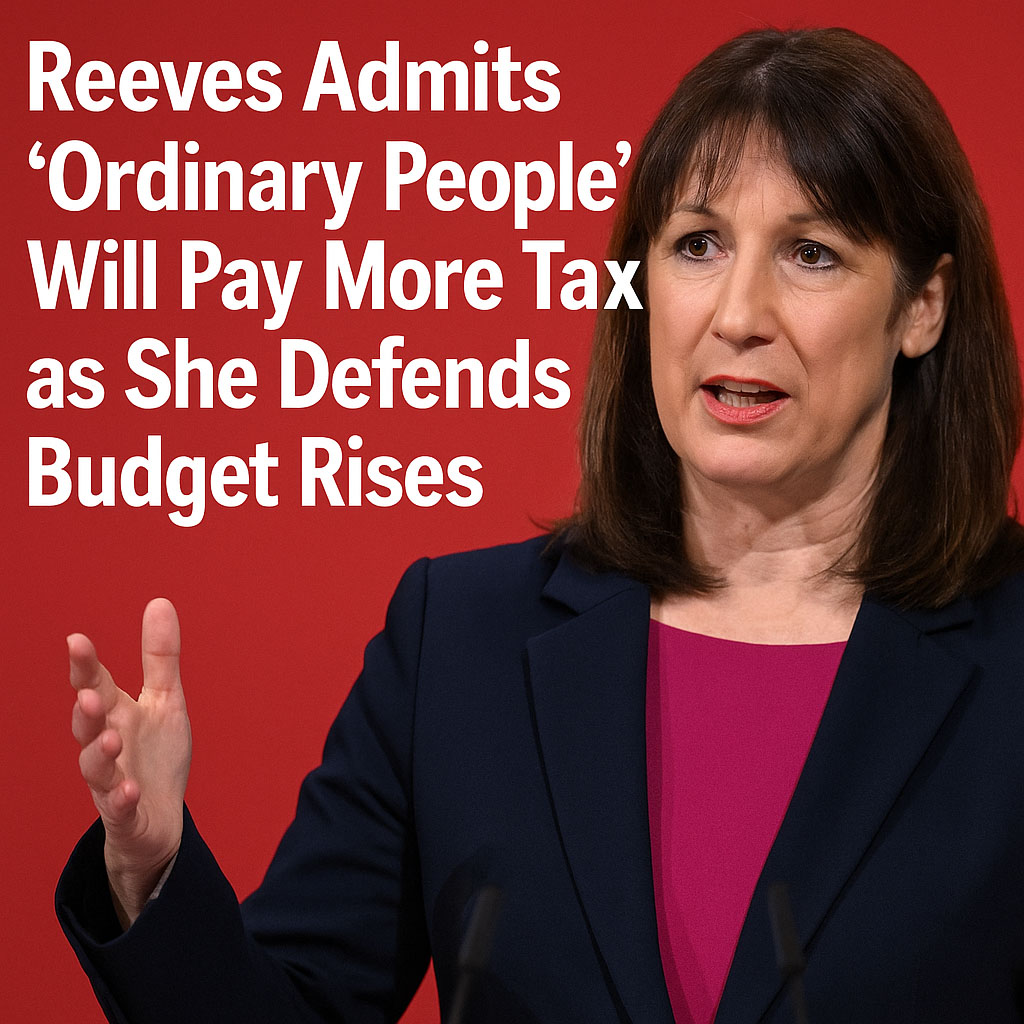
Chancellor Rachel Reeves has defended a raft of tax measures in her latest Budget, acknowledging that “ordinary people” will have to pay “a little bit more” as the government tries to repair the public finances and fund new welfare pledges. ITVX+1
Her comments have sparked a fierce debate about fairness, broken promises and how far Britain’s taxpayers can be squeezed as the overall tax burden heads towards a record high. ITVX+1
What exactly has Reeves announced?
The Budget combines around £26 billion of tax rises with a package of welfare changes and spending commitments. The Times+1 Key tax measures include:
- Extending the freeze on income tax thresholds until later in the decade. Instead of rising with inflation, the personal allowance and higher-rate threshold stay fixed. As wages climb, more people are dragged into paying tax or into higher bands – a classic “stealth tax”. Financial Times+1
- A new “mansion tax” on homes worth over £2 million, aimed at wealthier property owners. The Times+1
- Higher taxes on savings, dividends and property income, which particularly affect better-off investors and landlords. The Times
- A big hike in remote gambling duties on online betting firms, designed to raise over £1 billion a year by the end of the decade. The Guardian+1
These moves come on top of earlier decisions to raise taxes in Reeves’s previous Budget, meaning the overall tax take is on course to hit its highest level in modern history. Wikipedia+2Wikipedia+2
Why does she say “ordinary people” must pay more?
During post-Budget interviews, Reeves insisted she had kept Labour’s manifesto promise not to raise the rates of income tax, National Insurance or VAT – but admitted that freezing thresholds means “people are going to contribute more,” including ordinary working households. ITVX+1
Her argument is:
- Everyone has to share the burden – after years of weak growth and rising public debt, more revenue is needed to stabilise the economy.
- The headline rates of income tax are unchanged, so higher earners still pay more in percentage terms.
- The extra money will help finance policies Labour campaigned on, particularly:
- Scrapping the two-child benefit cap, which the Treasury estimates will lift hundreds of thousands of children out of poverty. The Guardian+1
- Investing in public services and green infrastructure promised in Labour’s growth plan. Wikipedia+1
In short, Reeves frames the Budget as a choice: either accept slightly higher tax bills now, or face deeper cuts to services and broken social pledges later.
How will the tax threshold freeze hit “ordinary” households?
The biggest impact on day-to-day pay packets comes from the threshold freeze. Because the personal allowance and higher-rate limit are not rising with inflation:
- The Office for Budget Responsibility (OBR) expects millions more people to be paying income tax by 2030–31, including many currently below the tax line. Financial Times
- Around 4–5 million workers are projected to be pulled into the higher-rate band, while hundreds of thousands will start paying the top 45% rate. Financial Times
This “fiscal drag” means:
- A worker on a modest salary who gets small annual pay rises may see their tax bill jump even though their standard of living barely improves.
- Minimum-wage workers could start paying income tax after relatively few hours of work each week as wages edge up. Financial Times
Critics say this undermines Labour’s claim to be protecting “working people”, because many of those dragged into tax are not high earners.
Who gains from the Budget?
Despite the higher tax take, there are clear winners:
- Families with more than two children on low incomes stand to benefit significantly from the removal of the two-child cap, worth up to several thousand pounds a year for some households. The Guardian+1
- Children in poverty: internal government estimates suggest nearly half a million children could be lifted above the poverty line by the change. The Guardian
- Low-paid workers also gain from a higher national minimum wage, part of Labour’s broader pledge to make work pay. The Guardian+1
Reeves argues that asking those with rising incomes and expensive assets to contribute more is the fairest way to pay for these priorities.
The political backlash: “stealth taxes” and broken promises
Opposition parties, some business groups and a number of commentators have accused the Chancellor of:
- Implementing stealth taxes by relying on fiscal drag rather than raising headline rates. Financial Times+1
- Breaking Labour’s election promises, arguing that ordinary workers were led to believe their overall tax bills would not rise. ITVX+1
- Risking economic growth, as higher taxes on investment, property and business profits could discourage new jobs and expansion. The Times+1
Some Conservative critics say the Budget treats workers as “cash machines”, while business lobby groups warn of reduced competitiveness compared with other countries. Facebook+1
Independent analysts note that the UK’s overall tax burden is heading to levels not seen in decades, although historically it remains lower than in some European neighbours. Financial Times+1
What does this mean for your finances?
For most people, the impact will depend on income level and circumstances:
- If your salary is rising each year, you are likely to pay more income tax over time purely because of the frozen thresholds, even if your nominal pay rise just keeps up with inflation.
- If you own a high-value property or earn significant rental, savings or dividend income, you are more directly targeted by the new measures and may see larger increases.
- If you are on a low income with three or more children, the removal of the two-child cap could more than offset the extra tax you pay, leaving you better off overall.
- Those who rarely see pay rises, or who work few hours, may notice little immediate change – but as the minimum wage rises, more minimum-wage earners will be drawn into the tax system. Financial Times+1
Financial advisers are already urging workers to:
- Check their tax codes and payslips over the next year.
- Make use of pension contributions and other allowances where possible to reduce taxable income.
- Budget for the possibility of higher deductions, especially if they are close to the higher-rate threshold.
Reeves’s gamble: fairness now vs. trust later
By openly admitting that “ordinary people” will pay more, Rachel Reeves is trying to present herself as an honest Chancellor taking difficult decisions after years of economic strain. ITVX+1
Her political gamble is that voters will:
- Accept slightly higher tax bills if they see real improvements in services, wages and child poverty, and
- Blame previous governments for the state of the public finances rather than her.
But if living standards continue to feel squeezed and growth remains weak, critics will argue that the Budget simply made hard-working households poorer while failing to deliver the promised transformation.
For now, one thing is clear: the debate over who should pay for Britain’s recovery – and how much “a little bit more” really is – has only just begun.