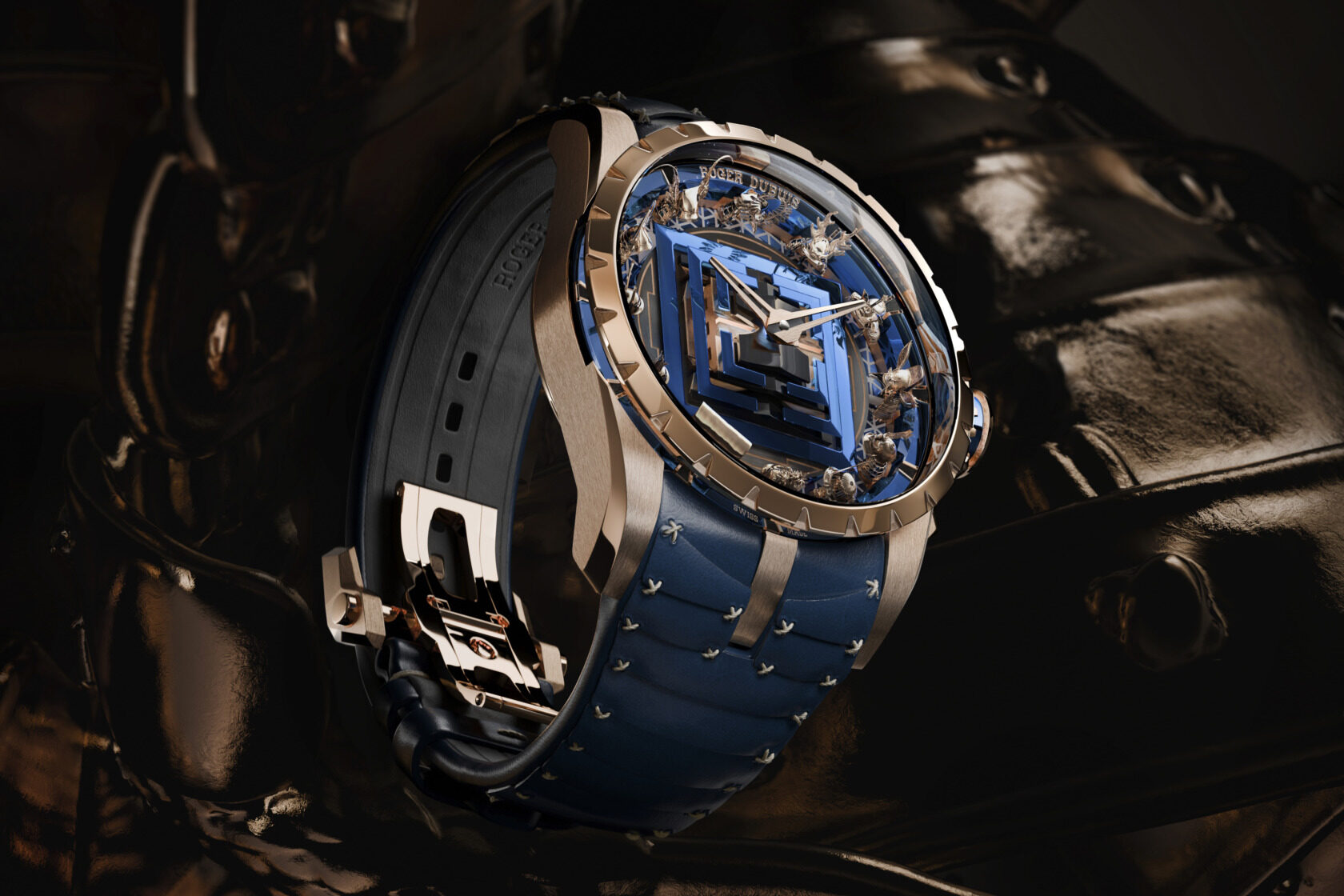
The Roger Dubuis Excalibur The Kabuto Legacy reimagines a classic watch collection with a Japanese historical theme. It replaces traditional knights with hand-engraved samurai helmets, blending Swiss watchmaking with Japanese craftsmanship. This limited edition piece is not merely a design experiment—it is a deliberate cultural synthesis, where horological precision meets historical authenticity. Source: design-milk.com.
What Happened
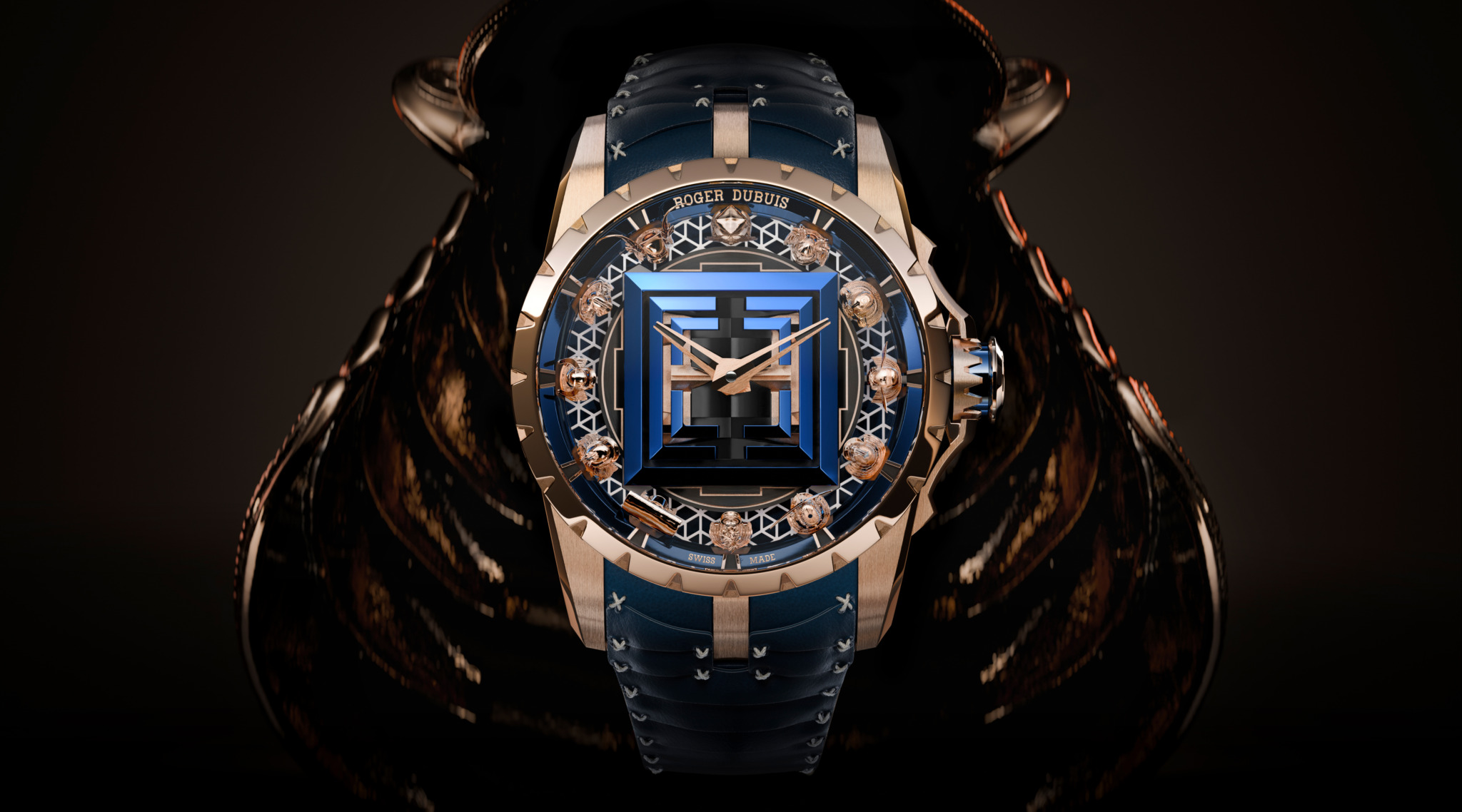
Roger Dubuis launched the Excalibur The Kabuto Legacy, a limited edition watch featuring 12 hand-engraved samurai helmets arranged around an abstract version of Edo Castle. This release marks a significant evolution in the brand’s narrative, shifting from European mythological references—such as the Knights of the Round Table—to a distinctly Japanese historical context rooted in the early 17th century.
The piece is part of the Excalibur collection, which began in 2005 with a focus on modern design and mechanical excellence. This new model continues the brand’s commitment to artisanal craftsmanship, but with a new cultural lens. Unlike earlier editions that featured European historical figures, this iteration draws from Japan’s unification era under the Tokugawa shogunate—a pivotal period in Japanese history that saw the consolidation of power and the establishment of a centralized government.
Key Facts
- The watch has a 45mm case made of 18K pink gold, a material choice that reflects both luxury and durability, common in high-end timepieces.
- Each of the 12 helmets is micro-sculpted and hand-engraved, taking two to three days of artisan work per piece. This level of detail underscores the labor-intensive nature of the craftsmanship involved.
- The timepiece is limited to 28 pieces, making it rare and collectible. This scarcity enhances its value and appeal to dedicated collectors who prioritize provenance and exclusivity.
- It features an abstract interpretation of Edo Castle, finished in deep blue, a color historically associated with samurai garments and official state regalia. The choice of color is not arbitrary—it echoes the traditional indigo dyes used in samurai attire during the Edo period.
- The movement is powered by the RD821 self-winding caliber, which includes 14 distinct finishing techniques applied to the movement components. These techniques—such as polishing, beveling, and brushing—ensure both aesthetic refinement and mechanical reliability. Like other certified Roger Dubuis timepieces, this piece also receives Poinçon de Genève certification, which establishes standards for craftsmanship, finishing, and mechanical performance in Geneva watchmaking.
Historical Background
The kabuto is a traditional Japanese samurai helmet, historically used as both protective armor and a personal identifier in battle. In feudal Japan, each samurai commander often wore a helmet with unique ornamentation that served as a visual signature—allowing allies and enemies to recognize leadership figures at a glance.
Each helmet in the Excalibur The Kabuto Legacy represents a commander from the early 17th century, during Japan’s unification under the Tokugawa shogunate. This period saw regional daimyo consolidate power into a single, centralized authority, culminating in the rise of Tokugawa Ieyasu as the first shōgun. The inclusion of these figures reflects a deep respect for historical accuracy and the significance of leadership in shaping national identity.
The design begins at 12 o’clock with Tokugawa Ieyasu, the shōgun who unified Japan. The Four Heavenly Kings—legendary samurai commanders who fought alongside Ieyasu—are depicted at the 1, 2, 4, and 9 o’clock positions. These figures were not only military leaders but also symbolic representations of balance and order in Japanese society. Flanking them are other notable figures from the era, each contributing to a broader narrative of political and cultural transformation.
Historical Consultation
To ensure accuracy and authenticity, Roger Dubuis consulted Frederik Cryns, a professor of Japanese history and a historical advisor on the television series Shōgun. Cryns brought both academic rigor and cultural insight to the project, helping interpret the roles, symbolism, and historical context of the commanders.

Cryns stated that the helmets were not merely decorative—they were functional tools of identification in battle. His expertise ensured that the design reflects not only visual accuracy but also the social and military significance of these figures in their time.
Design and Craftsmanship
The Edo Castle structure on the dial is not a mere illustration—it is a meticulously constructed miniature. The layered architecture incorporates several finishing techniques, including polishing, circular brushing, and shot-blasting, to create visual depth and texture. These techniques mirror traditional Japanese craftsmanship, where surface treatment is as important as form.
The helmets themselves are not just decorative elements. Each is individually crafted from 18K pink gold, a material that combines strength with a warm, luxurious finish. The hand-engraving process requires exceptional skill and precision, with each helmet taking between two and three days to complete. This level of labor reflects the broader philosophy of the Excalibur collection: that timepieces should be not only functional but also works of art.
These details highlight the fusion of traditional Japanese artistry with Swiss horological precision. The result is a timepiece that is both technically advanced and culturally resonant.
Why It Matters
The Excalibur The Kabuto Legacy demonstrates Roger Dubuis’s commitment to craftsmanship and cultural reinterpretation. By drawing from Japanese history, the brand expands its design language beyond European mythologies, offering a more diverse narrative in luxury timepieces.
It also reflects a broader trend in watchmaking: the integration of regional histories and artisanal traditions into high-end design. As global audiences become more culturally aware, luxury brands are increasingly turning to non-European heritage to enrich their product identities.

This model serves as a case study in how cultural authenticity can be achieved through collaboration, historical research, and meticulous execution—without sacrificing technical excellence.
Limitations and Open Questions
The watch is limited to 28 pieces, which makes it accessible only to a niche audience. While this scarcity adds to its collectibility, it may limit broader market penetration.
While the historical context is well-researched, the broader cultural significance of the figures depicted—such as the roles of the Four Heavenly Kings or the symbolism of the kabuto—is not fully explained in the source. This gap may limit deeper appreciation among non-specialist audiences.
There is no public data on market demand or collector interest, so its commercial impact remains uncertain. However, given the brand’s reputation for innovation and craftsmanship, it is likely to attract a dedicated following among collectors who value both technical and cultural depth.
What to Watch Next
Future editions of the Excalibur collection may explore other cultural traditions, such as Chinese or Korean historical figures. As luxury watchmakers increasingly incorporate global heritage, more such collaborations are likely to emerge.
The Roger Dubuis Excalibur The Kabuto Legacy is available through official channels. For a detailed view of the dial and craftsmanship, see the official product page at Roger Dubuis. A high-resolution image of the watch can be viewed at design-milk.com.
The article was written by Justin Mastine-Frost, a watch journalist with experience in photography, automotive design, and technical craftsmanship. His background informs a deep appreciation for both visual detail and mechanical precision.
Sources & further reading
Featured image: The Roger Dubuis Excalibur The Kabuto Legacy features 12 hand-engraved samurai helmets arranged around an abstract interpretation of Edo Castle. Photography courtesy of Roger Dubuis.. Via original publisher. Image source