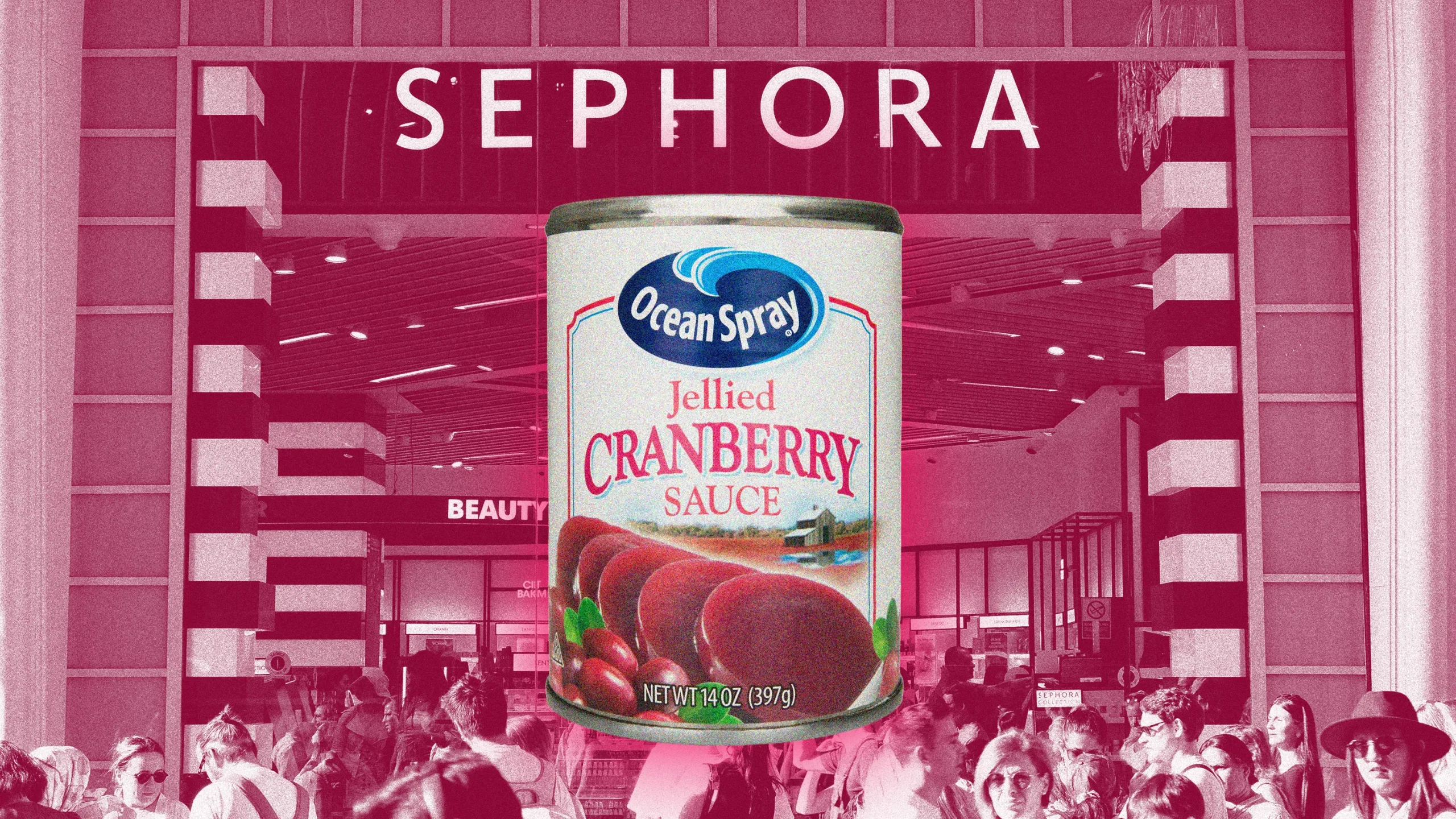
On a quiet weekend in late October, two major brands found themselves entangled in a viral online feud. Sephora, the world’s largest beauty retailer, posted a lighthearted social media message promoting a lipstick.
The post read: “No one likes cranberry sauce, bring lippies to Friendsgiving instead.”
What Happened Online
Within hours, a wave of responses emerged. One user wrote: “Oh hell no. Threads is a place of cranberry supremacy. Read the room.”
Others echoed the sentiment, listing common cranberry-based dishes like mimosas, scones, and cheesecake. These responses weren’t just jokes—they were expressions of collective identity.
The post unintentionally triggered a sense of belonging among users who see cranberry sauce as a non-negotiable part of the Thanksgiving table.
Several users pointed out that the post contradicted Sephora’s own anti-bullying initiative, launched earlier in the year. One user noted, “It’s hard to reconcile a brand that promotes inclusivity with a post that seems to mock a cultural tradition.”
This raised concerns about consistency between corporate values and public messaging. While the post was framed as humor, its tone implied a lack of respect for a widely cherished tradition.
Enter Ocean Spray
Soon after, Ocean Spray—the largest producer of cranberry products in the U.S.—responded with a post: “We’re going to go cry in the bog. The waterproof mascara better work.”
Bogs are marshes where cranberries grow. The post was both humorous and symbolic, referencing the actual farming conditions of cranberry harvests.
It also subtly positioned Ocean Spray as a deeply rooted, traditional American brand. The brand is owned by 700 American farmer families, a cooperative model that resonates with values of community and sustainability.
A user shared, “It’s impressive how a post about a harvest environment can feel so authentic—like it’s coming from real people, not a marketing campaign.”
Public Reaction and Community Response
Instead of escalating into a full-blown conflict, the online community pivoted. Rather than attacking Sephora, users began rallying behind Ocean Spray.
One user remarked, “It’s not about who’s right or wrong—it’s about what matters to people. And for many, cranberry sauce is a cultural anchor.”
This shift demonstrated how public sentiment can be redirected from criticism to support when a brand aligns with shared values.
Ulta Beauty, a direct competitor to Sephora, joined the conversation. It posted two messages: one declaring “Cranberry season > pumpkin spice season (change my mind)”, and another in the form of a poll, asking Threads users if “the best Thanksgiving side is @oceansprayinc jellied cranberry sauce.”
The responses overwhelmingly declared, “Yes, you’re right.” A user explained, “I didn’t even know cranberry sauce was this deeply embedded in American culture until I saw how many people defended it. It’s like a national ritual, not just a side dish.”
The incident revealed how social media can amplify cultural narratives and turn everyday comments into widespread conversations. A user noted, “This wasn’t just a brand feud—it was a moment where people felt seen, and that’s what made it go viral.”
Resolution and Aftermath
By the end of the weekend, both companies appeared to have de-escalated the situation. Sephora issued a final message: “We will never underestimate the power of cranberry sauce or bog spiders ever again.”
The incident did not result in any official boycotts or legal actions. No formal statements from either company addressed the incident beyond these social media posts.
While the conflict was brief, it revealed how deeply cultural symbols—like cranberry sauce—can trigger emotional responses in a public audience. It also highlighted the role of social media in turning everyday comments into widespread conversations.
For now, the drama is over. But it may inspire future collaborations. A cranberry-themed lipstick, for instance, could be a natural next step—especially if both brands see value in blending tradition with modern beauty.
For more on beauty industry dynamics, see the original source: Allure article.
Sources & further reading
Featured image: original publisher image. Via original publisher. Image source