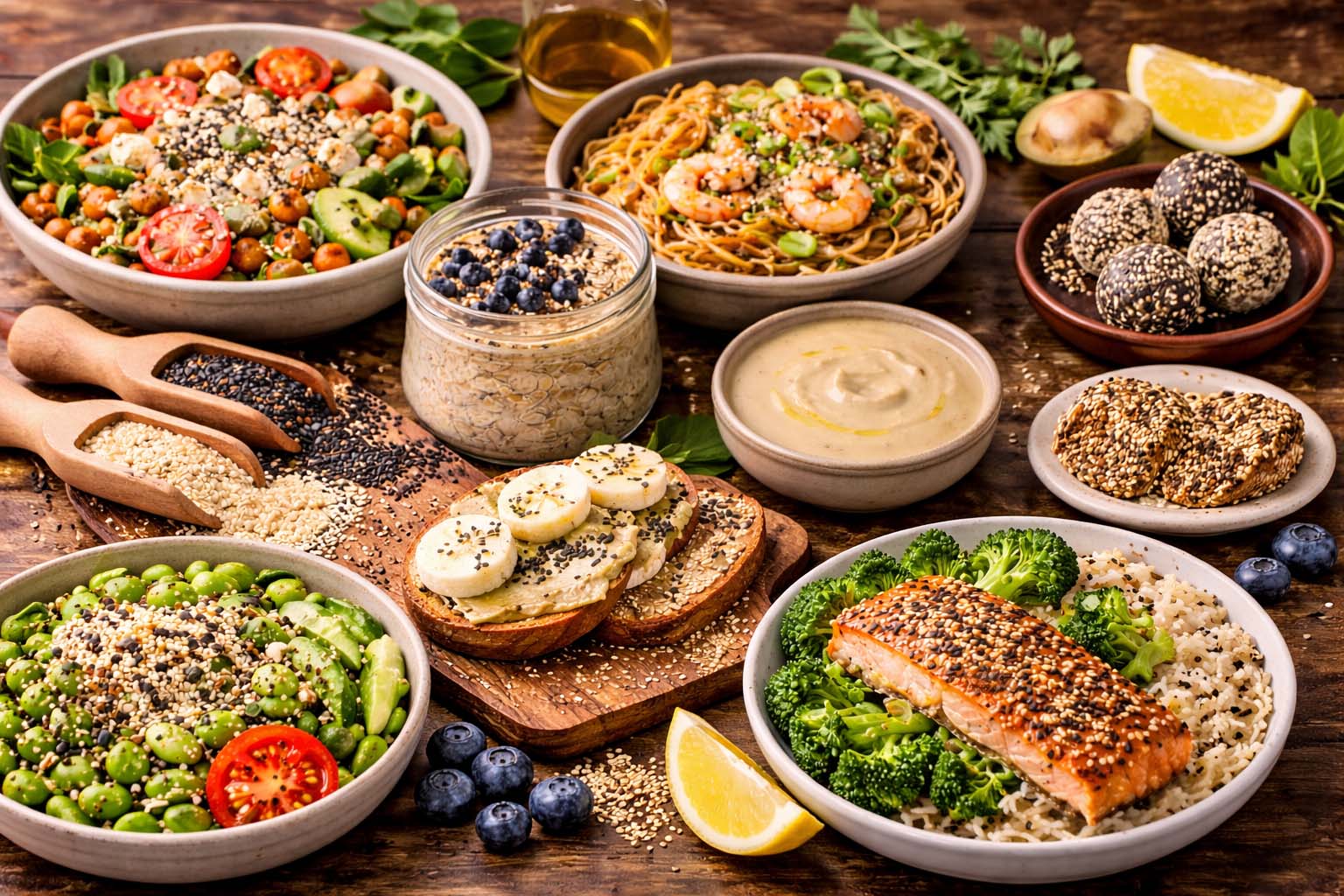
Sesame seeds are small, but they’re nutritionally “dense”: healthy fats + plant protein + fiber + minerals plus unique plant compounds called lignans (like sesamin). That combination is exactly why sesame can be useful for:
- Bone health (minerals)
- Heart health (unsaturated fats + lignans)
- Hair/skin (healthy fats + zinc/copper)
- Weight control (satiety from fat + protein + fiber)
The secret is picking the right type and using a realistic portion consistently.
How Sesame Seeds Help Bone Health
Bone strength is not only calcium. It’s also magnesium, phosphorus, zinc, copper and protein—sesame contains all of these.
Why it can help
- Mineral support: sesame contributes calcium + magnesium + phosphorus (key for bone structure)
- Trace minerals: zinc and copper support normal bone metabolism and connective tissue
- Protein + healthy fats: help overall nutrient intake and satiety, which supports steady eating habits
Best sesame type for bones
✅ Unhulled sesame (hull ON) tends to be higher in minerals and fiber than hulled.
Also great: ✅ Tahini (easy daily habit), especially if you like sauces/dressings.
Tip: If you dislike the slightly stronger taste of unhulled, mix 50/50 hulled + unhulled.
How Sesame Seeds Help Heart Health
Sesame is naturally rich in unsaturated fats (the “heart-friendlier” fat profile) and lignans that are studied for cholesterol and oxidative stress markers.
Why it can help
- Fat profile: replaces saturated-fat snacks with more unsaturated fats
- Lignans + antioxidants: help protect fats in the body from oxidation
- Magnesium + potassium-friendly pattern: sesame pairs well with whole foods (salads, veg, legumes)
Best sesame type for heart health
✅ Hulled sesame + tahini for daily consistency (easy to use)
✅ Toasted sesame oil (small finishing drizzle) for flavor—use sparingly because it’s concentrated calories
How Sesame Seeds Help Hair and Skin
No food “magically” grows hair overnight, but sesame brings a helpful mix of nutrients linked to skin barrier and hair structure.
Why it can help
- Healthy fats: support skin barrier and softness
- Zinc: supports normal skin and hair maintenance
- Copper: supports normal pigmentation (hair/skin tone) and connective tissue
- Vitamin E (small amounts) + antioxidants: supports overall skin health patterns
Best sesame type for hair/skin
✅ Black sesame (popular for its deeper antioxidant reputation)
✅ Black sesame paste or sprinkling black seeds on breakfast bowls
If black sesame tastes too strong, use hulled white sesame + tahini and add berries/citrus in the same meal.
How Sesame Seeds Help Weight Control
Sesame can support weight control because it’s satisfying—but it’s also calorie-dense, so portion is everything.
Why it can help
- Satiety: fat + protein + fiber = fuller for longer
- Craving control: adds crunch and richness to “diet meals” so they feel complete
- Stable routine: small daily “add-on” is easier than extreme dieting
Best sesame type for weight control
✅ Unhulled or mixed seeds (more fiber)
✅ Tahini in measured amounts (1 tbsp) for a creamy, filling dressing
Portion guide:
- 1 tablespoon seeds or 1 tablespoon tahini daily is a strong, realistic baseline.
Best Sesame Type by Goal (Quick Picker)
- Bones: Unhulled (or 50/50 mix)
- Heart: Hulled + tahini (plus a tiny toasted oil drizzle if you love it)
- Hair/skin: Black sesame (or black + white mix)
- Weight control: Unhulled/mix for fiber + measured tahini for satiety
If you want ONE “do-it-all” option: a mixed jar (hulled + unhulled + black) plus tahini in the fridge.
The 7-Day “Sesame Routine” (Simple, Repeatable, No Stress)
Goal: consistency without overeating.
Daily dose: choose ONE per day:
- 1 tbsp sesame seeds (any type) OR
- 1 tbsp tahini (about a heaped dessert spoon)
Day 1 (Bones + digestion)
Add: 1 tbsp unhulled sesame
How: Sprinkle on Greek yogurt or plant yogurt + berries.
Day 2 (Heart-friendly lunch)
Add: 1 tbsp tahini
How: Make a quick dressing: tahini + lemon + garlic + water + pinch of salt. Toss with salad.
Day 3 (Hair/skin focus)
Add: 1 tbsp black sesame
How: Top porridge/oats or smoothie bowl (banana works well with black sesame).
Day 4 (Weight-control snack upgrade)
Add: 1 tbsp mixed seeds
How: Add to cottage cheese or hummus + cucumber/carrot sticks.
Day 5 (Bone + heart combo dinner)
Add: 1 tbsp unhulled (or 50/50 mix)
How: Sprinkle on roasted veg + chickpeas + olive oil + herbs.
Day 6 (Flavor day, still measured)
Add: 1 tsp toasted sesame oil (not a tablespoon)
How: Finish a stir-fry or noodles; add chopped spring onion and a squeeze of lime.
Day 7 (Reset + prep for next week)
Add: 1 tbsp tahini
How: Blend into a “sweet tahini”: tahini + cinnamon + a little honey. Spread thinly on toast or apple slices.
Weekly habit tip: Pre-toast a small jar of seeds (dry pan, 2 minutes) so you actually use them.
Extra Tips for Best Results
- Pair sesame with vitamin C foods (citrus, peppers, berries) in the same day for a stronger overall nutrient pattern.
- Store seeds in the fridge to keep oils fresh and prevent bitter taste.
- If digestion is sensitive: start with 1 teaspoon for 3 days, then increase.
FAQs
Can I eat sesame seeds every day?
Yes, in normal food portions (1 tbsp/day is a sensible routine for most people).
Is tahini as good as seeds?
Tahini is excellent for consistency and satiety. Seeds add more texture; unhulled seeds usually add more fiber.
What’s better: hulled or unhulled?
- Unhulled: more fiber/mineral-rich, slightly stronger taste
- Hulled: smoother, milder, easier for sauces and baking
Bottom Line
Sesame seeds support bones, heart, hair/skin and weight control best when you:
- choose the right type for your goal, and
- keep a simple daily portion routine.
Safety note: Sesame is a common allergen. If you have allergies, are pregnant, have kidney stone history, or take regular medication (especially blood thinners), consult a GP/medical professional before significantly increasing sesame or tahini intake.