Stine Goya’s pre-fall 2027 collection marks a deliberate shift from her signature pastels to bold primary colors. The designer has moved away from soft tones in favor of vibrant reds, blues, and yellows, aligning with her ongoing exploration of Cubist aesthetics.
Primary Colors and Cubist Influence
The collection draws inspiration from the 1913 Armory Show in New York, where modern art movements like Cubism were introduced to American audiences. This pivotal event, documented in Florian Illies’s book, served as a foundational reference for Goya’s design philosophy.
Stine Goya adapted the angular perspectives and planar forms of Cubist art—developed by Pablo Picasso and Georges Braque—into garment construction. These structural elements appear in the sharp lines of collars and sleeves, translating the visual language of modern art into wearable forms.
Key Design Elements
- A fold-down collar on a collage-style dress echoes the sculptural quality seen in Cubist works.
- The tucks on a tomato-red blazer reflect a design influence tied to Paloma Picasso’s 1980s fashion, a style known for bold shoulders and structured silhouettes.
- On a blue check dress, overbeading degrades gradually, emphasizing the fluidity of the skirt beneath.
These small details, while subtle, contribute significantly to the collection’s overall impact. The addition of large beads on a drawstring miniskirt adds a tactile, playful element. Custom face buttons on some pieces offer a personal touch, reinforcing the idea of individual expression within a structured aesthetic.
Material and Movement
The weighting of the dress top on a blue check ensemble creates a balance that enhances the swishiness of the long skirt. This attention to material distribution reflects a deeper understanding of how fabric behaves in motion.
By emphasizing weight and form, Goya ensures that the garments do not merely imitate art—they respond to the body’s movement. The result is a collection that feels both architectural and fluid, merging rigidity with grace.
Context and Background
Florian Illies’s book on the 1913 Armory Show remains a key historical reference in fashion design. It details how modern art movements were received in America, shaping public taste and artistic direction.
For Goya, the show represents a moment when art broke from tradition and embraced fragmentation, abstraction, and multiple perspectives. These ideas are mirrored in her use of layered, jigsaw-like designs that challenge the viewer’s perception of form and space.
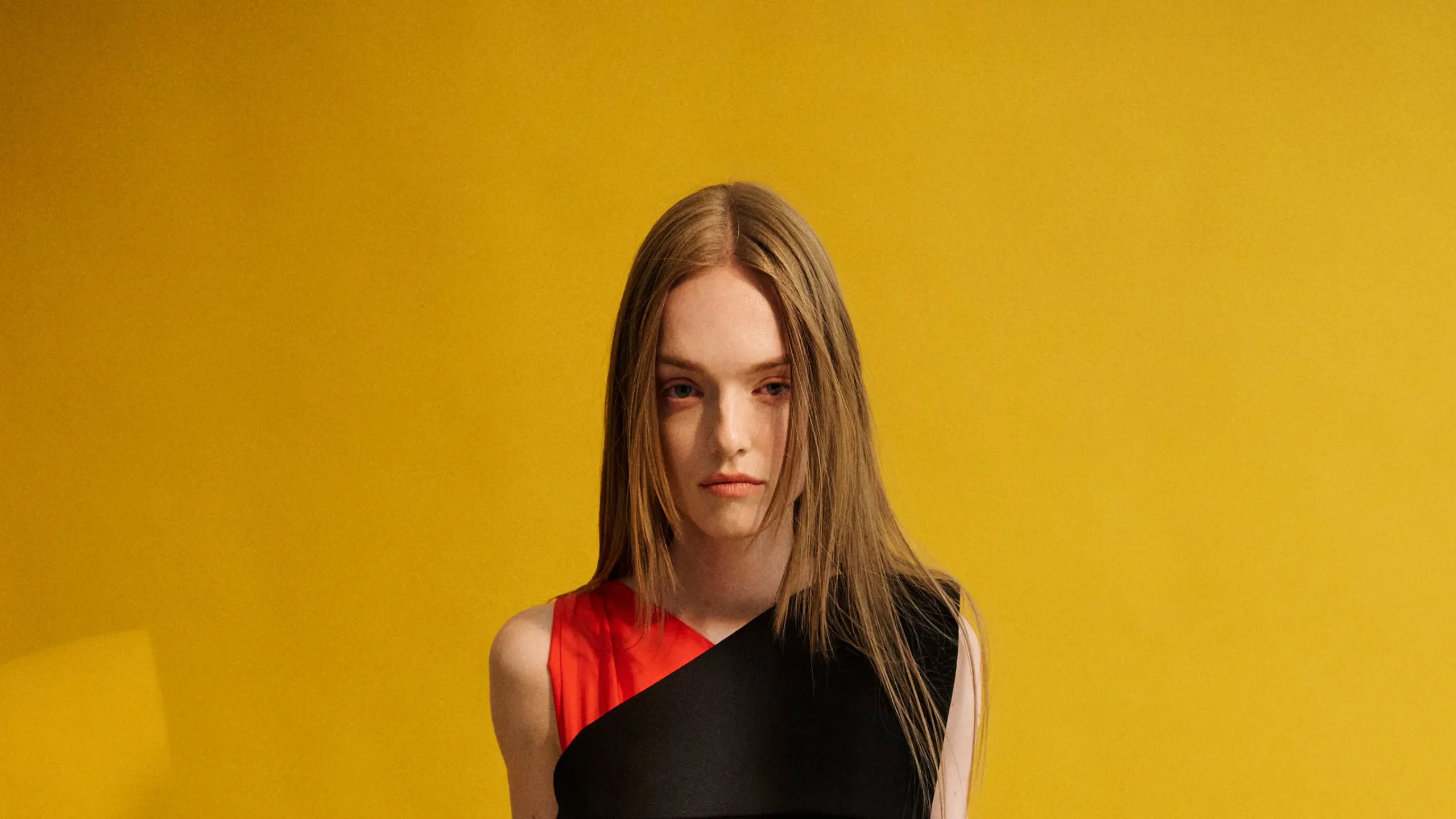
While past collections have featured pastel palettes, this pre-fall line signals a conscious evolution. The shift is not random—it is rooted in a deliberate artistic lineage and a commitment to design integrity.
Why It Matters
Stine Goya’s work continues to bridge art and fashion. By drawing on historical movements, she demonstrates how design can be both intellectually grounded and emotionally resonant.
Her pre-fall 2027 collection proves that fashion can serve as a medium for cultural dialogue. It invites wearers to engage with art not as decoration, but as a lived experience.
Limitations and Open Questions
The collection does not offer a full narrative of how Cubism translates into daily wear. While the visual references are clear, the practicality of these forms in real-world use remains untested.
There is no public feedback from consumers or critics on the comfort or versatility of the pieces. The focus remains on artistic expression rather than functionality.
Additionally, the connection between the 1913 Armory Show and modern fashion design is interpretive. While Illies’s book provides historical context, it does not confirm how directly Goya has engaged with that moment.
As such, the collection stands as a strong artistic statement, but one that invites further discussion about accessibility and relevance in contemporary fashion.
The full collection is available for viewing at Vogue’s dedicated page.
Sources & further reading
Featured image: original publisher image. Via original publisher. Image source