A scam doesn’t just threaten your bank balance—it hijacks your nervous system. Many people describe the same reaction: shaking hands, racing heart, nausea, tunnel vision, shame, and a desperate urge to “fix it now.”
That’s not weakness. It’s your brain’s threat response—fight/flight/freeze—kicking in.
This guide gives you a calm-first, action-second plan: how to steady yourself enough to make good decisions, plus the UK steps that protect your money and identity.
Why scams feel so physically overwhelming
Scams are designed to trigger:
- Urgency (“act now or lose everything”)
- Authority (bank, police, HMRC, crypto “support”)
- Emotion (fear, hope, love, embarrassment)
- Isolation (“don’t tell anyone”)
Your body responds as if it’s danger in real life. Stress hormones rise, thinking narrows, and you’re more likely to follow instructions—even if they don’t make sense.
First: calm your nervous system in 90 seconds
Before you call anyone or click anything, do this:
The 3-step reset
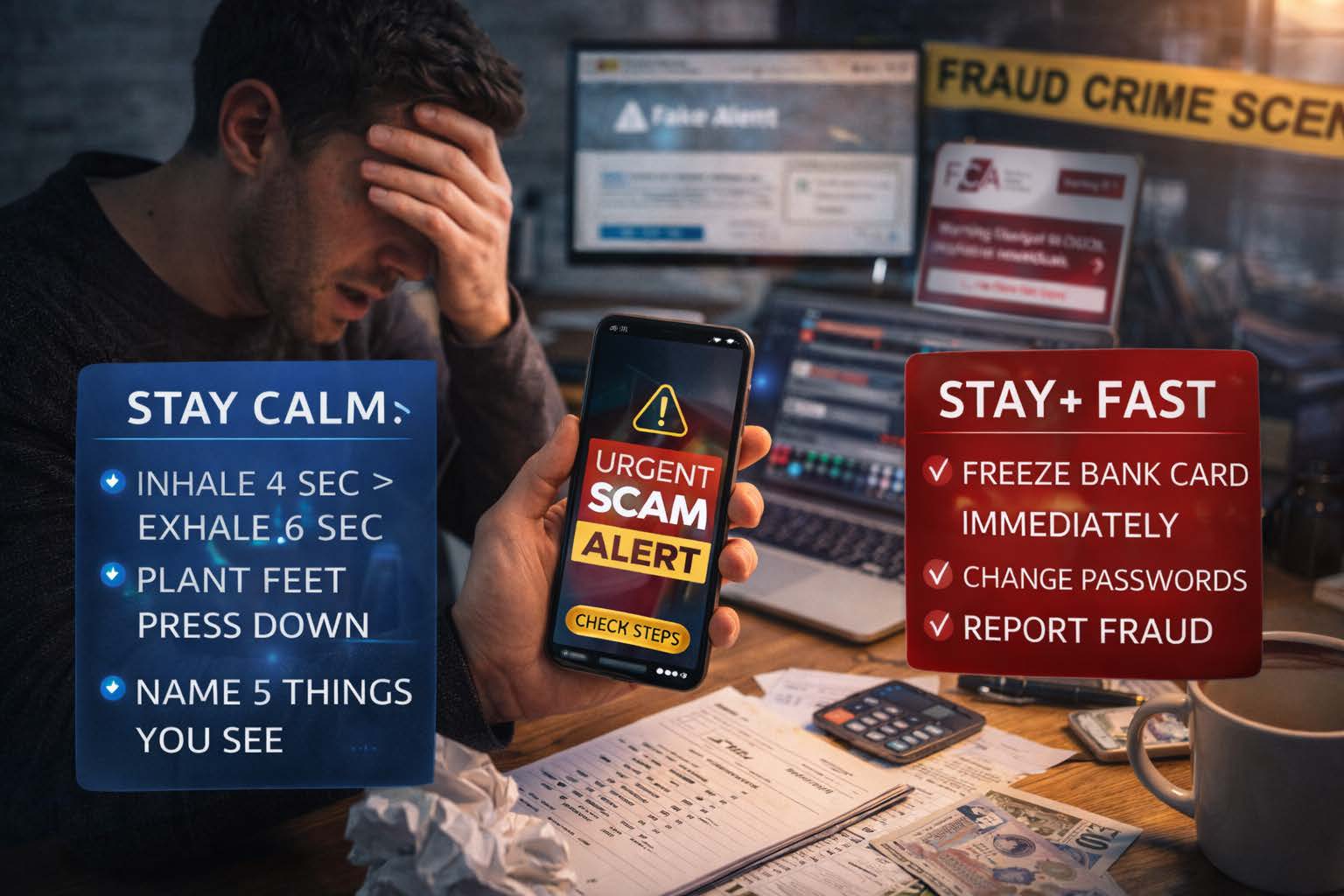
- Plant your feet on the floor and press them down.
- Breathe out longer than you breathe in (inhale 4 seconds, exhale 6–8 seconds) for 6 cycles.
- Name 5 things you can see (out loud if you can).
This interrupts panic enough to help you act effectively.
If you’re shaking: hold a cold glass of water or run wrists under cool water for 20–30 seconds.
Second: the “first hour” checklist (do this even if you’re not sure)
1) Stop the leak
- Don’t reply to messages or calls.
- Don’t click links again.
- Screenshot anything useful (numbers, emails, payment references).
2) Secure money
- If you shared bank details, paid money, or authorised a payment: contact your bank immediately using the number on the back of your card or the official app. Ask them to freeze cards, stop payments, and open a fraud case.
3) Lock down accounts
- Change passwords on your email first (email controls resets for everything).
- Turn on 2-factor authentication for email and banking.
- If you reused passwords anywhere else, change those too.
4) Reduce identity risk
If you shared personal details (DOB, address, ID photos), consider placing alerts with UK credit reference agencies and monitor activity.
Third: UK reporting steps (fast + useful)
Even if you feel embarrassed, reporting helps you and prevents others being targeted.
Report it here
- Report Fraud / Action Fraud (UK national reporting centre).
- FCA scam reporting (especially if it involves investments, “brokers,” crypto platforms, or financial services).
(If you want, tell me what type of scam it was and I’ll list the exact official places to report in one neat checklist.)
The emotions after a scam: shame is normal—but not helpful
Most victims say the worst feeling isn’t the money—it’s the self-blame:
- “How did I fall for that?”
- “I should have known.”
- “I can’t tell anyone.”
Here’s the truth: scams work because they are engineered—with scripts, persuasion design, and timing. Smart people get hit every day.
A healthier self-talk script
Try:
“I was targeted. I reacted like a human under pressure. Now I’m protecting myself.”
How to tell if your body is stuck in “threat mode”
Common signs in the days after:
- Sleep problems or vivid dreams
- Intrusive replaying (“what if I had…”)
- Compulsive checking bank apps
- Feeling jumpy when the phone rings
- Brain fog / trouble focusing
These usually ease as you regain control and take practical steps.
A 24-hour recovery plan (simple and realistic)
In the next 2 hours
- Do the bank/security steps above
- Eat something small + drink water
- Tell one trusted person (this reduces shame and helps you think clearly)
By the end of the day
- Make a list: what happened, what you shared, what you paid, what actions you took
- Save all evidence in one folder (screenshots, emails, numbers)
Over the next week
- Monitor accounts and credit
- Block unknown numbers; consider call screening
- Watch out for recovery scams (“we can get your money back for a fee”)—these often target victims next
For friends and family: how to support someone who’s been scammed
What helps:
- “You’re not stupid. This happens.”
- “Let’s do the bank steps together.”
- “We’ll take it one step at a time.”
What doesn’t help:
- “How could you?”
- “I told you so.”
- Pushing them to relive details repeatedly
FAQ
Why do I feel sick and shaky after a scam?
Because your body treats it like a real threat. Stress hormones rise, and physical symptoms (nausea, shaking, racing heart) are common.
What should I do first: calm down or call the bank?
Do a 60–90 second reset, then call the bank. You’ll make fewer mistakes if your nervous system is steadier.
What if I’m not 100% sure it was a scam?
Still act. Freezing cards, changing passwords, and reporting suspicious activity is appropriate even when you’re unsure.
Why do scammers call again after the first contact?
They try to keep you in urgency or shame. Also, victims are often targeted by “recovery scammers” who claim they can get money back.
When should I talk to a professional?
If anxiety, sleep issues, or panic symptoms last more than a few weeks—or you feel unsafe—speak to a GP or a qualified mental health professional.
Safety note (as you prefer)
If scam stress is causing panic attacks, insomnia, or severe anxiety, please speak with your GP or a qualified medical professional—support helps and you don’t have to handle it alone.