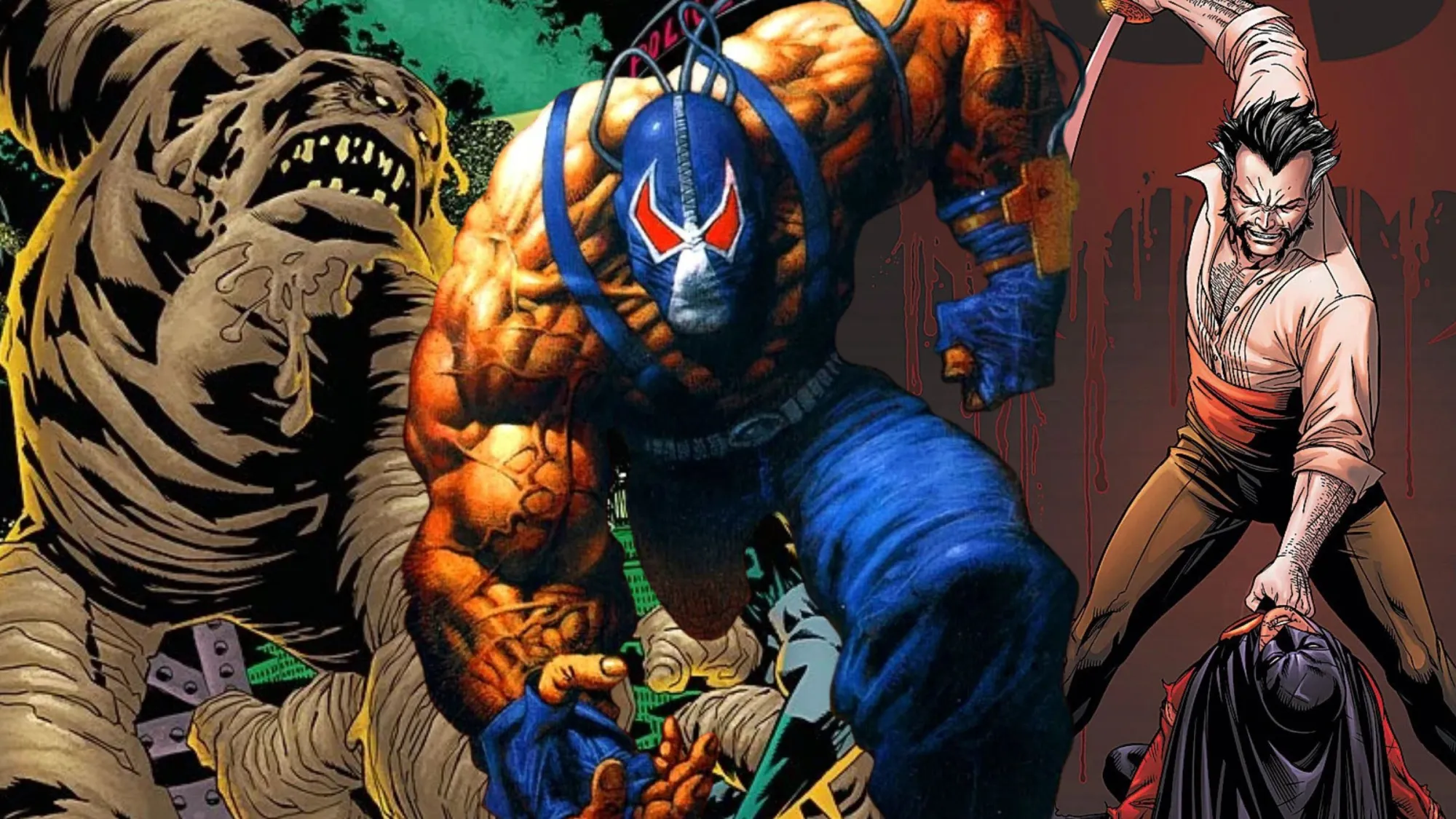
The Batman villains in the 1990s changed along with the Caped Crusader, who was completely different heading into the decade. The former campy DC hero turned deadly in the 1980s thanks to writers like Frank Miller, and with the 90s offering a new movie franchise that started in 1989, and some new critically acclaimed cartoons, Batman was more popular than ever. This allowed his villains to also step up as well, and with acclaimed series like Batman: The Long Halloween by Jeph Loeb and Tim Sale, these villains became some of DC’s best. This ranged from classic villains, like Batman’s greatest arch-nemesis, Joker, to new villains who debuted in the 90s, like Bane.
Videos by ComicBook.com
From homicidal clowns and demented former prosecuting attorneys to characters introduced on cartoons and one villain who broke the Bat, here are the 10 most important Batman villains of the 1990s.
10) Harley Quinn


Harley Quinn didn’t debut in DC Comics. Instead, she made her first appearance on Batman: The Animated Series in the episode “Joker’s Favor,” on September 11, 1992. She was supposed to be a one-off henchwoman, but she ended up popular enough to bring back for more. In fact, it only took one year for Harley Quinn to show up in comics in The Batman Adventures #12 (1993), which was set in the Batman: The Animated Series world.
Harley Quinn then grew in popularity after that, and she made her mainstream DC debut in 1999 with the one-shot Batman: Harley Quinn by Paul Dini and Yvel Guichet. She is Dr. Harleen Quinzel, an Arkham psychologist seduced into madness by the Joker. This origin was first told in The Batman Adventures: Mad Love (1994) by Dini and Bruce Timm. That comic won the 1994 Eisner Award for Best Single Story, a rarity for an animated continuity tie-in.
9) Clayface
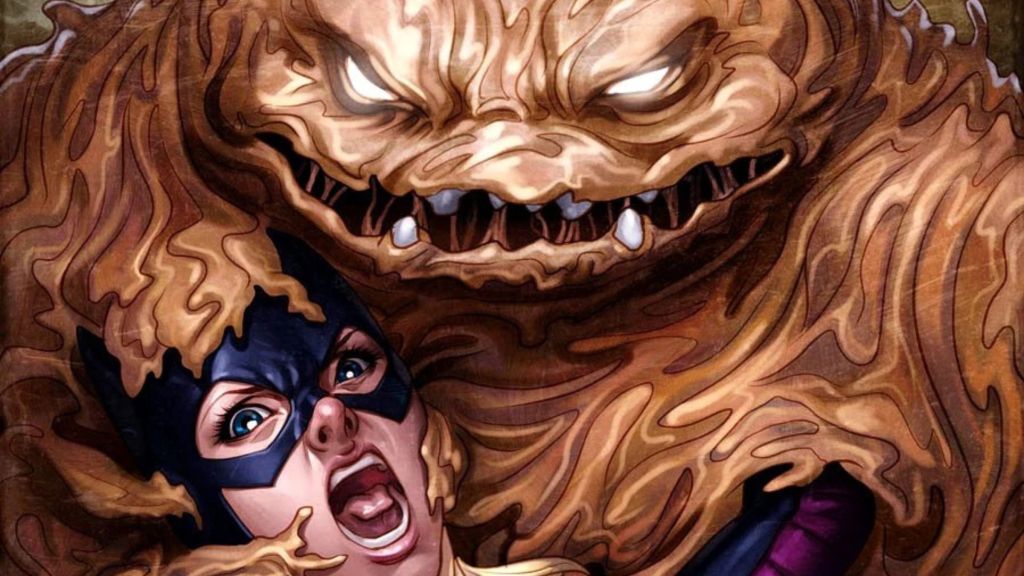
The original Clayface, Basil Karlo, debuted in Detective Comics #40 (1940) in “The Murders of Clayface,” created by Bill Finger and Bob Kane. He was a washed-up horror actor turned serial killer. After that, three other people took on the role of Clayface, including Matt Hagen, Preston Payne, and Sondra Fuller. It was Hagen who was the most popular version in animation in the 1990s, but it was Karlo returning in the comics.
When Karlo returned, he double-crossed all three of the other Clayface villains and absorbed all their powers to become an enhanced version of Clayface. This made him one of the deadliest Clayfaces that Batman ever faced. However, there was also a fifth Clayface in the 1990s with Clay Payne, a newborn who was experimented on after being kidnapped by the DEO. The Mud Pack was the first time that all the Clayfaces were connected into a legacy.
8) Victor Zsasz
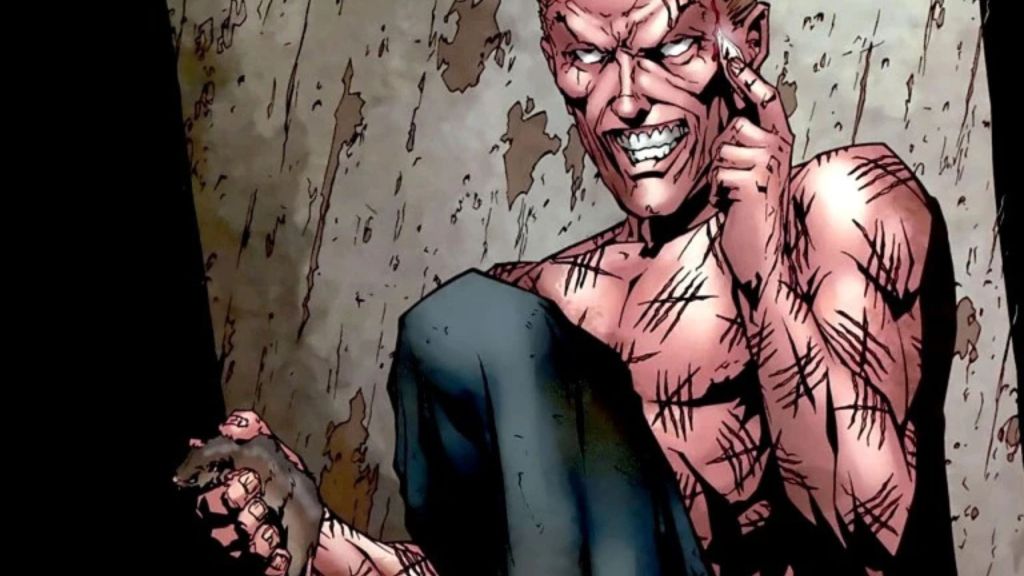
Victor Zsasz was one of the new villains from the 1990s. He debuted in Batman: Shadow of the Bat #1 (1992) by Alan Grant and Norm Breyfogle in “The Last Arkham” story arc. He’s a serial killer who slits victims’ throats, poses the bodies in lifelike positions, and carves a mark into his own skin for each kill. This covers his body in a scoreboard of murders. He was born to wealth, but when his parents died in a boating accident, he gambled his fortune away and then killed a mugger during a suicide attempt, giving him a nihilistic worldview.
His defining moment in the 1990s was when he took part in the “Knightfall” event, when he started killing people after Bane freed him from Arkham Asylum. He took an all-girls college hostage, killed two cops, and then fought an exhausted Batman as part of Bane’s plan to wear Batman down before he broke his back. What makes Zsasz so unique is that he calls himself a “liberator” because he frees all his victims from the disease of life.
7) Scarecrow
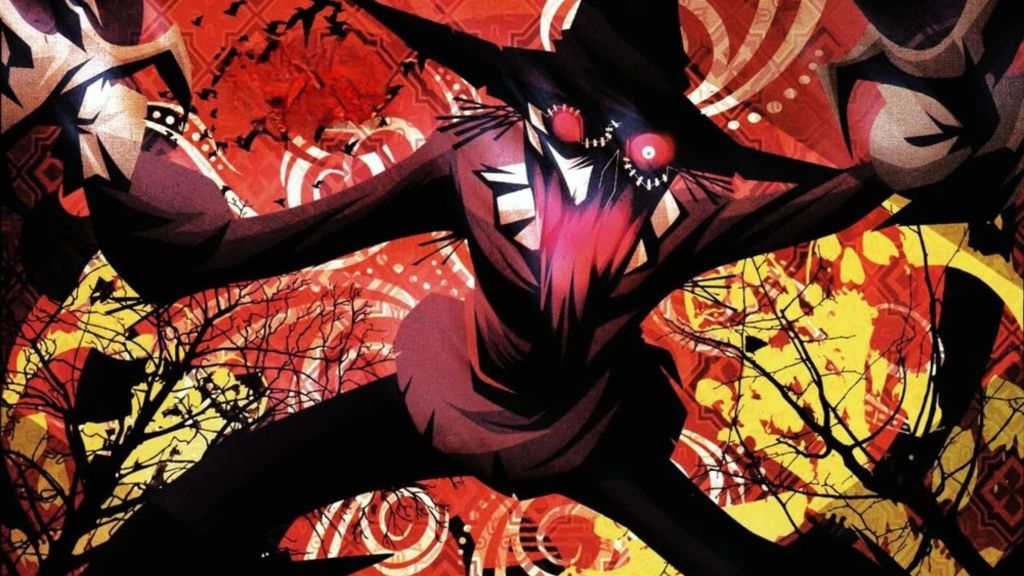
Scarecrow made his debut early in Batman’s career, debuting in World’s Finest Comics #3 (1941), in “Riddle of the Human Scarecrow,” by Bill Finger and Bob Kane. At the time, he was a psychology professor named Jonathan Crane. In the 1990s, Scarecrow took a huge leap forward in Batman comics, and his biggest moments came in the “Knightfall” storyline. His part of this was after Bane broke everyone out of Arkham, and Scarecrow teamed with Joker.
However, that didn’t work very well, as Batman completely destroyed Joker in that fight thanks to Scarecrow’s fear gas. While the fight ended badly for Joker, teaming with Scarecrow was memorable and resulted in a very high body count. The 90s also gave Scarecrow his own storyline called “God of Fear” during Azrael’s time as Batman, although the fear gas backfired here by triggering Azrael’s brainwashed programming, called the System. Scarecrow became so popular in the 1990s that he ended up as one of the villains when Christopher Nolan took over the Batman movie franchise in the 2000s.
6) Killer Croc
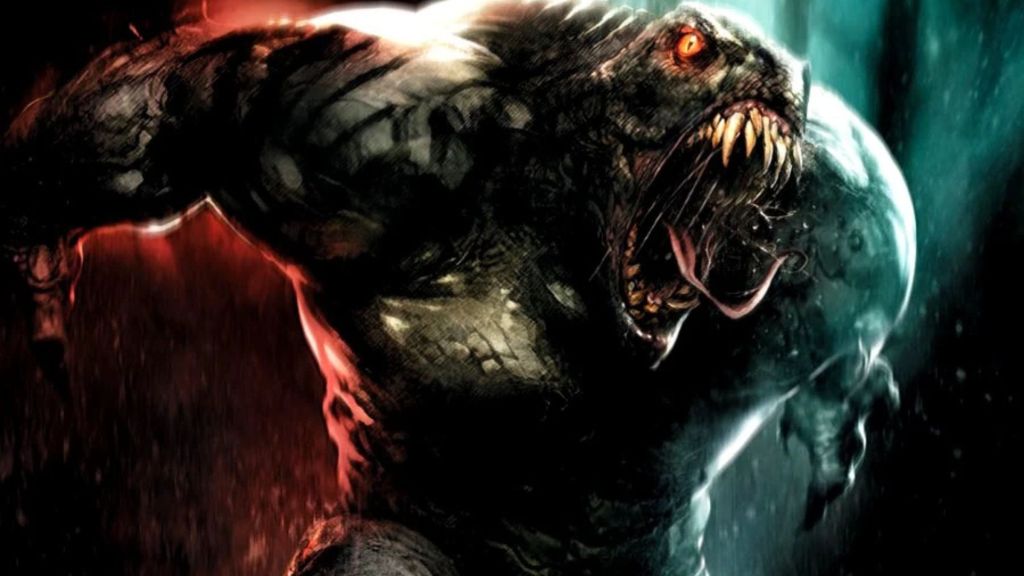
Killer Croc is Waylon Jones, and he debuted in Detective Comics #523 (1983) by Gerry Conway and Gene Colan. Jones was born with a rare condition, later revealed to be epidermolytic hyperkeratosis, giving him reptilian skin. He was orphaned and abused, and he became a carnival alligator wrestler strongman before turning to Gotham crime. Like many villains, Killer Croc was part of the “Knightfall” storyline when Bane broke everyone out of Arkham Asylum.
However, while Killer Croc went into the Gotham sewers, he ended up clashing with Bane instead of Batman. Despite Bane proving to be one of Batman’s strongest villains, he and Killer Croc fought to a stalemate. However, Bane ended up proving his dominance over Croc, although their battles against each other were one of the most defining moments for Croc in the 1990s. Unfortunately for Killer Croc, it was more to show how strong Bane was than to show how dangerous Croc is. Bane was shown to be more bestial and feral in the 1990s than he was in the 1980s.
5) Two-Face
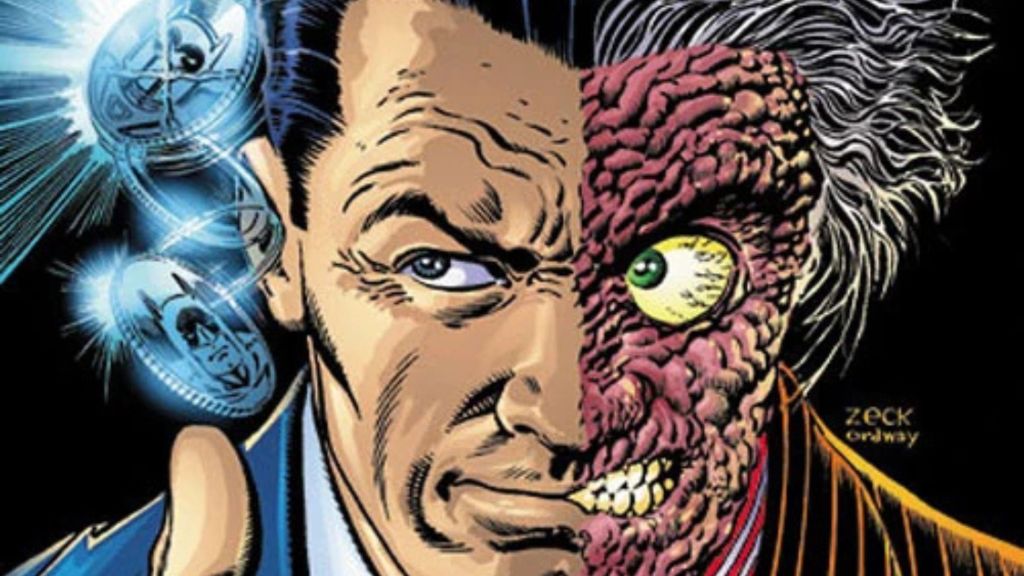
Two-Face made his debut in Detective Comics #66 (August 1942) by Bob Kane and Bill Finger. He was district attorney Harvey Dent, and he ended up with half his face scarred when mob boss Sal Maroni threw acid at him during a trial. Unlike the villains who were best known for “Knightfall,” Harvey Dent was instead the focus of the 1990s groundbreaking Batman series, The Long Halloween.
This was a showcase for several of Batman’s greatest villains, a 13-issue miniseries by Jeph Loeb and Tim Sale (1996–97), widely regarded as the definitive story showing Harvey Dent’s downfall. This rewrote his origin story, as Dent works alongside Batman and Captain Gordon to hunt the “Holiday” serial killer before being scarred and turning villain. It also ended in the famous twist implicating Dent and his wife, Gilda, in the murders. Dent got a second storyline in the 1990s with Batman: Dark Victory (1999–2000).
4) Mister Freeze
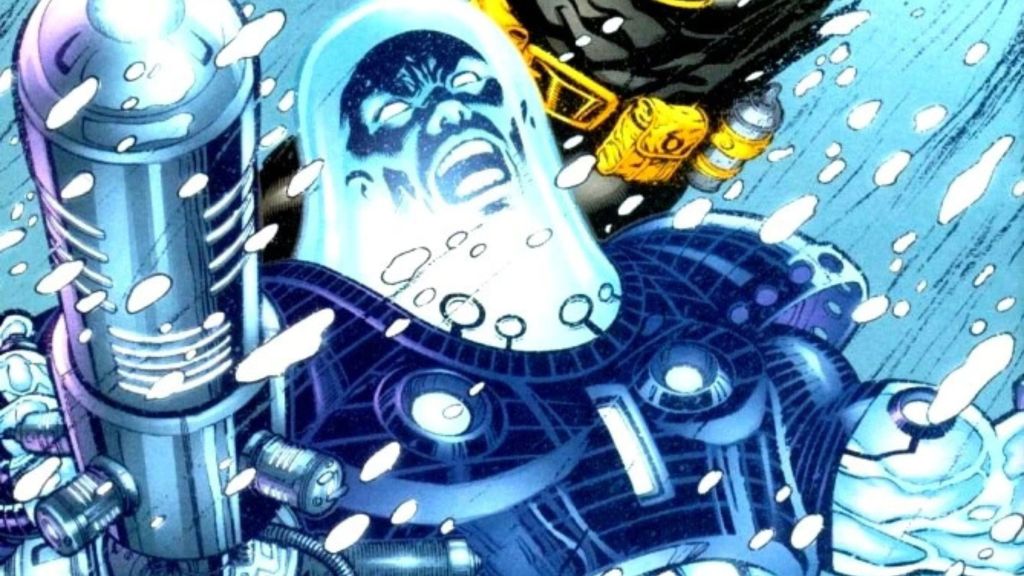
Mister Freeze debuted in Batman #121 (1959) by Dave Wood and Sheldon Moldoff as a villain known as Mr. Zero, a gimmick villain with ice powers. It was the Adam West TV show that renamed him Mr. Freeze and that carried over to the comics. However, he became one of the 1990s most famous villains thanks to Batman: The Animated Series, which gave him his tragic backstory and origin, where he was a scientist who only wanted to save his dying wife, Nora, whom he cryogenically froze to give him time.
This was carried over into the comics in the 1990s with the Batman: Mr. Freeze (1997) one-shot by Paul Dini, Mark Buckingham, and Wayne Faucher. This was the comic book debut of Nora Fries. This was the decade that Freeze became a main event villain, and this not only worked in the comics and animated series, but it was also part of the animated movie Batman & Mr. Freeze: SubZero (1998) and one of the main villains in the big screen movie Batman & Robin. The 1990s are when Mister Freeze became an A-list villain for the first time.
3) Ra’s al Ghul
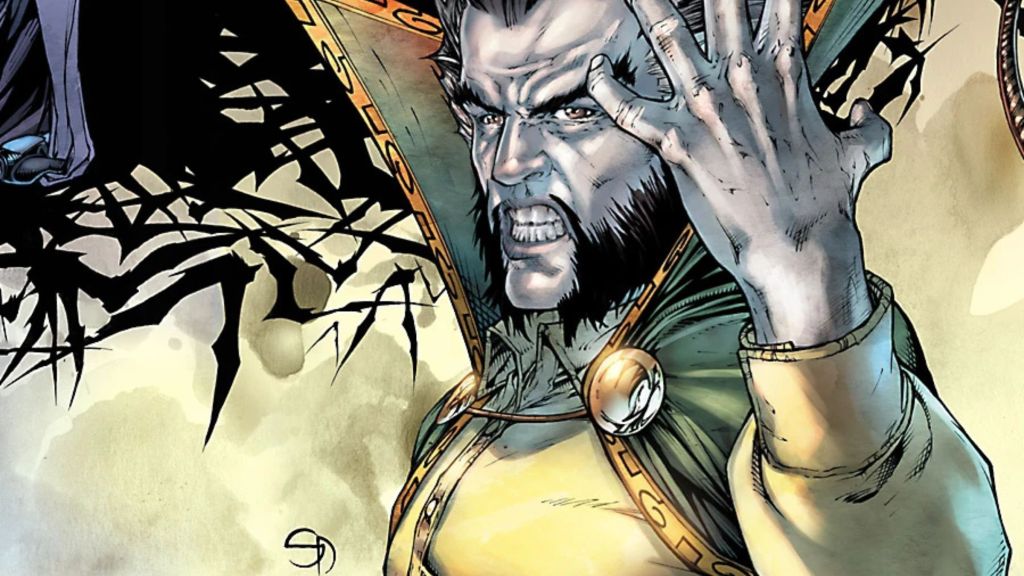
Ra’s al Ghul debuted in Batman #232 (1971) by Dennis O’Neil and Neal Adams. However, he ended up being very important in the 1980s and 1990s, thanks to the “Demon” trilogy. This was his definitive origin story told in Batman: Son of the Demon (1987), before the 1990s saw Batman: Bride of the Demon (1990) and Batman: Birth of the Demon (1992) by Dennis O’Neil and Norm Breyfogle.
His biggest ’90s Batman impact was the “Contagion” and “Legacy” crossover. After the Ebola-Gulf-A virus (“the Clench”) devastated Gotham in “Contagion” (1996), Ra’s co-opted the mutated plague in the sequel “Legacy” (1996), hoping to wipe out 90% of humanity to cleanse the planet. The 1990s made the Lazarus Pit so important because it is what revives the dead and dying, and they have kept Ra’s alive for centuries. Ra’s al Ghul is also one of the rare villains to figure out Batman’s secret identity.
2) Joker
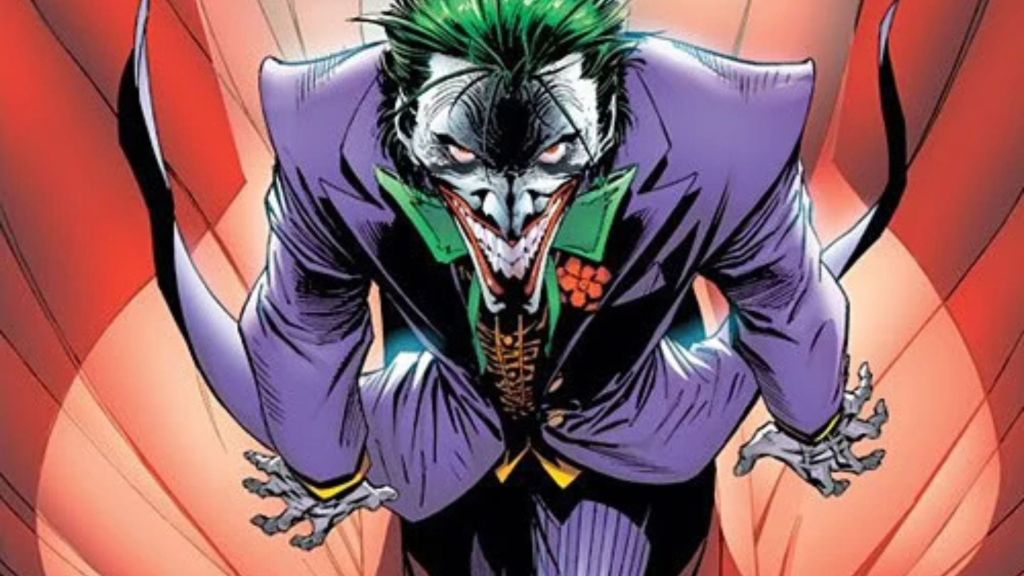
The Joker is one of Batman’s oldest villains, debuting in Batman #1 (1940) by Bill Finger, Bob Kane, and Jerry Robinson. He was killed off in that issue, but fans wanted to see more of him, so he was resurrected. He had been in the 1980s, one of the most important Batman storylines when he killed Jason Todd, the Robin, beating the teenager to death and blowing him up in “A Death in the Family” in 1988. He then disappeared until Bane showed up, and Joker teamed with Scarecrow to fight Batman.
However, Joker was part of two of the most important storylines in the 1990s Batman comics. He was in Batman: The Long Halloween in 1996, where he appeared with Scarecrow, Poison Ivy, the Riddler, and Mad Hatter in the Eisner-winning Two-Face origin saga. However, his most heinous moment came in the 1999 “No Man’s Land,” when he murdered Commissioner Gordon’s wife, Sarah Essen Gordon, when she stopped to save an infant. He also had the 1994 storyline “Going Sane,” where he thought Batman died, and he started a normal life because Joker can’t exist without Batman.
1) Bane
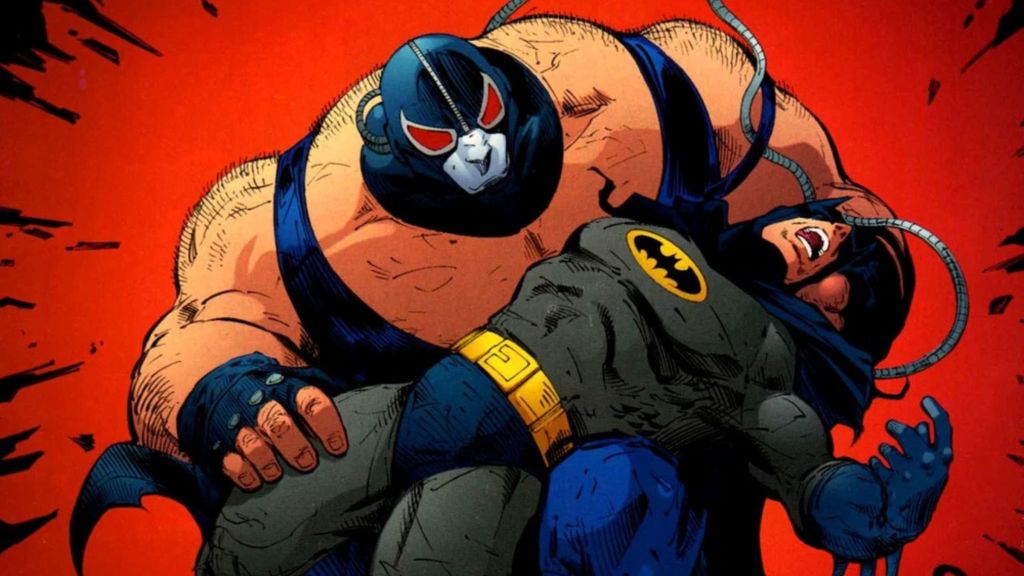
The most important Batman villain in the 1990s is Bane, who made his debut in the one-shot Batman: Vengeance of Bane #1 (1993) by Chuck Dixon, Doug Moench, and Graham Nolan. He grew up imprisoned in Peña Duro on the island of Santa Prisca, serving a life sentence inherited from his revolutionary father. His defining moment came in “Knightfall.” In Batman #497 (1993) by Doug Moench and Jim Aparo, Bane broke Batman’s back over his knee at Wayne Manor.
“Knightfall” was a trilogy, including “Knightfall,” “Knightquest,” and “KnightsEnd” (1993–94), and Bane’s actions caused Bruce Wayne to be gone for a year, replaced by Azrael. The series ended with Bruce reclaiming the mantle and Azrael ultimately defeating and jailing Bane. What made Bane such an important Batman villain in the 1990s was that he didn’t just beat up Batman. He out-thought Batman, breaking him psychologically first. Bane is also one of the very few villains to deduce that Batman is Bruce Wayne through pure reasoning.
What do you think? Leave a comment below and join the conversation now in the ComicBook Forum!