As social isolation grows, more people are turning to digital tools to build new friendships. A recent report highlights a wave of apps designed specifically to help users form platonic connections in person, with a focus on reducing social awkwardness and fostering local communities.
Why People Are Seeking New Friendships
Loneliness has become a recognized public health issue. Surgeon General declared it a public health crisis. This has driven increased interest in forming meaningful, non-romantic relationships.
Remote workers, who miss office interactions, and younger adults seeking shared interests are among those actively looking for new social circles. The stigma of online connections has diminished, especially after the rise of dating apps.
Apps now offer a less intimidating way to meet strangers. Instead of approaching someone at a café or gym, users can join curated groups or events through platforms that clearly signal they’re seeking friendship, not romance. This clarity reduces the fear of rejection or awkward silences that often accompany real-world social interactions.
For individuals who have lived through periods of isolation—whether due to pandemic-related disruptions, geographic relocation, or personal circumstances—these digital tools provide a structured, low-pressure pathway to re-engage with others. The appeal lies not just in the act of meeting, but in the sense of belonging that comes from being part of a shared interest or activity.
Key Friendship Apps and How They Work
222 is an iOS-only app that pairs users based on personality test results. It invites them to nearby public events like wine bars and comedy clubs. A vetting process ensures only selected participants attend, helping to maintain a safe and intentional environment.
One of the app’s standout features is the option to bring a plus-one, which significantly reduces social anxiety for users who may feel overwhelmed by initiating conversations with strangers. This feature is particularly valuable for individuals who have struggled with social interactions in the past.
The app charges a $22.22 curation fee or a monthly subscription at the same price. While the fee may seem modest, it reflects the effort involved in curating and managing real-world meetups that are both safe and engaging.
Bumble BFF
Bumble launched its friend-finding feature in 2016, expanding it into a standalone app in 2023. The app has undergone a significant redesign, with a stronger emphasis on facilitating group meetups and helping users grow their social circles.
Available for free on both iOS and Android, BFF allows users to connect with others who share similar interests and meet in person. The app’s evolution from a dating feature to a dedicated friendship platform shows a clear shift in user expectations—many now seek connection without romantic intent.
Users report that the app has helped them build more consistent, long-term friendships, especially when they are part of a group that shares common hobbies or values. The group-based structure encourages deeper bonding than one-on-one interactions.
Clyx
Clyx helps users discover local events by pulling data from platforms like Ticketmaster and TikTok. It also allows users to upload their contact lists to see which friends plan to attend events.
By integrating real-time event data, the app provides a dynamic view of what’s happening in a community. This feature is especially useful for users who want to stay informed about events their friends are attending, enabling them to participate in shared experiences.
The app currently operates in Miami and London, with plans to expand to New York City and São Paulo. This expansion reflects a growing recognition that local communities are central to meaningful social connection. The app’s focus on inclusivity and real-time data makes it a strong contender for users seeking both convenience and authenticity.
Crowdier
Crowdier lets users create groups of 2 to 5 friends and browse other groups to plan in-person hangouts. A match is formed when both groups agree to meet, requiring a majority of members to respond positively.
For example, in a 4-person group, at least two members must say yes. This democratic approach ensures that group activities are inclusive and not driven by a single individual’s preferences.
By requiring consensus, the app fosters a sense of shared ownership over social events. This model is particularly effective for users who value group dynamics and want to avoid the pressure of being the sole organizer.
Les Amís
Les Amís is tailored for women, transgender, and LGBTQ+ users. It uses AI to match users based on shared interests and organizes local events like pottery classes and book clubs.
Matches are made every Monday, with users able to chat and plan meetups for the week. This consistent cadence provides a reliable rhythm for social engagement, helping users build routines around friendship-building.
The app is available in cities across Europe and in the U.S. in Austin and New York, with expansion plans to Boston, Miami, and Los Angeles. The inclusion of diverse identities in its design demonstrates a commitment to accessibility and inclusion.
Membership fees vary by city: $70 in New York, €55 in Amsterdam. These fees are not just financial transactions—they represent access to a curated, safe, and welcoming environment for underrepresented communities.
Meetup
Meetup, launched in 2002, helps users connect over shared interests. Users can RSVP to events, join groups, create their own, and chat with members.
It supports a wide range of hobbies, professions, and causes. The platform has helped millions of users build local communities over the years. Its long-standing presence indicates that people trust its structure and reliability.
Many users report that Meetup has helped them form lasting friendships through shared passions—such as hiking, photography, or book clubs—proving that consistent, interest-based engagement leads to deeper connections.
Meet5
Meet5 launched in the U.S. It offers group activities like picnics, concerts, and hiking.
Appfigures estimates show around 777,000 U.S. downloads so far. The app is available on both the App Store and Google Play. Its focus on older adults reflects a growing awareness that loneliness affects all age groups, not just younger populations.
For many retirees or empty nesters, Meet5 offers a way to re-engage with social life after years of being isolated. The app’s emphasis on group activities helps counteract the feeling of being alone, even in a busy community.
Pie
Pie features an AI-driven quiz that predicts compatibility. Users take a brief personality assessment before attending events, and are grouped into six-person groups with a shared chat.
Each person who RSVPs to a Pie event takes a brief personality assessment, and the algorithm organizes attendees into groups of six, who are then added to a group chat within the Pie app, allowing them to interact with each other before the event.

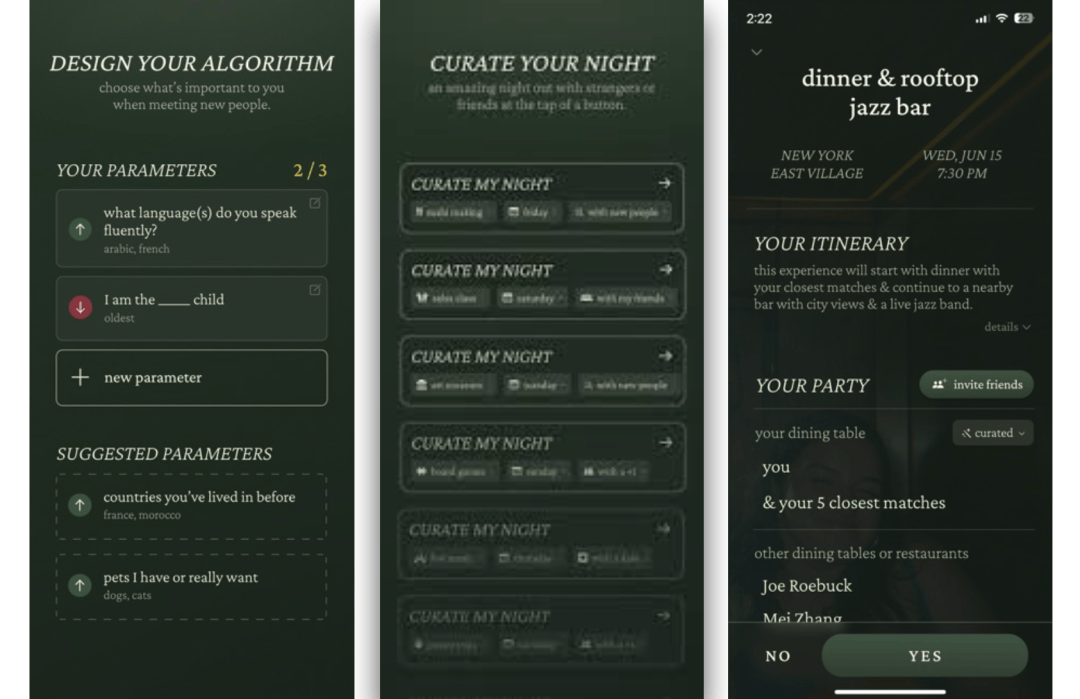
Currently, Pie is only available in Austin, Chicago, and San Francisco. This limited availability may be due to the app’s early stage, but it also suggests that user adoption is concentrated in specific urban centers with strong community cultures.
Timeleft
Timeleft matches users with four others based on age, gender, and personality. Users learn only minor details—like occupation and zodiac sign—on the night before a dinner date.
Dinners take place every Wednesday at 7:00 p.m. at a selected restaurant. The app includes a conversation game to help break the ice. After dinner, there’s an after-party at a local bar.
Users pay for a ticket upfront and cover their own dinner and drinks. Pricing varies by country and restaurant. The app’s structure—dinner followed by an after-party—creates a natural flow for conversation, reducing the pressure of starting a dialogue from scratch.
Washed Up
Washed Up launched in early 2026 and is designed for people in the Los Angeles area. It helps users discover local events like concerts and trivia nights.
Users can create or join ‘plans’—small group meetups tied to specific events. They can browse, request to join, chat with the group, and add new friends, making it easier to attend events with others.
By structuring events around small, manageable groups, the app reduces the pressure of being the only person at a gathering. This design supports a more inclusive and welcoming social environment.
Wyzr Friends
Wyzr Friends is designed for adults aged -than 40, including empty nesters and divorced individuals. Users can thumbs up or down potential friends and arrange activities based on shared interests.
Available in the U.S., Canada, Australia, Ireland, the Philippines, Singapore, and Mexico, the app supports users seeking connection through shared hobbies like movies or hiking.
Its focus on older adults highlights a key demographic shift: people are not just seeking friendships to fill time—they are seeking meaningful, reciprocal relationships that support emotional well-being.
Mmotion
Mmotion blends location tracking with social discovery. Upon joining, users can join interest-based groups—such as hiking, basketball, or art—and view a map of active users.
It highlights new places on the map, making it easy to find restaurants or venues. The app is currently only available in New York City, with users required to apply to join.
By combining real-time location data with interest-based groups, Mmotion offers a dynamic, interactive way to discover new social circles. This feature is especially useful for users who live in dense urban environments and want to explore nearby communities.
Synchrony
Launched in March 2026, Synchrony is designed for neurodivergent adults. It was founded by a mother of a son on the autism spectrum to create a safe, supportive community.

Features include interest-based matching and two-step identity verification—requiring both the user and a trusted person to verify personal details and a photo ID during registration.
It includes an optional AI tool called Jesse, which helps users navigate conversations. Jesse offers editable prompts, clarifies topics, and suggests boundaries. It avoids providing medical advice.
After a 30-day free trial, users pay $44.99 per month. The app is available on both iOS and Android. The inclusion of AI tools tailored to neurodivergent users reflects a growing effort to design technology that is not only accessible but also respectful of diverse cognitive and emotional needs.
Market and User Response
According to Appfigures, over a dozen local-focused friendship apps have generated about $16 million in U.S. consumer spending this year. The total number of downloads across these apps is estimated at 4.3 million so far in 2025.
These figures suggest growing user interest. However, the apps vary in availability, features, and pricing. Some are limited to specific regions or user demographics, such as neurodivergent adults or older adults.
For instance, while Meetup has a broad user base, apps like Synchrony and Wyzr Friends target niche demographics. This diversity indicates that users are increasingly seeking platforms that align with their specific identities and needs.
Limitations and Open Questions
Many of these apps are still in early stages. Some are limited to specific regions or user demographics, such as neurodivergent adults or older adults.
While the apps reduce social awkwardness, they do not guarantee meaningful connections. Users may still face challenges in forming deep, lasting friendships.
Privacy and data use remain concerns. Apps that pull data from platforms like TikTok or Ticketmaster may raise questions about how personal information is shared and stored.
There is no official data on long-term user satisfaction or retention. The success of these apps depends on how well they balance convenience with genuine human connection.
What to Watch Next
As more apps enter the market, users will likely see increased competition and innovation. Features like AI-driven matching, location-based events, and inclusive design are expected to evolve.
Future developments may include expanded geographic reach, better integration with real-world events, and deeper support for diverse identities and needs.
For now, the apps represent a growing response to rising loneliness—a trend that continues to shape digital social tools.
Original source: TechCrunch
Sources & further reading
Featured image: 5 friends with smartphones, close up.. Via original publisher. Image source