

The oil market sent a clear signal this week that a massive release of stockpiled crude by the U.S. and its allies is nowhere near enough to address the unprecedented supply disruption triggered by the Iran war.
More than 30 nations in Europe, North America and Northeast Asia agreed to flood the market with 400 million barrels of oil in an effort to keep a lid on rising energy prices. The U.S. is leading the effort with a release of 172 million barrels from its Strategic Petroleum Reserve or 43% of the IEA total.
It is the largest release of stockpiled oil in the 50-year history of the International Energy Agency, an organization tasked with maintaining the energy security of its members during global crises.
But the oil bazooka is not inspiring confidence in the market. Crude prices have surged more than 17% since the IEA announced the emergency stockpile release on Wednesday. Brent oil prices, the international benchmark, closed above $100 on Friday for the second session in a row.


Brent crude oil futures in the past five days
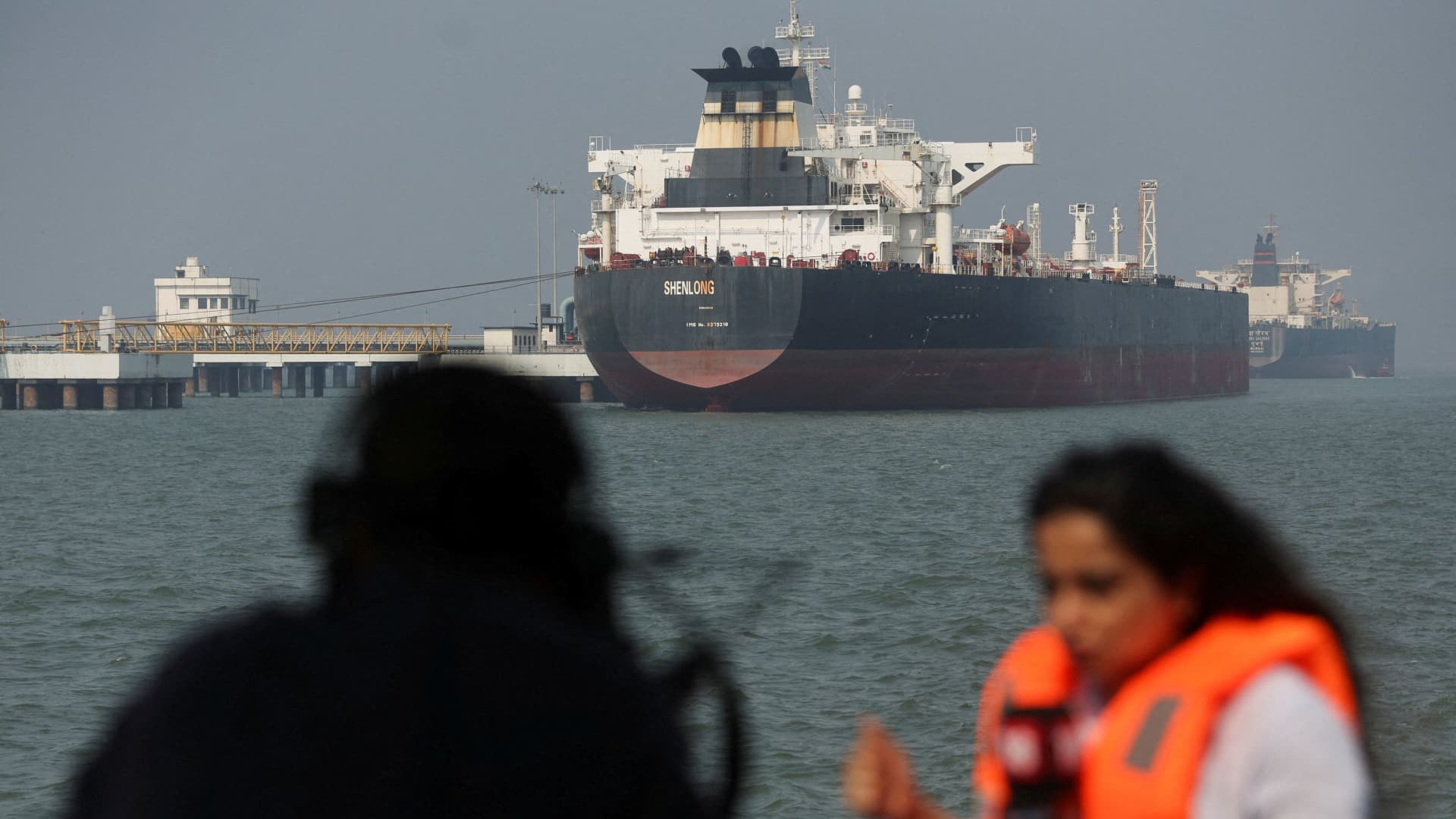
The explanation is simple, said Tamas Varga, analyst at the London-based oil broker PVM. Tankers are under attack in the Persian Gulf, the critical Strait of Hormuz remains basically closed, and Iran’s new supreme leader has vowed to keep the trade chokepoint shut.
“Until transit is reactivated, those kinds of policy announcements are going to have limited impact,” said Tom Liles, senior vice president of upstream research at consulting firm Rystad Energy.
Saudi Arabia, Iraq, Kuwait and the United Arab Emirates exported around 14 million barrels per day (bpd) before the war, Liles said. Around 5 million bpd to 6 million bpd can be exported through Saudi and UAE pipelines that terminate at the Red Sea and Gulf of Oman, he said.
This leaves around 9 million bpd, or about 10% of global supply, that can only pass through the Strait and will remain bottlenecked in the region until transit resumes, Liles said. At first glance, the 400 million emergency barrels would cover about 40 days of that lost supply, the analyst said.
But the reality is a lot more complicated, Liles said. “There’s only a limited amount of volume that can be released over a given period. It’s not as if 400 million barrels just appear immediately on the market,” he said.
Stockpiles not enough
The oil supply disrupted by the war is far larger than the stockpiles the IEA can release daily. As a consequence, the action will have limited impact on the trajectory of oil prices, analysts at Bernstein told clients in a Thursday note.
The U.S. will release 172 million barrels over a 120-day period. This implies 1.4 million barrels per day, which is just 15% of the supply lost due to the Hormuz closure. It takes 13 days for the barrels to hit the market from President Donald Trump’s authorization.

The IEA did not detail when the other members would start releasing barrels or in what quantities. It said each of its 32 member countries will decide based on circumstances appropriate to them.
The IEA last released emergency stockpiles in response to Russia’s invasion of Ukraine. Its members managed to reach a combined high of 1.3 million bpd in September 2022, according to consulting firm Rapidan Energy. The IEA could perhaps boost the release rate closer to 2 million bpd, according to Rapidan.
“It buys time, but it does not solve the crisis,” the Bernstein analysts said.
It is possible that oil prices could rise to levels that start lowering demand before the stockpile release even fully kicks in, Liles said. Rystad forecasts that a two-month war will push Brent oil prices to $110 per barrel by April. A four-month war could spike Brent to $135 per barrel by June.
Depletion risk
The IEA members also risk depleting their stockpiles. The 400 million barrels slated for release represents 33% of the 1.2 billion barrels in member-state stockpiles. The 172 million barrels the U.S. plans to release represents 41% of the 415 million currently held in the Strategic Petroleum Reserve.
U.S. Energy Secretary Chris Wright said Wednesday that the White House plans to more than replace the oil that it is releasing with 200 million barrels within the next year at no cost to the taxpayer.
The IEA action also does nothing to address the 20% of liquefied natural gas exports that are unable to reach the global market due to the Strait’s closure. LNG is a form of natural gas that is chilled into a liquid and loaded onto tankers for export. Natural gas is used for electricity production and heating.
The stockpiles will partially alleviate the oil shock from the war, said Tobin Marcus, head of U.S. policy and politics at Wolfe Research.
“But it does not by any means obviate the need to reopen the Strait, and we don’t think much more help is coming after this,” he said.