Many people feel like they don’t belong. They stand apart from the crowd, not fitting into social norms or group behaviors. This experience—being an outsider—is not just a personal feeling. It has deep psychological and spiritual roots.
The Weight of Being an Outsider
Being an outsider means feeling different. It means not fitting in. It can mean being seen as odd, strange, or even dangerous.
For those who have lived this way, it is not a temporary phase. It is a lifelong condition. It shapes how they see the world and how they relate to others.
Author Aletheia Luna, who has lived as an outsider for most of her life, shares that she has rarely felt like she belonged. Even when she found small pockets of acceptance, they were often among people who were also different—introverts, neurodivergent individuals, or deeply sensitive people.
She writes that this kind of isolation is not just lonely. It is emotionally painful. It creates a deep sense of melancholy, a feeling of being seen as an outsider in a world that claims to value belonging.
What Outsiders Learn About Belonging
True belonging begins with self-awareness. An outsider, by definition, is someone who does not conform to mainstream expectations. This distance from the crowd often leads to deeper self-reflection.
When someone is not trying to fit in, they are more likely to ask questions. They are more likely to explore their inner world. This leads to a stronger understanding of who they are.
Brené Brown observes that true belonging is not something achieved through relationships. It is something carried within. It starts with self-acceptance. Without that, any connection to others remains superficial.
For outsiders, this means that belonging is not about being accepted by others. It is about being at peace with oneself. This self-knowledge is rare and powerful.
Consider the example of a person who grows up in a family that values conformity and social performance. They may spend years trying to meet expectations—smiling at the wrong time, saying the right things, avoiding conflict. When they finally begin to see themselves clearly, they realize that their true self has been suppressed. The moment they stop trying to please others and begin to listen to their inner voice, a shift occurs. They no longer feel like they are performing. They feel like they are living. This is the moment of true belonging.
Outsiders are often the first to notice when a relationship is not authentic. They can see through the surface-level interactions and recognize when someone is hiding behind a mask. This ability to detect inauthenticity comes from lived experience. It is not a skill learned in therapy or school. It is a natural outcome of being on the outside.
Outsiders See Through Social Deception
Groupthink is a powerful force. It shapes decisions in schools, workplaces, and even politics. People often follow the crowd, not because they believe in something, but because it feels safe.
Outsiders are less influenced by this pressure. They are not pulled into the same social currents. This gives them a different perspective.
For example, the recent trend of mothers using ghost filters to scare children is widely criticized. It reflects a form of groupthink—where behavior is normalized because it is shared. Outsiders, by stepping back, see such actions as harmful and absurd.
They are less likely to justify violence or cruelty simply because it is common. This critical distance allows them to see reality more clearly.
Historically, groupthink has led to some of the most tragic outcomes in human history. In the 1930s, for instance, many leaders in authoritarian regimes justified extreme policies by claiming they were acting in the interest of national unity. The public was not questioned. The dissent was silenced. The truth was buried. Outsiders—those who did not conform to the dominant narrative—were often the first to see the danger. They were the ones who spoke out, even when it cost them their livelihood or safety.
Today, we see similar patterns in social media. Algorithms promote content that confirms our beliefs, creating echo chambers. People are not exposed to opposing views. They are not challenged. This is a modern form of groupthink. Outsiders, who consume diverse information and question assumptions, are better equipped to recognize when a narrative is being manipulated.
Deeper Empathy for Others
Outsiders often feel the pain of others more deeply. They have lived through the same isolation, the same fear of being judged.
When someone is an outsider, they understand what it is like to be unseen, to be ignored, to feel invisible. This empathy is not theoretical. It is lived.
For instance, a therapist who grew up in a family that emphasized silence and emotional repression may have a deeper understanding of how trauma manifests in relationships. They can see the patterns—avoidance, emotional withdrawal, defensiveness—because they have experienced them firsthand. This allows them to respond with compassion, not judgment.
Similarly, a person who has lived with chronic anxiety may recognize the signs of panic attacks in others. They can offer support not because they are trained, but because they have walked the same path. This kind of empathy is not performative. It is rooted in personal experience and emotional resonance.
Outsiders Are More Creative
True creativity does not thrive in crowded environments. It requires solitude, focus, and freedom from social expectations.
When people are pulled into daily routines and social roles, they lose the ability to think freely. Creativity, by nature, challenges the status quo.
It is often seen as strange or disruptive. It looks different. It breaks rules. It is not what society wants to see. Outsiders, by nature, are more likely to embrace this kind of thinking.


For instance, a person dressed as a banana dancing at a formal gala is not fitting in. But that act—unconventional, bold, joyful—may be the spark of a new idea or art form.
Consider the work of artists like Frida Kahlo or Pablo Picasso. Both were seen as outsiders in their time. They rejected traditional forms of art and created works that were deeply personal, emotionally raw, and visually revolutionary. Their creativity did not emerge from social approval. It came from a place of inner truth. They were not trying to conform. They were trying to express what they felt.
Another example is the rise of digital art and memes in the 2010s. These forms of expression were initially dismissed by mainstream art institutions. They were seen as trivial or unserious. But over time, they became powerful tools for cultural commentary. The creators of these works were often outsiders—people who did not fit into traditional art circles. They used humor, absurdity, and satire to challenge dominant narratives. Their creativity was not polished or academic. It was raw and immediate.
Outsiders Are More Spiritually Aware
History shows that many of the world’s greatest spiritual figures were outsiders. They lived on the edges—deserts, mountains, caves.
They sought connection with something beyond the world. They received visions, messages, and insights. These were not learned in classrooms. They came through solitude and silence.
Archetypes like the wanderer, the shaman, the mystic, and the hermit all represent the outsider. They are not part of the mainstream. They are on a journey to reconnect with the deeper truths of existence.
Jesus said, ‘Be in the world but not of it.’ This is a call to distance. To remain aware, to stay awake, to not be fully absorbed by daily life.
One of the most powerful examples is the life of Ramana Maharshi, a Hindu sage who lived in a remote cave in India. For decades, he remained silent, meditating in solitude. His teachings were not delivered through lectures or books. They came through deep, personal experiences. People who sought him did not find answers in classrooms. They found them in silence, in stillness, in the absence of noise.
Similarly, the indigenous traditions of the Amazon and the Arctic have long honored the role of the outsider—the shaman, the healer, the one who walks between worlds. These figures are not part of the official structures of society. They operate outside of systems of power. Their wisdom is not taught in schools. It is passed down through personal experience and ritual.
Is Being an Outsider a Curse or a Gift?
It depends on how one views it. The experience can feel like a burden—loneliness, rejection, isolation.
But it also brings depth. It brings insight. It allows for a more authentic connection with others. The pain of being different can lead to a deeper understanding of what it means to belong.
Outsiders may suffer more. But they also have access to a deeper well of inner wisdom. This wisdom is not found in popularity or conformity.
They learn to value authenticity over approval. They learn to see the world not as it is presented, but as it truly is.
For example, a person who grew up in a highly competitive academic environment may have learned to suppress their emotions to succeed. As an adult, they may struggle with emotional regulation. But when they step into a community of others who also feel isolated, they realize they are not alone. They begin to heal not through fixing themselves, but through recognizing their shared experience. This is the power of outsider connection.
What This Means for You
If you have ever felt like you don’t belong, you are not alone. You are part of a long tradition of people who have seen beyond the surface.
Being an outsider does not have to be a flaw. It can be a strength. It can be a path to deeper self-knowledge and connection.
One of the key takeaways is this: you do not need to change who you are to find belonging. You only need to accept yourself as you are.
For those seeking deeper inner work, the Soul Work Compass Course offers a 12-step path to self-discovery. It helps readers understand their core values, heal past wounds, and build a personal compass for life.
For those who want to explore inner healing through journaling, the Inner Work Journal Bundle includes over 150 prompts for self-love, inner child healing, and shadow integration.
These tools are not for everyone. They are for those ready to go beyond surface-level comfort and begin real transformation.
Author Aletheia Luna is a psychospiritual writer and intuitive guide. Her work draws from personal trauma and recovery, supported by study in transpersonal and contemplative traditions. Her writings have been featured in Psychology Today and on The Mind’s Journal and Tiny Buddha.
She writes from lived experience. Her insights are not abstract. They come from a life shaped by being different, by being seen as odd, by being deeply sensitive.
What is your greatest challenge as an outsider? What is your greatest gift? Share your thoughts in the comments below.
Sources & further reading
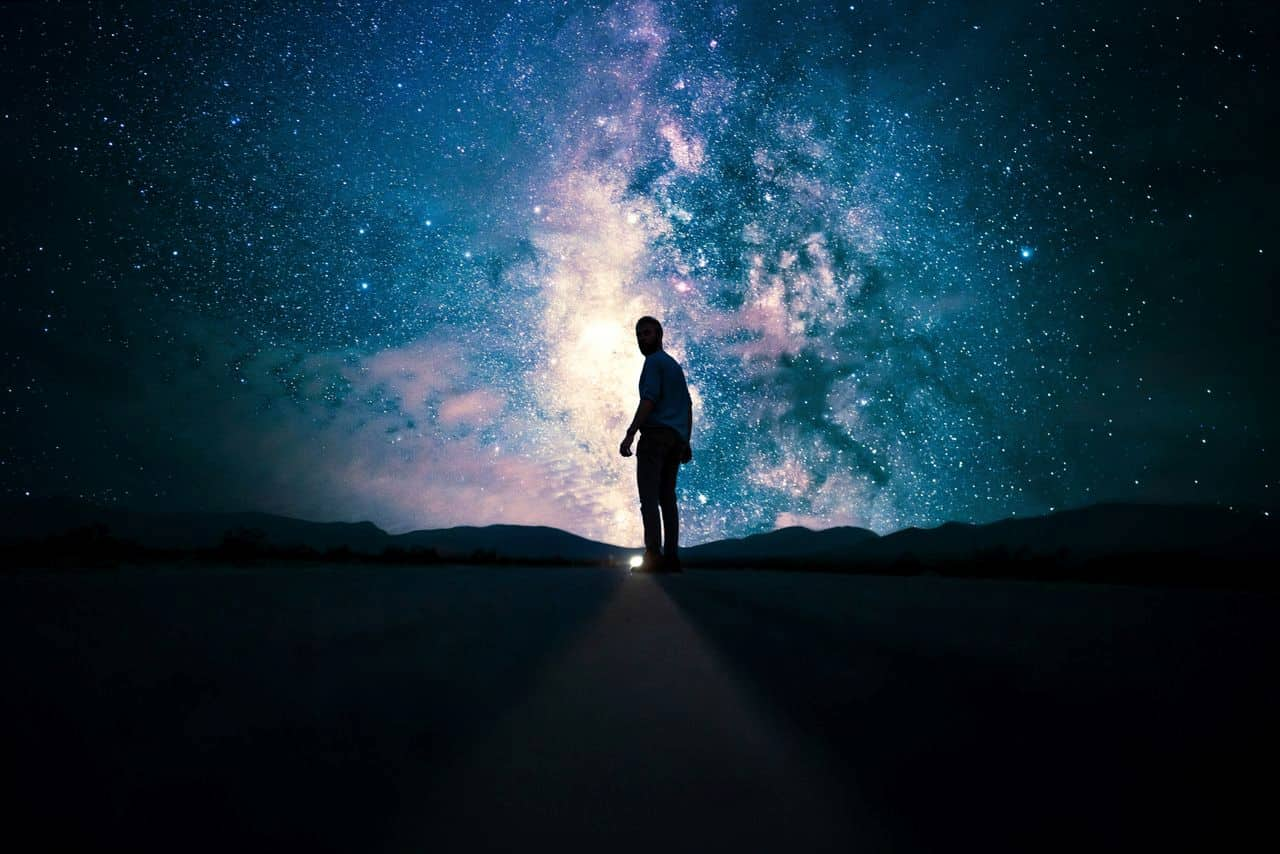
Featured image: image of a man underneath the milky way symbolic of being an outsider. Via original publisher. Image source