Writer-director Beth de Araújo created the film Josephine after witnessing a traumatic event as a child. The movie draws directly from her own memory of a sexual assault she saw at age eight.
What Happened in the Park
On a Saturday morning when she was eight, Araújo and her father were playing soccer in Golden Gate Park near San Francisco. They heard a woman scream. Her father, a former Olympic runner for Brazil, told her to stay behind and ran toward the sound. Araújo, alone and frightened, followed him into a clearing where she found a woman, naked from the waist down. She didn’t understand what had happened, but felt a deep sense of unease.
Her father quickly shifted into a performance of normalcy. He put on a face, energy, and made it seem fun. Araújo found it deeply dissonant. ‘I was like: “This is so weird. Why is my dad being so extra fun right now?”’ That moment became a key theme in the film, echoing Josephine’s confusion and emotional disconnect.
Josephine’s Childhood Experience
The film features an eight-year-old girl named Josephine, played by newcomer Mason Reeves. Josephine sees a woman tuck her hands under her legs to stop them from shaking—a gesture of distress. She doesn’t understand the violence or the power dynamics. Her father, Damien, played by Channing Tatum, seems eager to return to their soccer game. This mirrors Araújo’s memory and reflects a parent’s attempt to normalize trauma.
Family Silence and Emotional Aftermath
The family never spoke about the incident. Araújo overheard conversations about the assault, the trial, and the fact that the perpetrator was released from prison when she was fifteen. These fragments stayed with her. She began checking home locks and often woke up anxious. Her sleep was disrupted by a constant, low-level fear.
In 2014, a stranger groped her in a theater. That incident pushed her into functional hypervigilance. After 20 years, she finally asked her father about the park event. He said he didn’t explain it to her because he didn’t want to scare her. ‘With his best intentions, of exactly how he wanted to protect me and love me, the exact opposite occurred,’ she recalled. ‘I became much more scared.’
Writing the Film: A Vomit Draft
After that conversation, Araújo wrote a ‘vomit draft’—a literal regurgitation of the trauma she had carried for decades. She described it as purging something that had festered for years. ‘I needed to purge it out of me,’ she said. The result was Josephine, which premiered at Sundance and won both the grand jury prize and audience award. The film’s power lies in its authenticity—its honest portrayal of a child’s confusion and fear.

How the Film Evokes a Child’s Mind
Araújo asked: ‘Can I transport the audience back to being de-assimilated, to a time before they knew what sexual violence was?’ She learned about it through personal experience. Josephine begins to see all boys and adult intimacy with hostility. Her parents try to help, but their responses are flawed. Her mother, Claire, played by Gemma Chan, tries therapy—without success. Damien insists such an event won’t happen to Josephine and enrolls her in self-defense classes. These efforts fail to address the emotional core of her trauma.

Araújo says both parents are well-intentioned but ineffective. ‘The lack of control must feel horrifying,’ she said. ‘Because you love this person so much and yet you can’t control them starting to learn and experience the darkness of this world.’ This tension forms the film’s emotional core. It reflects real struggles parents face when trying to talk about sexual assault.
Why the Film Shows the Rape Scene
Unlike many films, Josephine shows a full, graphic account of what Josephine sees from the bushes. The scene was shot so Mason Reeves sees nothing—preserving her innocence. Viewers fill in the blanks, but the reality of what she experiences is clear. Araújo said, ‘I just felt like if we didn’t fully see what Josephine sees, the audience would lose connection to her fear.’ This decision was shaped by her work as a witness advocate in San Francisco.
Real-World Influence on the Film
Araújo trained as a witness advocate in San Francisco, supporting victims in getting rape kits within 72 hours of an assault. She also worked at the LA Rape and Battering Hotline. There, survivors often said they wish they had fought back more—only to find that doing so made things worse. As a witness advocate, she learned that survival is the first goal. The film honors that principle—showing Josephine’s focus on staying safe, not fighting back.
Legal Accuracy in the Trial Scene
The film’s second half follows Josephine as the sole witness in a rape trial. Two judges, two public defenders, and two prosecutors reviewed the script. Female public defenders are often assigned to defend men charged with rape—a detail that adds complexity. In the film, the perpetrator’s lawyer suggests Josephine saw consensual role-playing. Araújo said, ‘I’ve had such a challenging time trying to wrap my head around him pleading not guilty. I never testified in court, and I think part of why I wrote that in was to say what I know is true.’
Healing or Transformation?
Araújo resists calling the film a story of healing or catharsis. ‘I don’t think anyone ever fully heals from sexual violence,’ she said. ‘You become a different person—and that person can continue.’ This view is both honest and necessary. The film’s release coincides with a personal milestone: ‘This year, I’m sleeping through the night. That’s very meaningful in my life.’
What to Watch Next
Josephine is now playing in US and UK cinemas and in Australia on 18 February.
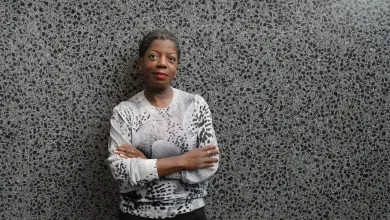
For a deeper look at how trauma shapes storytelling, see Thelma Golden’s transition at the Studio Museum.
For more on the impact of sexual violence in film, explore the Guardian’s original reporting on the making of Josephine.
Sources & further reading
Featured image: original publisher image. Via original publisher. Image source