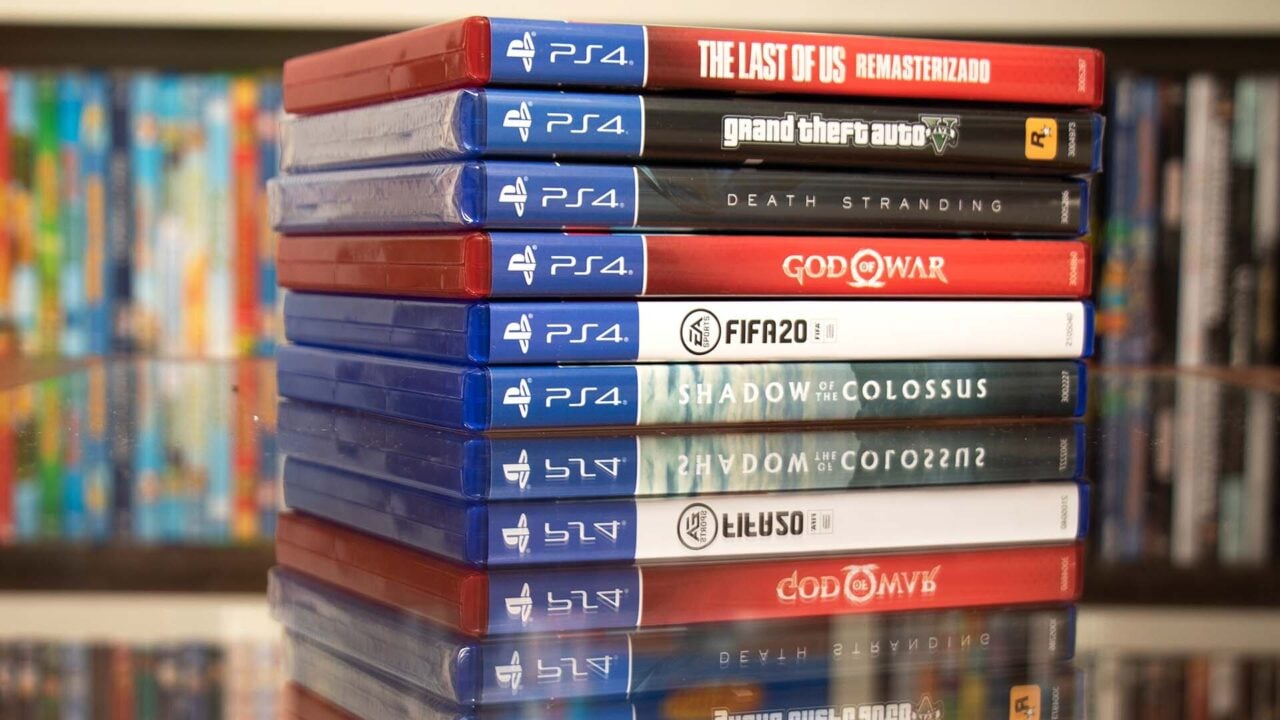
Sony is ditching physical discs for good, starting in 2028, and a lot of people are deeply unhappy about it. Understandably so.
A lot of groups have brought up the many, many issues with Sony’s decision, but I’m going to start by throwing to DoesItPlay?, a community focused on video game preservation and cataloging what and how games are available, especially those with online components. The group summarized the issues pretty well in a lengthy but thorough statement when I reached out for comment.
Sony’s decision to discontinue physical media entirely goes against everything we stand for. And it will potentially have catastrophic consequences for the entire industry. The obvious bits are that Sony effectively erased ownership on their closed system, and will have a monopoly over distribution and pricing as a result. The ripple effect goes deeper, though. Basically erasing the second hand market, it will lock some players out of the platform, if they can’t afford the prices set. It will also reduce word of mouth, and therefore, discoverability, which will result in potentially lower sales for all games. Developers already complain about the abysmal chances to be discovered in digital storefronts like PSN or the eShop. The same effect happens when games can no longer be found at brick and mortar retail.
In addition, this will pose a challenge for developers and stores to stay in business. Entire business models will be heavily compromised in that space. Developers have also already stated that the option of a physical release was a motivation to bring their games to PlayStation in the first place, both because there is a larger audience as well as seeing their own work immortalized like that (see tweet from Billy Basso, creator of Animal Well). So Sony is even alienating those who are supposed to make the content that keeps its platform relevant.
That’s still not all, though. Press and many creators depend on monetization like affiliate marketing. If there are less games to advertise or if certain affiliate partners have to close shop entirely, it kills important revenue for all types of media. This will certainly affect us too, although we can already say that we won’t be going anywhere. We still have a lot of work to do for our mission, even beyond 2028.
The larger problem is that many still don’t care or even know about the consequences. Rising prices through a monopolized storefront and removed content thanks to the complete lack of customer protection legislation will bite customers in the long run. Sony themselves even set the scene a few days before with the second time Studio Canal movie purchases were set to be removed in September without any compensation. Actions like this are currently challenged by courts and on the political level by movements like Stop Killing Games. We need those efforts to succeed now more than ever. Otherwise, we will be entirely at the mercy of corporations who see customers as nothing but little wallets to drain.
Wow, that seems like it sucks! It’d be great if someone could do something about this, wouldn’t it?
Like maybe that big overarching video game industry trade body we’ve got in D.C.? Maybe it might have something to say here? You know, the folks whose job it is to go to the government and push for regulation and policies that could potentially make sure companies like Sony can’t just rip our bought and paid for video games out of our hands on a whim?
Well, I can tell you definitively that the Entertainment Software Association does not have anything to say. I asked, and it declined to comment on either Sony’s move, or the topic of “digital ownership” more broadly.
I’m not surprised by this. Look, I get it. The ESA is literally composed of the leadership of the biggest video game companies, Sony included. It’s not going to say anything as a body that would be detrimental to one (or, most likely, multiple) of its members. For all it says on its website about existing to, among other things, “protect consumers,” that’s never going to come at the expense of corporate profit. Because the ESA lives or dies regardless of whether you or I own our video games outright. But if the profit dries up, so too does the ESA.
But while unsurprised, I am pretty frustrated. Because you’d also want to believe that the ESA, an amalgamation of all the major companies that make and publish games, would be at least a little bit invested in what’s good for the medium overall, a notion that one hopes would include as many people as possible being able to continue to afford and enjoy video games. Because if just you or I are forced to pay a premium for a single game, it doesn’t matter in the grand scheme of things. But if huge groups of people are priced out, pushed out, or otherwise disengaged with what the industry as a whole is doing, then everyone suffers together. You’d think that, even for purely selfish reasons, the ESA would have something to say about all this, even if it’s as simple as a “we’re working with our members to ensure…” type of thing.
Instead, the ESA has actively been hindering real efforts to ensure that all games remain accessible to all people. I wrote about some of this back in 2024, covering a hearing for an amendment that would make digital video games available for legitimate researchers doing legitimate work: you know, the absolute barest minimum level of digital game protection that could be offered to anyone. But the ESA as a body dug in its heels, refusing to even consider workarounds or compromises offered by the Software Preservation Network to help ensure their proposal wasn’t used for piracy. At the time, I reached out to all 30 members of the ESA for comment, and only XSEED responded. No one else wanted to talk about it.
And that’s just for researchers! Doing legitimate academic research! It doesn’t even touch the problem of making sure that games, like books and music and movies and every other form of art, is available in libraries for the general public to enjoy, even if they can’t afford Sony’s upcoming $1000 or whatever console. It doesn’t do anything about the aforementioned problem of someone buying that $1000 console, buying an $80 game for it, and then suddenly one day discovering they don’t own that game anymore, as if someone barged into their house and robbed them of it. What are we going to be doing about that? For the time being, no one at the level of influence and authority claimed by the ESA seems to know, nor care.
When Sony made its announcement yesterday, I reached out to Frank Cifaldi, executive director of the Video Game History Foundation, which has been working on this problem for years now. Cifaldi conceded that Sony’s decision “doesn’t have as much of an impact as you might expect” on historical game preservation, but only because the VGHF and other organizations have been trying to find ways to deal with the growing withdrawal from physical games for years now. “The vast majority of video games produced over the last two decades were not made for dedicated home video game consoles, let alone pressed to physical media,” he said. “And even when they were released on physical media, a day-one digital patch was all but guaranteed, meaning that even though a disc is preserving data in an accessible way, it may not represent the game that people actually played.”
But Cifaldi, like me, is flummoxed by how flippant the industry writ large seems to be about the slow death of physical games.
What continues to baffle us is what the industry expects institutions like ours to do about it. If platform owners are deciding to eliminate physical media and older digital storefronts, then we need trade groups like the Entertainment Software Association to offer meaningful solutions for archives and museums to legally preserve digital-only content and make it accessible for research. Everyone agrees this is a serious problem, but the ESA has repeatedly opposed the efforts of cultural heritage institutions to reform digital copy protection laws to make it easier to do this work. The industry needs to meaningfully come to the table on this issue, because expecting museums to download a copy of Grand Theft Auto VI and hope it’ll run in 50 years is not a preservation solution. In the end, the industry and those who love games will suffer which we’re hoping can be avoided if action is taken by stakeholders.
I don’t really know what to do about this! We can’t count on our government (certainly not here in the U.S.) to be proactive about consumer and cultural protections, especially given how few of our leaders seem to either know anything about how video games work, or care about people playing them (or otherwise). It seems like the only people we can rely on, long-term, are our collective selves: on researchers, preservationists, groups of dedicated fans, and yes, like it or not, pirates, to keep video games alive as a cultural artifact and as an art form that everyone deserves to have access to.
As the director of a historical video game preservation institution, and someone who has dedicated his entire adult life to this cause, this is accurate. We have attempted to work with the industry’s trade organization to find a legal path forward, but they refuse to offer a meaningful alternative.
— Frank Cifaldi (@frankcifaldi.bsky.social) 2026-07-01T18:45:54.133Z
If the ESA, or any of these major companies, want to put forward a better and more equitable solution to all this, I’d love to hear it.