The Week That Will Show Washington’s AI Party Is Over Source: wsj.com.
For the first time in years, U.S. lawmakers are turning their attention to artificial intelligence in a way that signals a shift in policy direction. The focus is not on innovation, but on oversight.
What Happened
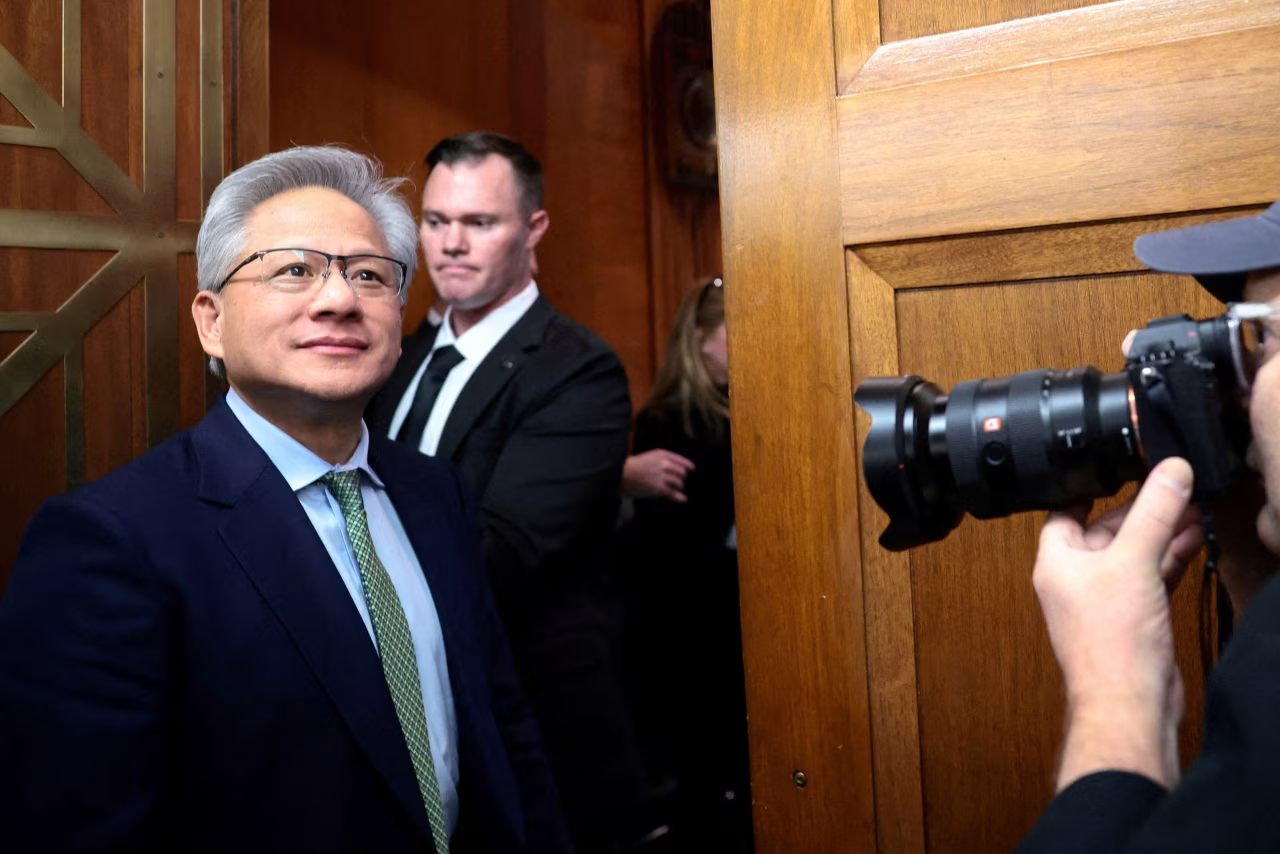
Jensen Huang, CEO of Nvidia, is set to return to Washington, D.C., under intense congressional scrutiny. His visit comes as lawmakers prepare to examine AI-related regulations more closely.
The move follows a period of rapid AI development, during which Nvidia’s chips became central to training large language models and generative AI systems.
Key Facts
- Jensen Huang has been absent from Washington for over a year, during which AI adoption surged.
- His return is expected to coincide with hearings on AI safety, data privacy, and national security.
- Regulatory bodies are drafting rules to govern how AI systems are deployed in government and public services.
Background: How It Works
Nvidia’s GPUs have powered much of the world’s AI infrastructure. From cloud providers to research labs, the company’s technology underpins AI development.
As AI systems grow more powerful, concerns have risen about their use in surveillance, misinformation, and autonomous decision-making.
Lawmakers argue that without clear rules, AI could outpace regulatory frameworks.
Why It Matters
This week marks a turning point. The congressional hearings may signal the end of what has been called the ‘AI party’—a period when tech leaders and policymakers largely avoided strict regulation.
Experts say that if Congress passes meaningful AI oversight, it could set a precedent for how other emerging technologies are governed.
For Nvidia, the visit is both a personal and corporate milestone. Huang’s presence may influence how the company responds to policy demands.
Limitations and Open Questions
There is no official timeline for the hearings. The scope of regulations remains undefined.
Some lawmakers have expressed skepticism about overregulation, fearing it could stifle innovation.
Others warn that without clear standards, AI risks becoming unaccountable or opaque.
Industry groups have not yet issued unified statements on how they expect to comply with new rules.
What to Watch Next
Key developments to track include:
- Whether the hearings include testimony from AI developers or researchers.
- How the final regulations address AI in healthcare, law enforcement, and education.
- Whether Nvidia will release a public statement on its compliance with new rules.
For those following the tech sector closely, this week could define the future of AI governance in the United States.
For more on Nvidia’s recent leadership shift, see Nvidia Reinstates Jensen Huang as CEO.
For a critical perspective on the risks of AI deals, see The Danger of Jensen Huang’s Handshake Deals at Nvidia.
As AI becomes more embedded in daily life, the balance between innovation and accountability will be tested.
Sources & further reading
Featured image: original publisher image. Via original publisher. Image source