About a month ago, when Donald Trump spoke at a conference for Saudi Arabia’s sovereign investment fund, it was hard not to notice the complexities of the circumstances. On the one hand, Riyadh has helped steer the White House’s policy in Iran. On the other hand, the president’s son-in-law, having already received billions of dollars from Saudi Arabia, recently turned to the Middle Eastern country for more money for his private investment firm.
All the while, Saudi officials remain focused on private dealings with Trump’s family business, as the Republican extended his public support to the sovereign investment fund, ignored Pentagon concerns about selling F-35 fighter jets to Saudi Arabia and designated Saudi Arabia a “major non-NATO ally” as part of a new security agreement.
The trouble is, it’s not just the Saudis.
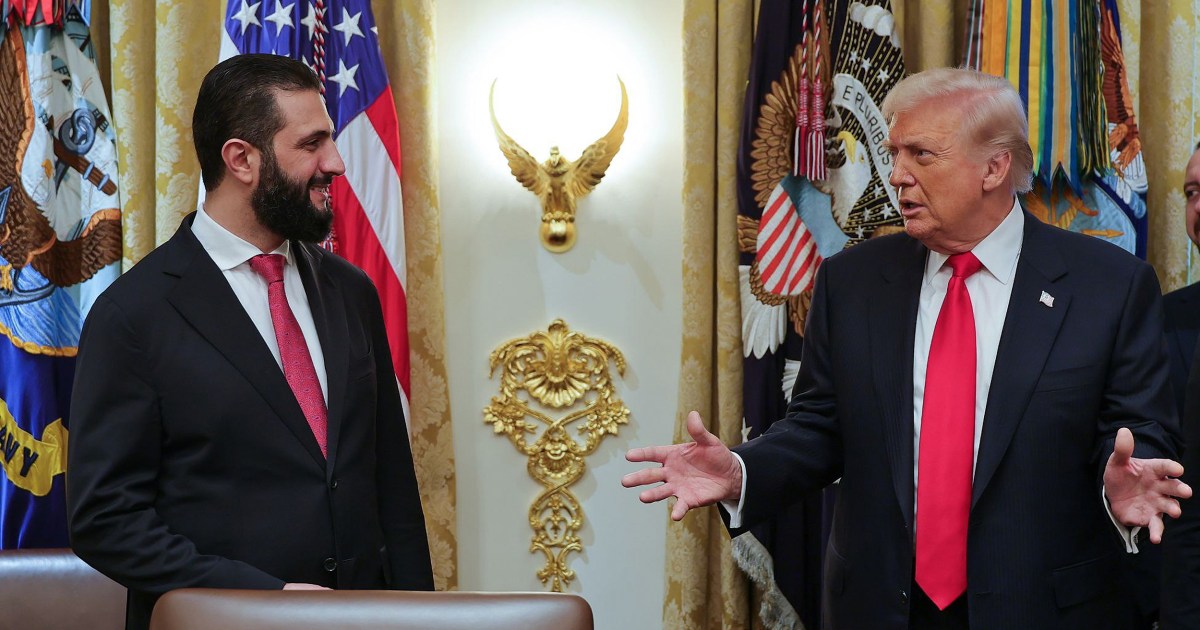
The New York Times reported on wealthy interests in Syria with ambitions plans for the nation’s future who needed the U.S. to drop the economic sanctions that crippled the country during Bashar al-Assad’s reign. One Syrian-born businessman, Mohamad Al-Khayyat, secured a meeting with Republican Rep. Joe Wilson of South Carolina, who recommended that plans for a luxury golf course carry the Trump Organization brand as a way of getting the American president’s attention.
The Times’ report, which has not been independently verified by MS NOW, added that the businessman was way ahead of the congressman. He’d already planned to propose a Trump-branded resort. The same businessman’s brothers, who enjoy the backing of Thomas Barrack, the American president’s special envoy to Syria, were also negotiating a real estate partnership with Ivanka Trump and Jared Kushner.
The Times summarized the broader context nicely:
Such a mixing of personal and diplomatic affairs has long been the norm in Middle Eastern nations, where a small set of players have historically run, and profited from, their dominant role in society. But it has become the way Washington operates in Mr. Trump’s second term, too.
Business discussions involving the president’s family … are consistently blurred with important policy decisions or consequential nation-to-nation negotiations.
Not to put too fine a point on this, but developments like these aren’t supposed to happen in the U.S. If a foreign country wants a change in federal economic sanctions, it’s supposed to go through proper diplomatic and economic channels as part of a formal process to prevent corruption and potential conflicts of interests.
In 2026, that model has been torn down — and replaced with what the Times described as “a warped system of executive patronage,” which is awfully tough to defend.
The article added:
Mohamad Al-Khayyat returned to Washington late last year toting a special stone celebrating the proposed golf course, carved with the Trump family emblem. He presented it to Mr. Wilson in his Capitol Hill office to deliver to the White House. Mr. Al-Khayyat then joined meetings with other lawmakers to push the sanctions repeal.
Weeks later, legislation for a permanent repeal won approval in Congress and was signed into law by Mr. Trump in late December.
This was no doubt noticed by officials and monied interests elsewhere, sending a clear signal about how to interact with the U.S. government (at least until January 2029).
Steve Benen is a producer for “The Rachel Maddow Show,” the editor of MaddowBlog and an MS NOW political contributor. He’s also the bestselling author of “Ministry of Truth: Democracy, Reality, and the Republicans’ War on the Recent Past.”
-

-
-
-