Truman Capote, the celebrated American writer known for his literary depth and distinctive style, designed a beachside studio in Sagaponack, Long Island, specifically for work.
Capote’s Studio: A Workspace Built for Focus
The studio was not a luxury retreat. It was a dedicated workspace, stripped down to a shell after Capote purchased the property.
He transformed the structure into a minimalist office with a narrow, monastic setup: a table, a typewriter, and no distractions.
According to the original 1965 Vogue article, Capote worked in concentrated hours. He did not mix work and leisure. When he wasn’t writing, he enjoyed the quiet life—cruising the Mediterranean, dancing, or visiting friends’ homes.
Design Philosophy: Simplicity with Character
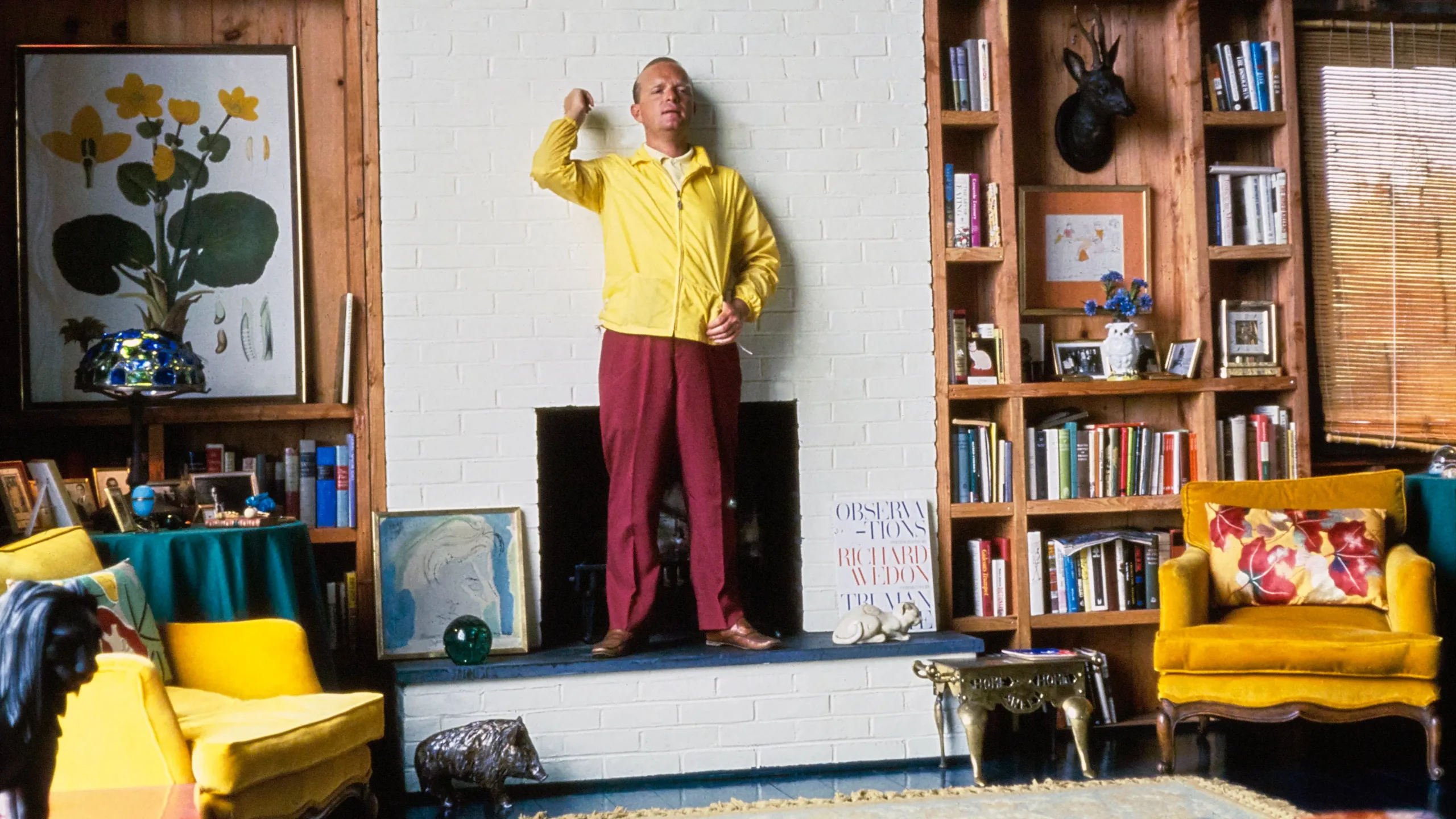
The studio reflects Capote’s personality—witty, complexly simple, and full of extravagant gestures.
It features bright, shining colors and raw wood finishes, giving it a sophisticated farmhouse look. These elements align with Capote’s broader aesthetic: polished, American, and grounded.
There were no guest rooms. The house was designed for solitude. When a friend came for lunch, Capote was seen marinating cucumbers—a detail that reveals his blend of play and domesticity.
Location and Isolation
The property sits on a strip of moor between wheat and potato fields, just a few hundred yards from the ocean.
The beach stretches four miles on either side. On the Fourth of July, Capote reportedly saw only three people walking along the shore—a testament to the area’s quiet, isolated character.
This solitude supported his creative process. The environment offered mental clarity and minimal interruption.
Legacy and Preservation
Some of Capote’s possessions, including items from this studio, are now set for auction. The original photographs of the studio were published in the November 1965 issue of Vogue.
The studio remains a significant piece of American literary history. It represents a deliberate choice—designing a space not for comfort, but for focused, uninterrupted work.
Capote’s approach to writing was not about routine. It was about intensity. The studio was a physical manifestation of that principle.
It is a rare example of a writer designing a workspace with purpose, not just convenience.
For those interested in the intersection of creativity and environment, Capote’s studio offers a compelling case study in how space shapes productivity.
Learn more about Capote’s life and work in the original Vogue article.
Sources & further reading
Featured image: original publisher image. Via original publisher. Image source