US lifts naval blockade, 60-day negotiation period beginspublished at 21:08 BST 18 June
 Jack Grey
Live reporter
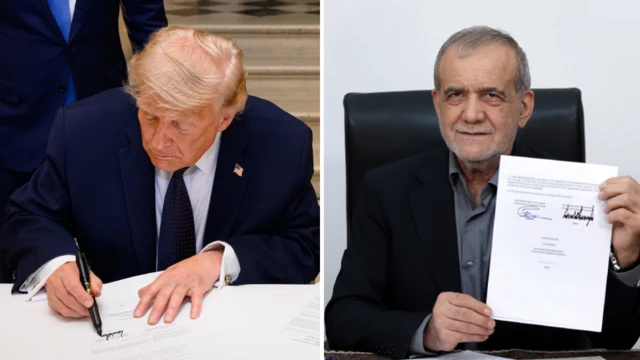 Image source, White House/X | Getty Images
The United States has lifted its naval blockade of Iran as the US-Iran deal starts to take effect after being signed on Wednesday.
The agreement centres around 14 key points, including the reopening of the Strait of Hormuz. You can read the full summary of the agreement here.
What the US has said
- “OIL IS FLOWING, IRAN CAN NEVER HAVE A NUCLEAR WEAPON,” wrote Donald Trump in a social media post praising the deal
- Later, the US president posted that he expects a ceasefire to take effect “on all fronts”, including between Israel and Hezbollah in Lebanon
- Vice-President JD Vance stressed that Iran would not receive any money as part of the deal unless it met the obligations set out by the US
Iran’s response to the deal
- Iran’s Supreme Leader Mojtaba Khamenei, in a statement, outlined how he initially disagreed with the deal but ultimately allowed it to go ahead.
- Khamenei also said that Trump came to the agreement “out of desperation”
- Iranian President Masoud Pezeshkian said that Iran “did not trade its dignity” in making the deal with the US, praising his nation’s diplomacy and “resilience”
Following the agreement, the US and Iran now begin a 60-day negotiation period to reach what is described in the agreement as the “final deal”.
But the formal signing ceremony scheduled for tomorrow in Switzerland is cancelled, according to Pakistan. Vance also said while the US is planning to go there to talk, the timing is now uncertain.
We’re pausing our live coverage for now, but you can read more in our online article.
You can also read our international editor Jeremy Bowen’s analysis on the deal, and why Iran believes its deal with the US leaves it stronger than before.
Iran’s security council says ships must apply to use Strait of Hormuzpublished at 20:54 BST 18 June
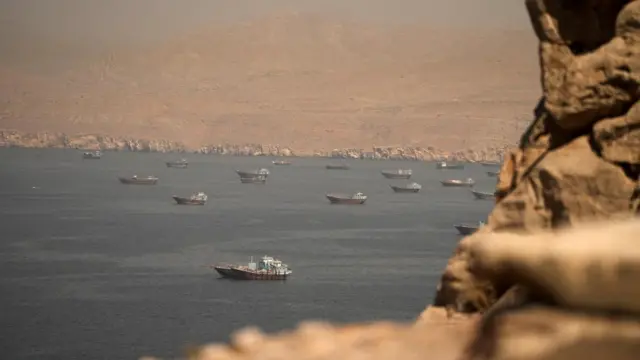 Image source, Reuters
Ships passing through the Strait of Hormuz must do so in co-ordination with Iran, according to the country’s national security council.
In a statement carried by Iranian state media, the council says tolls paid by ships will be suspended and covered by Iran for 60 days, under the Memorandum of Understanding agreed with the US.
However, ships must still submit an application through the recently established Persian Gulf Strait Authority, which Iran set up during the war to exert greater control over the key waterway.
Earlier today, US Vice-President JD Vance told reporters that international waterways should remain toll-free and that the strait should not be used as a “choke point” for the global economy again.

Trump goes further in criticising Israel than any US administration in modern historypublished at 20:33 BST 18 June
 Tom Bateman
US State Department correspondent
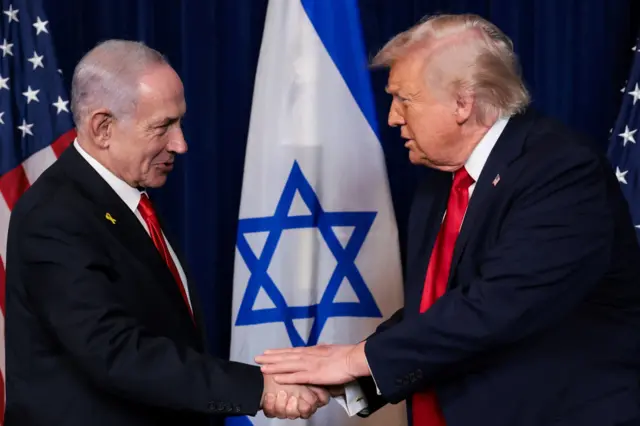 Image source, Reuters
JD Vance’s very public criticism of Israeli cabinet ministers today shows the depth of the Trump administration’s current displeasure with its key ally.
Trump this week accused Israel of using vastly disproportionate force by killing civilians in Lebanon during Israel’s attacks on the Iran-backed Hezbollah.
Vance told the New York Times that his message for ultranationalist ministers in Israel was “you can’t just kill your way out of” national security problems, before telling reporters that Israel was globally isolated and only Trump was backing the country.
All this cumulatively amounts to the sharpest public criticism from any US administration against Israel in modern history, and signals how angry Trump is that the Israel-Hezbollah conflict could spike his pact with Tehran.
But one further point: In an election year, Trump’s political and economic fate is deeply linked to the survivability of his deal.
Part of this very public row with Netanyahu is also about sending signals to his Gulf Arab allies – and to Tehran – that he is trying to honour the commitment he’s made to a truce in Lebanon.
As with the president’s hopes for the war itself, his row with Netanyahu may move to the “rearview mirror”, if and when his Iran deal stabilises.
Northern Israel residents ‘afraid of a disaster’ if troops withdraw from Lebanonpublished at 20:22 BST 18 June
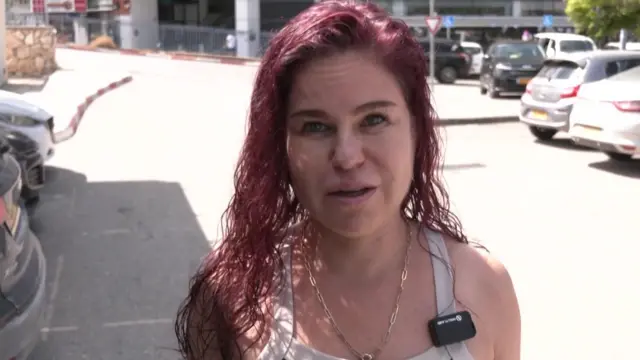 Image source, Reuters
Olga says the deal is a “disaster” for Israel
Meanwhile, in Israel, Olga, who lives in the town of Shlomi near the Lebanon border, says she is “afraid of a disaster”.
“I see no advantage in this [deal]. Not to the world and especially not to Israel,” she says.
Some Israelis have told Reuters they think their troops need to stay in a buffer zone – also known as the yellow zone – in south Lebanon.
“I’m afraid that the minute the army leaves the yellow zone, we’ll be in a very, very quick situation of 7 October all over again,” says Noa Rotem, who lives in Kibbutz Matzuva.
Hamas launched an attack on Israel on 7 October 2023. It was the deadliest day in Israel’s history and triggered the deadliest war in Gaza, which has killed 72,742 Palestinians, according to the Hamas-run health ministry.
Meanwhile, Esther Yaakobi, who also lives near the Lebanon border, says the agreement is “in favour of Iran”. “Hezbollah does not intend to stop the war and still wants to annihilate us.”
“The problem is southern Lebanon,” her neighbour Nissim Swissa says. “If they [the Israeli army] withdraw, we’re done for.”
Some Beirut residents ‘still don’t feel safe to go home’published at 20:01 BST 18 June
 Gabriela Pomeroy
Live reporter
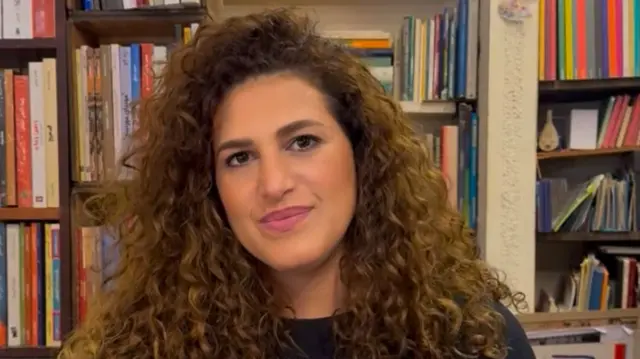 Image source, Lana Halabi
I’ve been speaking to residents of Beirut about their reaction to the deal between the US and Iran.
“I felt
relief,” says Lana, owner of the Halabi Bookshop in the city, when she heard news of the deal.
“But no one trusts that Israel will respect it.”
She says during the war, “we have had a lot of loss”. There are still “surveillance drones buzzing over our heads and displaced people sleeping in the streets here”.
When the war began, her parents had to leave their house in an area which borders the Hezbollah stronghold Dahieh, which has been frequently hit by airstrikes.
“They still don’t feel safe to go home.”
Lebanon could cause an even sharper rift between US and Israelpublished at 19:44 BST 18 June
 Jeremy Bowen
International editor
The memorandum of understanding signed lays out the political, military and economic consequences of the ill-judged decision to attack Iran on 28 February.
The human cost is already clear. Thousands have been killed, many of them civilians, in Iran and Lebanon.
The US, and by extension Israel, have suffered a strategic defeat.
The regime in Tehran faced its worst nightmare: a joint military operation to cripple or destroy it by the US, the world’s strongest power, and Israel, the Middle East’s superpower. The regime has not just survived. It has been empowered.
Its strategy of blocking the Strait of Hormuz, and with it one fifth of the world’s supplies of oil and gas as well as other vital components in the global economy, has forced Trump to agree to a series of concessions that have infuriated and alarmed America’s Iran hawks and the Israeli government.
The agreement calls for an end to the war in Lebanon. Israel says that cannot happen.
It wants a free hand in Lebanon, and that issue has the capacity to cause an even sharper rift between Israel and the US, and play into the hands of Iranian hardliners who oppose any deal with the Americans.
What has the Iran war achieved?
Amid US-Iran deal, questions remain over Lebanon conflictpublished at 19:31 BST 18 June
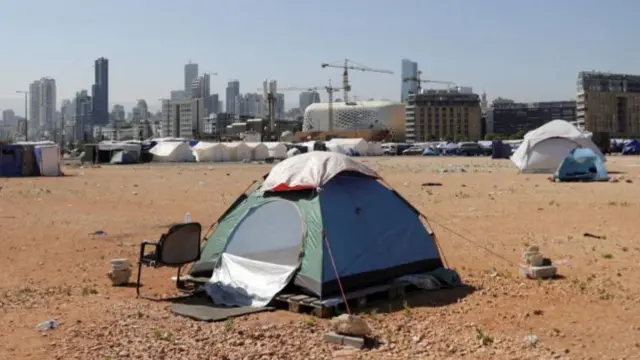 Image source, Reuters
A tent for displaced people near Beirut, Lebanon, on Thursday
Israel and Lebanon agreed to renew their fragile ceasefire at the beginning of June, and the US-Iran memorandum of understanding calls for the “immediate and permanent termination” of military operations in Lebanon.
But Israel argues that its conflict against Hezbollah – the Iranian-backed armed militant group based in southern Lebanon – is separate from its war on Iran, and should continue.
And both Israel and Hezbollah have carried out strikes against each other since the US-Iran agreement was announced. That includes some strikes reported in Lebanon this morning, where Lebanese state media said three were killed.
The upcoming negotiations in Switzerland between the US and Iran do not include Hezbollah, and the group has rejected the terms of the US-backed ceasefire between Israel and Lebanon.
So as peace negotiations begin, the truce leaves unanswered questions for Lebanon.
US expects ceasefire ‘on all fronts’, including Lebanon, says Trumppublished at 19:13 BST 18 June
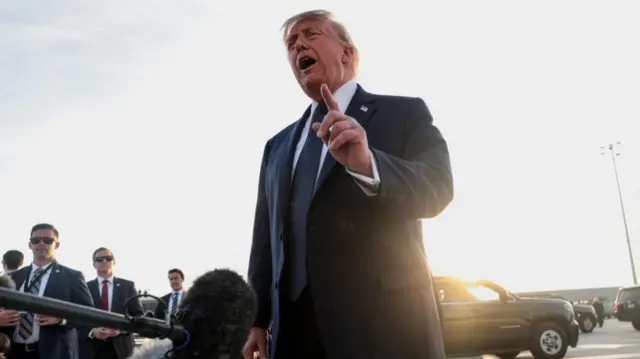 Image source, Reuters
Donald Trump says he expects a ceasefire to take effect “on all fronts”, including between Israel and Iran-backed Hezbollah in Lebanon.
In a new post on Truth Social, the US president says he expects countries in the Middle East to “maintain their commitment to allowing our negotiations” to take place.
“We expect a complete ceasefire on all fronts, including Lebanon, Hezbollah, and Israel,” he adds.
As a reminder, the first point of the US-Iran agreement declares the “immediate and permanent termination of military operations on all fronts, including in Lebanon”.
But Israel has said it has no plans to withdraw its troops from Lebanon, and it launched attacks in the south of the country today, according to Lebanese state media.
What does the latest message from Iran’s supreme leader tell us?published at 19:04 BST 18 June
 Ghoncheh Habibiazad
Senior reporter, BBC Persian
Reading between the lines of the message attributed to Iran’s supreme leader, which was read aloud on state TV, there are several key points beyond his apparent initial disagreement with the memorandum of understanding.
He referred to “in-person negotiations in the future” between Tehran and Washington, which seems to signal further talks between the two countries for now.
At the same time, he stressed that this “will not mean acceptance of the enemy’s position”.
He also spoke about “safeguarding the rights of the Iranian nation and the Resistance Front” – Iran’s allies and proxy groups in the region. Tehran has said any agreement with the US to end the war must also address the conflict in Lebanon, and this is reflected in the memorandum.
When it comes to implementing the agreement, he appears to place himself alongside the Iranian people, while implicitly assigning responsibility for its success to Iran’s president, the only official mentioned by name.
President Masoud Pezeshkian has supported the agreement, calling it a “historic document”.
Some Iranian officials, state media and pro-establishment figures have hailed the 14-point memorandum with the US as a victory, while hardliners and some in the diaspora opposition have remained critical.
- Here are the details in the 14-point memorandum
Trump made deal ‘out of desperation’ – full message from Iran’s supreme leaderpublished at 18:42 BST 18 June
Here is the full message from Iran’s Supreme Leader Mojtaba Khamenei published on Iranian media.
“As you have been informed, a memorandum of understanding was signed between the presidents of Iran and the United States of America.
“In the course of reaching this stage, the officials in charge, out of sincere concern and goodwill, made extensive efforts—and of course, it was the American president who, out of desperation, used all kinds of leverage to bring this about.
“I, as a matter of principle, held a different view; however, out of the commitment that the esteemed [Iranian] president—as the head of the Supreme National Security Council—gave to me on his own behalf and on behalf of the other members regarding the safeguarding of the rights of the Iranian nation and the Resistance Front, and his explicit acceptance of that responsibility, I granted my permission.
“He [Pezeshkian] also explicitly stated that if the American side seeks to make excessive demands, they will not submit to them. From this moment on, we—that is, you, the proud nation, and this humble servant—will await the realization of the aforementioned conditions.
“However, it’s self-evident that the in-person negotiations in the future will not mean acceptance of the enemy’s position. We hope the blessed prayers of our Master (may God hasten his noble reappearance) will bring all kinds of victories & triumphs to honorable Iranian nation.”
Iran’s supreme leader says he accepts deal despite holding ‘a different view’published at 18:39 BST 18 June Breaking
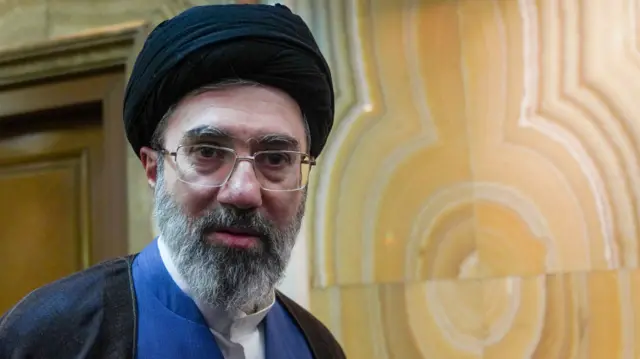 Image source, Reuters
Mojtaba Khamenei, now the Supreme Leader of Iran, pictured attending a meeting in Tehran in October 2024
We’ve now seen a message from Iran’s Supreme Leader Mojtaba Khamenei, published on state media.
He says he initially disagreed with the memorandum of understanding, but allowed it to go ahead after assurances from Iranian President Masoud Pezeshkian.
“I, as a matter of principle, held a different view; however, out of the commitment that the esteemed [Iranian] president—as the head of the Supreme National Security Council—gave to me on his own behalf and on behalf of the other members regarding the safeguarding of the rights of the Iranian nation and the Resistance Front, and his explicit acceptance of that responsibility, I granted my permission.”
We’ll bring you more on this soon.
Mojtaba Khamenei has not appeared in public since becoming supreme leaderpublished at 18:20 BST 18 June
Ghoncheh Habibiazad
Senior reporter, BBC Persian
Mojtaba Khamenei, 56, has not appeared in public since becoming supreme leader on 8 March, reportedly due to security concerns.
However, several written messages attributed to him have been published by Iranian outlets since then.
Iranian president Masoud Pezeshkian was the first official to speak publicly in May about a face-to-face meeting with Mojtaba Khamenei since his appointment as successor to his father, Ayatollah Ali Khamenei.
Ali Khamenei was killed in a US-Israeli air strike on his compound on 28 February. Mojtaba Khamenei was reportedly injured in the same strike.
Iran will hold funeral processions and burial for Ali Khamenei in early July.
Ali Khamenei said publicly weeks before his death that negotiations with the US were not “wise” and would not “resolve” the country’s problems.
It remains to be seen whether Mojtaba Khamenei will attend his father’s funeral.
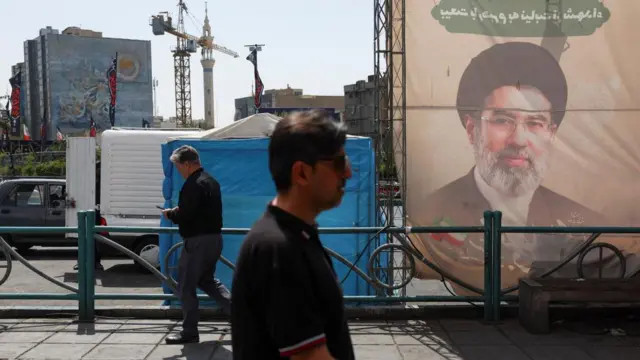 Image source, Reuters
Iran’s supreme leader to deliver ‘very important message’ soonpublished at 18:16 BST 18 June Breaking
Iranian state media say Supreme Leader Mojtaba Khamenei will deliver a “very important message” about the deal to Iranians soon.
It’s the first time Khamenei has responded to the agreement. We’ll bring you the latest as soon as we have it.
US confirms it has lifted naval blockade of Iranpublished at 18:07 BST 18 June
US Central Command (Centcom) has confirmed that the naval blockade on all maritime traffic entering and leaving Iranian ports has been lifted.
In a statement, it says “all US military blockade enforcement efforts have ceased” and that US forces are no longer “impeding the transit of vessels to or from Iranian ports” in the Gulf.
“Our great Naval Ships will remain in the general area to make sure that all aspects of the agreement are adhered to, obeyed and in full force and effect,” the statement concludes.
‘All there is for the US is success,’ Trump says on Iran dealpublished at 18:04 BST 18 June
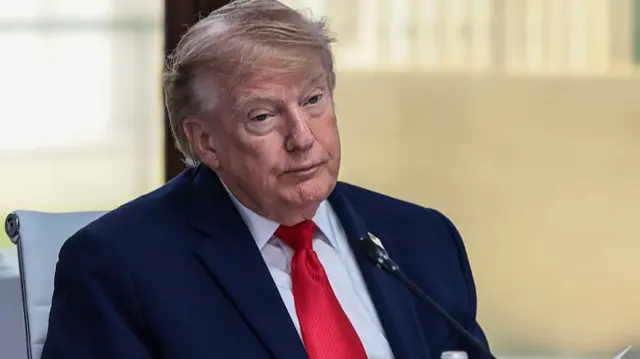 Image source, Getty Images
US President Donald Trump says there “is no 300 Billion Dollar payment to Iran by the US” in the agreement signed by the two countries.
“That’s Fake News!” he writes on Truth Social.
“All there is for the US is Success, Lower Oil Prices, and Victory. Check out the Stock Market. Dumocrat propaganda at play!!!” he adds.
For context: The text of the agreement states the US will work “with regional partners to develop a definitive, mutually agreed plan with at least USD 300 billion for the reconstruction and economic development of” Iran. However, it does not say the US will contribute to the fund.
Will White House look for other ways to present MoU as a win?published at 17:51 BST 18 June
 Daniel Bush
Washington correspondent
The administration’s messaging strategy around the Iran deal came into clearer focus at the news briefing on Thursday, where Vice-President JD Vance defended the memorandum of understanding amid growing criticism from Republicans in Congress.
Vance spent the 47-minute news briefing insisting again and again that the MoU doesn’t give Iran any benefits until the country proves it will be a good actor in the Middle East. That includes Iran following through on a commitment in the MoU to destroy its stockpile of enriched uranium, and showing it will not fund proxy groups in the region, Vance said.
Iran will see sanctions relief and other economic benefits only “if they comply fully and change their behaviour”, Vance said. The remarks echoed the way White House officials have been framing the deal for days, calling it a “performance-based” agreement.
That may be how the White House views the deal it signed this week. The US will certainly push Iran to make major concessions in the negotiations that are now under way to reach a final peace deal over the next 60 days.
But the messaging strategy – that the US played hardball, and Iran will only get rewarded for good behaviour – is not resonating inside the Republican Party. GOP lawmakers in the last 24 hours have been increasingly vocal in criticising the terms of the interim deal, a sign they view it much differently – and aren’t buying the White House sales pitch.
It will be interesting to see if Vance and other senior US officials stick to their initial argument over the coming days and weeks, or shift gears and search for other ways to frame the MoU as a win for the American people.
Vance defends US-Iran deal at White House news conferencepublished at 17:31 BST 18 June
Gary O’Donoghue
Chief North America correspondent, reporting from Washington DC
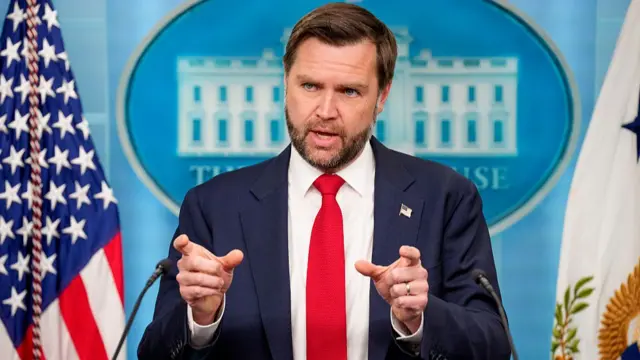 Image source, Getty Images
The memorandum of understanding between the US and Iran has now come into effect, triggering a 60-day period of further negotiations, JD Vance has told reporters at the White House.
The US vice-president had been due to travel to Switzerland for a formal signing ceremony and talks on the next phase of the deal tomorrow, but he suggested those plans were still up in the air.
“Our plan is to go to Switzerland. I don’t know exactly when,” he said.
Throughout the briefing, Vance repeatedly stressed that Iran would not receive any money or sanctions relief unless it met the obligations set out in the memorandum.
The vice-president also said he didn’t know the precise value of Iran’s frozen assets, but said they were worth “a lot”, citing a figure of “north of $200bn (£151bn)”.
Vance also hit out at some members of the Israeli government who had criticised Donald Trump over the deal.
He said that President Trump was “the only head of state in the entire world who is sympathetic to the nation of Israel at this moment in time, and he happens to be the head of state of the world’s superpower”.
It is clear that the vice-president is placing himself front and centre in this agreement with Iran, making himself very much the public face of it.
There is much speculation that he wants to succeed Donald Trump as the next president, and he is tying that ambition closely to the success of this deal.
Trump is the ‘only head of state sympathetic to Israel at the moment’, Vance sayspublished at 17:25 BST 18 June
Finally, Vance is asked about a report by the US news site Axios that Israeli Prime Minister Benjamin Netanyahu is “fuming” over the US-Iran deal.
The vice-president says that’s not reflective of his conversations with Netanyahu, but adds that what “does bother me” is criticism of the deal and of Trump by Israeli cabinet members.
He says his message to them is that “Donald J Trump is the only head of state in the entire world who is sympathetic to the nation of Israel at this moment in time”.
“The problem for Israel is not Donald J Trump; and anybody in Israel who thinks their biggest problem is the president of the United States needs to wake up and smell the reality of the situation that the country is in,” he concludes.
Vance on Switzerland trip: Our plan is to go, but not sure whenpublished at 17:21 BST 18 June
Vance says the plan is still to go to Switzerland for the Iran deal, but adds: “I don’t know exactly when.”
He says the negotiation is highly technical, so it’s important to have people on the ground to get into the “nitty-gritty” of talks.
“We think these technical negotiations are going to start sometime this weekend,” he says.
As a reminder, the official signing ceremony for the memorandum of understanding was set to take place in Switzerland on Friday. However, mediator Pakistan has told the BBC that the ceremony was cancelled because the deal has already been signed remotely.
US and Iran representatives are still expected to meet in Switzerland for further talks.
Vance says selling ‘a few million dollars worth of oil’ cannot change Iranian economypublished at 17:13 BST 18 June
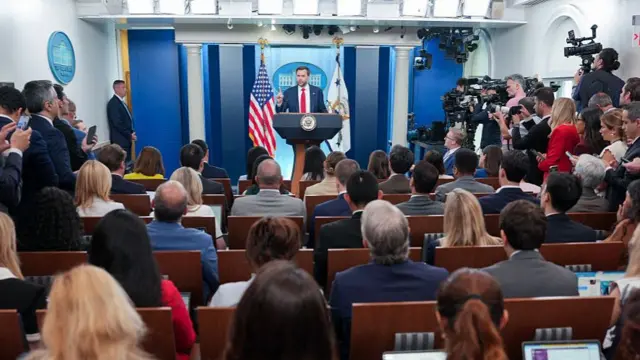 Image source, Getty Images
Vance is continuing to take questions from the press.
He’s asked whether Iran could make “tens of millions of dollars” by selling its oil – and if that would give the country a “lifeline”.
Vance replies that Iran’s economy is in “freefall” and it has “sky high inflation”.
He adds that the idea that Iran selling “a few million dollars worth of oil” is “going to fundamentally transform” their economy is “not true”.
“We can slap everything back on if the Iranians don’t make the deal we expect,” Vance says.