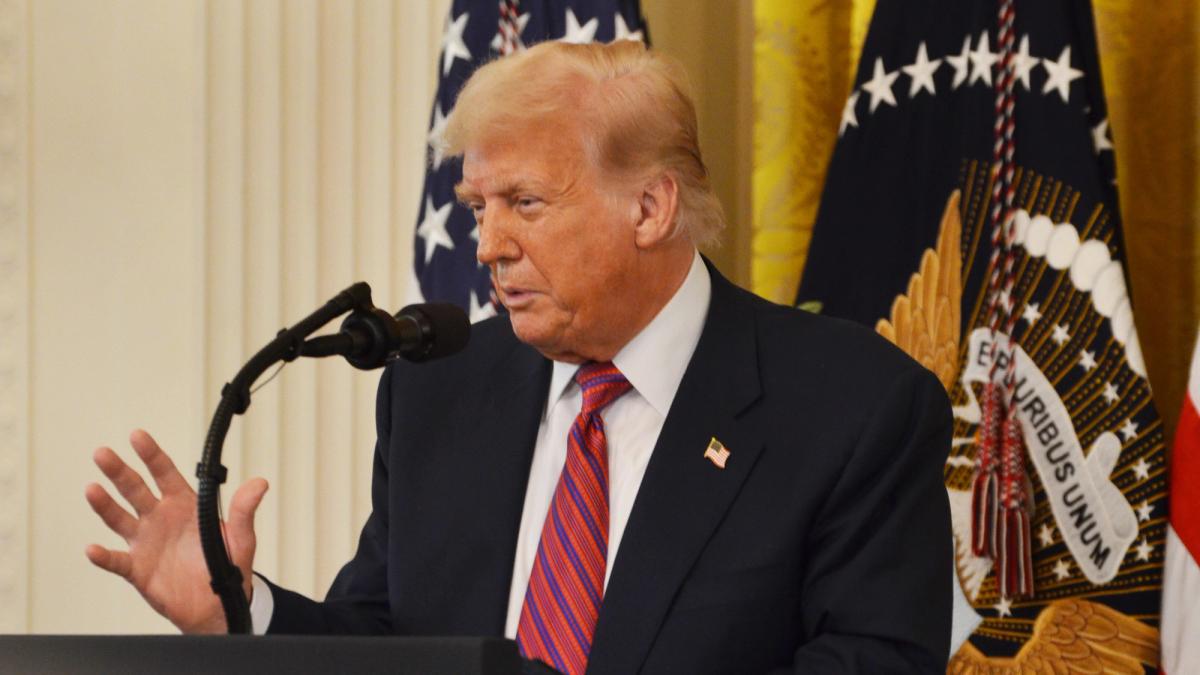
President Donald Trump is set to highlight U.S. efforts to combat overseas crypto-related scams at a White House event. Source: coindesk.com.
What Happened at the Event
On Wednesday, President Donald Trump hosted a White House event focused on cybercrime. The gathering will spotlight U.S. law enforcement actions against foreign criminal organizations that operate crypto-based fraud schemes. A White House official described the event as a ‘tangible demonstration of progress,’ emphasizing that the administration has taken measurable steps to disrupt transnational digital fraud operations.
Key figures from the Department of Homeland Security, the Treasury, and the FBI will participate. The discussion will center on real-world outcomes: U.S. authorities have halted approximately $833 million in fraudulent crypto transactions, and 503 fraudulent crypto websites have been seized through coordinated operations led by the Homeland Security Task Force. Officials have also informed nearly 9,000 U.S. citizens who were targeted by these scams, offering them resources and guidance to recover or report their losses.
Key Figures and Actions
- A White House official stated that U.S. authorities have halted about $833 million in fraudulent crypto transactions linked to overseas scams.
- Law enforcement agencies have seized 503 fraudulent crypto websites as part of operations coordinated by the Homeland Security Task Force.
- citizens have been notified of their status as victims of these scams, with support services being made available to them.
- According to a Treasury announcement in November, a multi-agency Scam Center Strike Force was established specifically to target ‘pig butchering’ scams—fraudulent schemes where scammers build fake relationships to lure victims into transferring funds.
- Since last year, the U.S. has imposed sanctions on websites and digital infrastructure associated with organized crime networks in Burma, Cambodia, Laos, and the Philippines.
The Scam Center Strike Force operates under a unified command structure, enabling faster response times and improved inter-agency coordination. These operations are designed to dismantle the operational backbone of criminal groups that use cryptocurrency to move illicit funds.
Background: How the Scams Work
Many of these scams rely on digital platforms to operate globally. Criminal groups set up websites and apps that mimic legitimate services—such as investment opportunities or dating platforms. Victims are lured through fake relationships or promises of high returns, often under the guise of legitimate business ventures.
Once funds are transferred, they are typically routed through cryptocurrency wallets that are not tied to traditional financial records. This makes it extremely difficult for authorities to trace or freeze assets. The decentralized and pseudonymous nature of blockchain technology allows scammers to operate with minimal oversight and rapid transaction speeds.
These operations often originate in countries with weaker regulatory frameworks. From these hubs, scammers launch attacks targeting U.S. citizens and businesses, exploiting trust and digital familiarity to gain access to personal financial information.
Why It Matters
These scams have stolen tens of billions of dollars from U.S. citizens over the past several years. The White House event aims to show that the administration is not merely making statements, but is actively pursuing real-world results. By highlighting specific figures—such as halted transactions and seized websites—the administration underscores measurable progress in combating digital fraud.
The event also signals a broader strategy: holding foreign actors accountable for cyber-enabled crimes that impact American citizens. This approach may influence how other nations respond to similar threats, especially as digital assets become more integrated into global financial systems.
Limitations and Open Questions
Despite progress, significant challenges remain. The global nature of cryptocurrency means that many of the tools used by scammers are hosted outside U.S. jurisdiction. International cooperation is essential, but it is often hindered by differing legal standards and political sensitivities.
Moreover, criminal networks are highly adaptive. They frequently shift platforms, use new technologies, or migrate operations to less monitored regions. As long as these networks remain decentralized and under-regulated, they will continue to evolve and exploit vulnerabilities.
Additionally, the president’s personal involvement in cryptocurrency has raised political concerns. As the congressional midterm elections approach, digital asset use has become a focal point of scrutiny. A congressional aide noted that ‘the administration’s actions are being closely examined for consistency with public accountability standards,’ while another official said that ‘the data presented reflects real, measurable progress in enforcement efforts.’
What to Watch Next
Following the event, the Treasury may release more details about the Scam Center Strike Force, including its operational scope and future targets. Updates on new sanctions or expanded operations could follow in the coming weeks.
Public awareness of these scams is expected to grow. More victims may come forward, leading to greater pressure on authorities to improve detection and recovery mechanisms. As digital assets become more common, the line between legitimate finance and criminal activity will remain blurred. This event marks one step in a broader effort to address that gap.
For more on how U.S. policy is shaping the crypto landscape, see Trump’s Iran Pledge Supports Crypto Gains Amid Bitcoin Recovery.
Sources & further reading
Featured image: original publisher image. Via original publisher. Image source