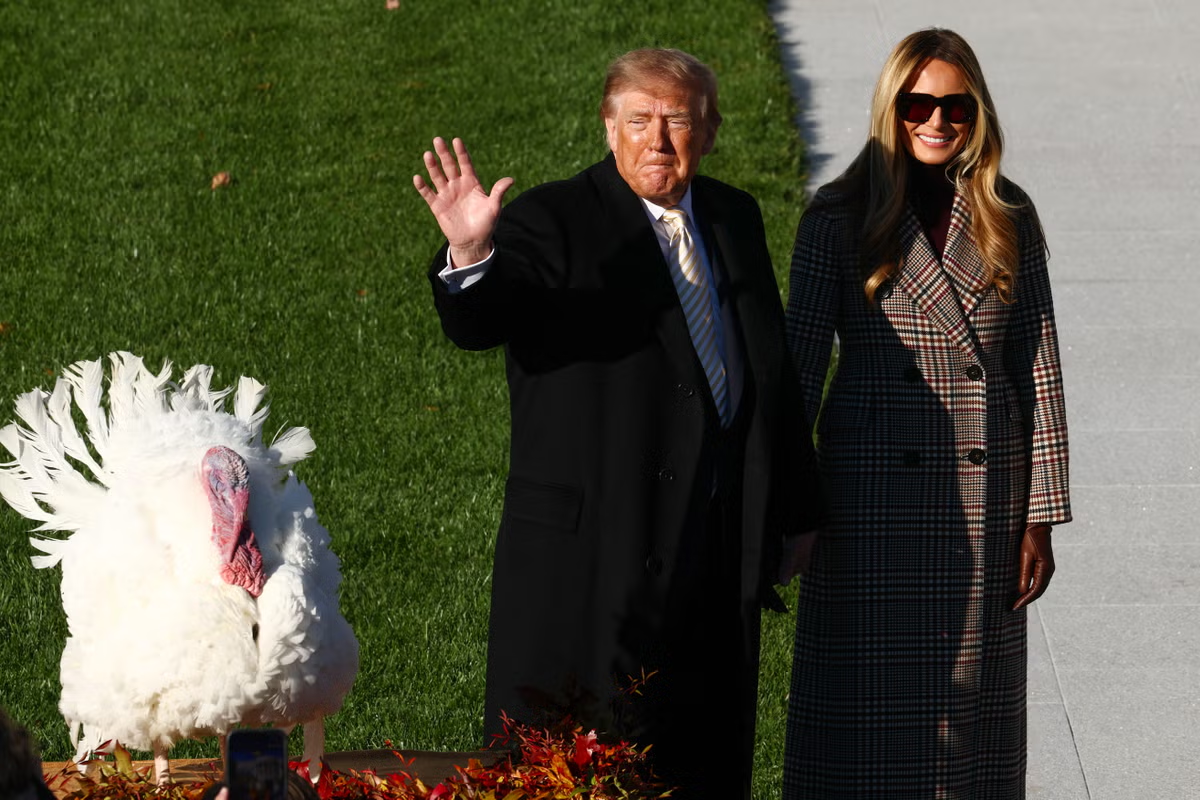
President Donald Trump spent Thanksgiving at Mar-a-Lago with a series of angry, unstructured posts on Truth Social. The posts transformed the holiday into what many have compared to Festivus, a fictional holiday from the 1990s sitcom Seinfeld. Festivus began as a satirical response to commercial excess, featuring grievances aired at a dinner table—exactly the tone Trump adopted in his early morning posts. Source: independent.co.uk.
What Happened
Trump opened the day with a message to political opponents, wishing them a ‘Happy Thanksgiving.’ The tone was festive but quickly shifted to a series of sweeping claims and personal attacks. His posts were made before most Americans woke, suggesting a pattern of late-night public commentary with little regard for factual accuracy or balanced context.
On the Economy and Iran
Trump claimed GDP numbers released before the election were ‘fake.’ He said they were corrected to show a 4.3% growth rate—up from an initial 3.4%. He called the revision a ‘record-setting error’ and demanded an investigation into the Commerce Department.
While the GDP is higher than the first estimate, economic data is typically released in two stages: an advance figure followed by a revised one. This process is standard and designed to improve accuracy. The Commerce Department has not admitted to any error. Independent analysts note the revision reflects normal statistical adjustments, not a major flaw.
Trump linked the Iran war—launched eight months before the midterm elections—to the Democrats’ gains in Congress. He said the war drove up gas prices, worsening inflation and the cost of living. However, experts point out that while the war has affected oil prices, broader inflation is shaped by many factors. No direct link has been established between the Iran war and rising inflation.
On Sharia Law and Political Misrepresentation
Trump accused Democrats of promoting ‘Sharia law’ after Michigan elected Abdul El-Sayed as its first Muslim U.S. Senator. He claimed El-Sayed was a ‘jihadist’ and demanded he pass through metal detectors at the Capitol before the election.
These claims have been widely disputed. No evidence shows El-Sayed or any Democratic official supports Sharia law. The U.S. Constitution does not allow Islamic law to serve as a legal system. The U.S. judiciary operates independently of religious law. The New York Times reported such allegations are baseless and part of a broader pattern of misinformation.
On Somali Immigrants and Welfare Fraud
Trump claimed only ‘2%’ of Somali Americans in Minnesota have jobs and do not rely on welfare. He said these individuals should be allowed to stay, while the rest should be expelled to save the state.
Prosecutors have charged some Somali Americans in Minnesota with welfare fraud. However, most defendants are individuals in specific cases, not representative of the broader community. Many Somali Americans in Minnesota say the accusations have unfairly damaged their reputation. Community leaders deny the generalization, noting most work in agriculture, construction, and service jobs.
Attack on the New York Times and David E. Sanger
Trump criticized journalist David E. Sanger, the Times’s chief Washington correspondent, for not covering his achievements. He called Sanger a ‘lowlife’ and claimed his article missed key accomplishments—like border closure, crime stats, tax cuts, and a naval blockade against Iran.
Sanger’s article focused on the market reaction to Trump’s push to reinstate Jensen Huang, CEO of Nvidia. Sanger warned that Trump’s habit of using market performance to validate decisions is 'risky business.' He noted that markets often react when outcomes fall short.
The New York Times said Sanger’s coverage is essential for understanding how presidential actions affect markets and foreign policy. The outlet emphasized that ‘noisy name-calling’ is a distraction from factual reporting.
Other Claims and Context
Trump also referenced a failed test in Iowa, where Army engineers detonated degraded lead azide. He blamed President Obama for failing to act. The incident was a routine safety test and did not represent a policy failure.
Meanwhile, President Obama was seen helping volunteers at a food bank in Chicago, wishing people a happy Thanksgiving. This contrast highlights differing public actions between the two administrations.
Trump’s posts were made during a period of sleep deprivation. The timing suggests a pattern of late-night commentary. His statements often blame external forces or opponents, downplaying his own administration’s role. While framed as personal, his rhetoric has real consequences—especially in how it shapes public views of immigrants, economic data, and foreign policy. Experts and journalists have challenged many of these claims. The New York Times and others have noted that many assertions lack evidence and rely on exaggeration or misrepresentation.
Sources & further reading
Featured image: original publisher image. Via original publisher. Image source