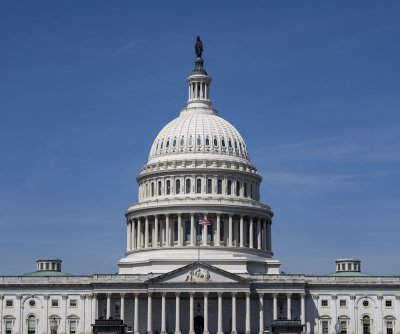
The U.S. Capitol building is seen in Washington, D.C. The Senate passed a bipartisan bill Monday aimed at lowering housing costs, sending it to the House of Representatives. File Photo by Bonnie Cash/UPI | License Photo
June 22 (UPI) — The U.S. Senate on Monday passed a bipartisan bill aimed at lowering housing costs, sending it to the House of Representatives for a final vote.
The Senate voted 85-5 to pass the 21st Century ROAD to Housing Act. Several senators missed the vote because of severe thunderstorms that affected Ronald Reagan International Airport, NBC News reported.
A deal on the act was negotiated by a bipartisan group including Sen. Tim Scott, R-Ariz.; Sen. Elizabeth Warren, D-Mass.; Rep. French Hill, R-Ark., and Rep. Maxine Waters, D-Calif.
Scott and Warren both said before the vote that it showed that common ground is possible.
“Today’s vote proves that it is possible to find bipartisan, common ground on legislation that actually helps the American people,” Warren said on the Senate floor, The Hill reported. “And, importantly, it proves that bipartisan legislation doesn’t have to be the weakest, most milquetoast agreement that doesn’t offend anyone or do too much to help anyone either.”
The bill’s provisions include measures that encourage renovating older homes, encourage communities to build more housing through funding and grant programs, cut some red-tape issues around building housing and effectively ban private equity from buying up single-family homes. It restricts companies that already own more than 350 single-family homes from buying more.
The act had been stranded for a time after the Senate passed one version in March and the House of Representatives passed a different version in May. The final bill includes provisions sought by the House and drops a provision it objected to that would have required large investors that own or construct at least 350 single-family homes to sell them after seven years.
Those voting against it included Sen. Rick Scott, R-Fla., who told The Hill that housing is “a local issue.” Scott said he wanted to see Congress balance the budget and drive interest rates down.
If the House votes to approve the bill this week as expected, it will go to President Donald Trump, who is expected to sign it.