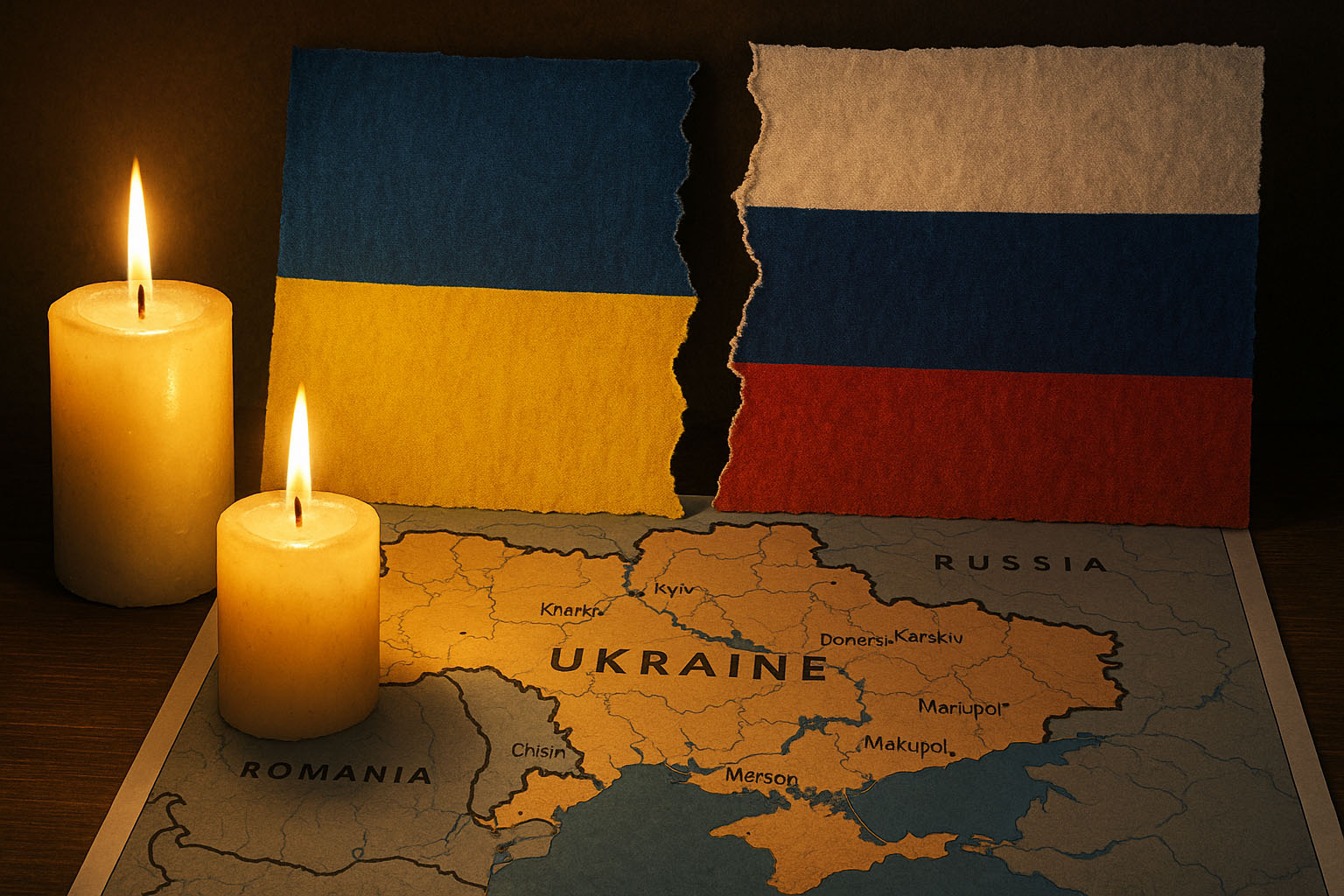
The Ukraine–Russia war, which began with Russia’s full-scale invasion on 24 February 2022, is now in its fourth year. What many expected to last weeks has turned into a long, grinding conflict reshaping security, politics and economies far beyond Eastern Europe. Encyclopedia Britannica+1
In late 2025, the war is still active on multiple fronts. Russian forces have made slow territorial gains in eastern Ukraine, while Ukraine continues to defend, strike deep behind the front lines and lobby for Western support. At the same time, new peace proposals and intense diplomatic pressure are emerging, especially from the United States and European allies. Reuters+4House of Lords Library+4CSIS+4

up-to-date overview:
- A concise timeline from 2022 to 2025
- The current battlefield situation
- The human cost in lives and displacement
- The state of peace talks and proposed deals
- How the war affects the rest of the world and what to watch next
1. How the war started: from 2014 to the 2022 full-scale invasion
The current phase of the war did not start from nowhere in 2022.
- In 2014, Russia annexed Crimea and backed separatist forces in parts of Donetsk and Luhansk, after protests in Kyiv removed Ukraine’s pro-Russian president. Fighting in eastern Ukraine never completely stopped. House of Commons Library+1
- On 24 February 2022, Russia launched a full-scale invasion from several directions – Belarus, Russia and occupied Crimea – targeting Kyiv, Kharkiv, southern ports and the Donbas region. Encyclopedia Britannica+1
Russia said it was conducting a “special military operation” to “demilitarise and denazify” Ukraine and protect Russian speakers. Ukraine and most of the international community condemned it as an unprovoked invasion and a violation of international law. Council on Foreign Relations+1
Key early events:
- Russian forces quickly captured large areas in the south and east, and advanced toward Kyiv, but failed to take the capital.
- By spring 2022, Ukraine pushed Russian forces back from Kyiv, Chernihiv and Sumy, forcing Moscow to focus on the east and south. Encyclopedia Britannica+2Reuters+2
2. Timeline highlights: 2022–2025
2022: Initial invasion and Ukrainian counterattacks
- Russia captured cities like Mariupol, heavily bombarding civilian areas; Ukrainian officials estimated tens of thousands of civilians were killed there. Reuters+1
- Ukraine launched counteroffensives around Kharkiv and Kherson, retaking significant territory by the end of 2022. Wikipedia+1
2023: Attritional fighting and limited progress
- Ukraine’s much-discussed 2023 counteroffensive in the south and east liberated some villages and pressured Russian supply lines, but did not break the Russian front.
- Russia dug in with fortified defensive lines, extensive minefields and artillery, turning much of the front into a war of attrition. Wikipedia+2Council on Foreign Relations+2
2024–early 2025: Long-range strikes and “industrial war”
- Both sides escalated drone and missile warfare, hitting energy networks, logistics hubs and industrial targets deep behind the front lines – in Ukraine and inside Russia. Council on Foreign Relations+2AP News+2
- Western analysis describes an “adaptation spiral” where both Ukraine and Russia rapidly innovate: drones, electronic warfare, cheap precision munitions and battlefield sensors. CSIS+1
Mid–late 2025: Slow Russian gains and pressure for peace
- In 2025, Russian forces gradually expanded control over parts of Donetsk and Luhansk, claiming full control of some areas and pushing Ukrainian defenders back from several settlements. House of Lords Library+2PBS+2
- Ukraine maintains local counterattacks and long-range strikes, but is under pressure from manpower shortages, ammunition constraints and war fatigue. CSIS+2Institute for the Study of War+2
- New peace proposals, including a controversial US-backed plan reportedly requiring Ukraine to cede occupied territory, are causing intense political debate in Kyiv, Moscow, Washington and European capitals. Al Jazeera+4The Guardian+4Reuters+4
3. The battlefield in late 2025: a long, grinding front
The front line in late 2025 stretches from northern Luhansk, through Donetsk, down towards Zaporizhzhia and Kherson. ArcGIS StoryMaps+3House of Lords Library+3Al Jazeera+3
Russian advances
- Russian forces have made slow but steady gains in parts of Donetsk and Luhansk oblasts, often capturing small settlements at high cost.
- The Institute for the Study of War and UK analysis describe a war that has shifted into a new phase, dominated by Russia’s larger industrial base and willingness to absorb heavy casualties. IISS+2Institute for the Study of War+2
Ukrainian strategy
- Ukraine aims to hold key defensive lines, especially around major cities and transport hubs.
- It uses long-range drones and missiles to hit Russian military infrastructure, oil depots, and logistics nodes in occupied territories and inside Russia. Council on Foreign Relations+2Wikipedia+2
- Kyiv continues to push for stronger Western air defence systems, artillery and ammunition to counter Russia’s advantage in shells and missiles. AP News+2The Guardian+2
Air and drone war
- Russia regularly launches missile and drone attacks on Ukrainian cities, power stations and ports. UN investigators have concluded that repeated drone strikes on civilians and civilian infrastructure in several regions constitute war crimes and, in some cases, crimes against humanity. Al Jazeera+3The Guardian+3UN Human Rights Monitoring Mission+3
- Ukraine responds with drone attacks on Russian territory, including border regions and military sites further inland. Council on Foreign Relations+2AP News+2
The result is a stalemated but intensely violent conflict, with neither side achieving a decisive breakthrough, but both suffering heavy losses.
4. Human cost: casualties, refugees and life under fire
Military casualties
Exact numbers are highly disputed and politically sensitive. Different Western and independent estimates suggest:
- By mid-2025, total military casualties (killed and wounded on both sides) may exceed 750,000–1,000,000. Russia Matters+2Wikipedia+2
- A June 2025 analysis drawing on multiple Western intelligence estimates suggested around 250,000 killed and 700,000 wounded combined, but emphasised uncertainty. Russia Matters+1
Russia and Ukraine both keep detailed official figures secret; public numbers are partial and contested.
Civilian casualties
- The UN human rights monitoring mission (OHCHR) recorded over 53,000 civilian casualties (14,500+ killed and 38,000+ injured) in Ukraine between February 2022 and 31 October 2025, while stressing that the real number is likely higher. Wikipedia+2UN Human Rights Monitoring Mission+2
- In recent months, hundreds of civilians per month continue to be killed or injured by shelling, drones and missiles, especially in frontline and major urban areas. UN Human Rights Monitoring Mission+2UN Human Rights Monitoring Mission+2
Displacement and refugees
The war has triggered Europe’s largest displacement crisis in decades:
- Around 6.9 million Ukrainian refugees have been recorded globally, and about 3.7 million people remain internally displaced inside Ukraine, according to UNHCR data from early 2025. UN Refugee Agency+2UNHCR+2
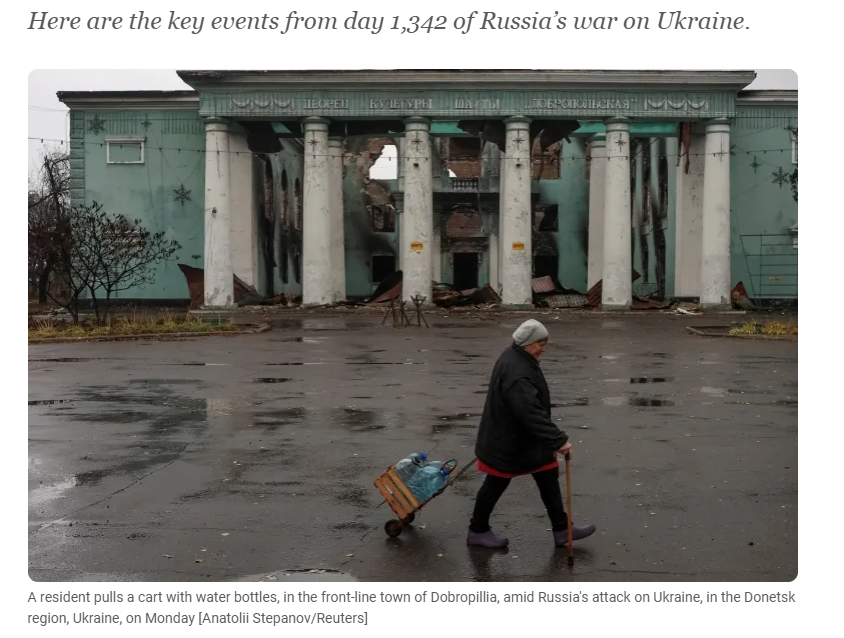
- Millions more live near the front lines under constant threat of attack, power cuts and economic collapse.
Despite this, some refugees have started to return to parts of Ukraine, even while fighting continues, trying to rebuild homes and businesses in relatively safer regions. UNHCR Data Portal+1
5. International response: aid, sanctions and war economies
Western support for Ukraine
- The EU, UK, US and other allies have provided tens of billions of dollars in military, financial and humanitarian aid since 2022. This includes air defence systems, artillery, armoured vehicles, training and budget support. Council on Foreign Relations+2CSIS+2
- Political debates in Western capitals periodically delay or limit aid packages, especially as war fatigue and domestic priorities grow.
Russia’s war economy and partners
- Russia has shifted onto a war economy, with military production driving what growth exists. Analysts note that Russian factories are increasing output of artillery shells, drones and armoured vehicles, often at the cost of civilian sectors. IISS+1
- Moscow seeks to bypass sanctions through trade with non-Western partners, including China, Iran, North Korea and others, who provide technology, drones or ammunition in different ways, according to Western intelligence reports. Council on Foreign Relations+2CSIS+2
Global ripple effects
The war has had global impacts:
- Energy prices and security: Europe accelerated its shift away from Russian gas and oil, while sanctions reshaped global energy markets. Council on Foreign Relations+1
- Food security: Interruptions to grain exports via the Black Sea have affected food prices, especially in parts of Africa and the Middle East. Council on Foreign Relations+1
- Security architecture: Finland and Sweden moved to join NATO, and European defence spending has risen significantly. Council on Foreign Relations+1
6. Peace talks and political pressure: what’s on the table?
As the war drags on, pressure for some kind of settlement is rising.
Ukraine’s position
President Volodymyr Zelenskyy has repeatedly said that Ukraine aims to:
- Restore its territorial integrity, including areas occupied since 2014
- Ensure security guarantees so Russia cannot simply attack again
- Hold those responsible for war crimes accountable under international law Council on Foreign Relations+2The Guardian+2
Kyiv has proposed a 10-point peace plan focusing on withdrawal of Russian troops, nuclear safety, food security and justice mechanisms.
Russia’s position
Russia has:
- Annexed (illegally under international law) four Ukrainian regions – Donetsk, Luhansk, Zaporizhzhia and Kherson – plus Crimea, and insists these areas are now part of the Russian Federation. Encyclopedia Britannica+1
- Demanded recognition of these territorial changes as part of any settlement.
Moscow presents the war as a defensive struggle against NATO influence on its borders, framing it as a “righteous battle”, in President Putin’s words. Al Jazeera+1
New peace plans and US pressure (late 2025)
In late 2025, a US-backed peace proposal reportedly pushed Ukraine to accept a settlement requiring territorial concessions and possibly limited NATO membership or security guarantees. Al Jazeera+4The Guardian+4Reuters+4
Key points from media reports:
- Ukraine would be asked to cede some currently occupied areas.
- Russia would formally halt offensive operations and accept some international monitoring.
- Western leaders are divided: some see it as a way to freeze the conflict; others warn it could reward aggression and leave Ukraine vulnerable. Reuters+2The Guardian+2
Ukrainian officials have publicly resisted any plan that forces them to give up territory under pressure, arguing that such a deal would be unacceptable to Ukrainian society after so much sacrifice. Reuters+1
7. How ordinary people are coping – in Ukraine, Russia and beyond
In Ukraine
- Many Ukrainians live with regular air raid sirens, power cuts and disruptions to heating and water, especially in frontline and major cities. UN Refugee Agency+3Al Jazeera+3AP News+3
- Communities organise bomb shelters, volunteer networks, field kitchens and humanitarian support for displaced people.
- There is a strong sense of national solidarity, but also exhaustion, grief and trauma after years of war.
In Russia
- Russian society has become more militarised, with ongoing mobilisation, propaganda and restrictions on dissent. IISS+2Wikipedia+2
- Some families are affected by repeated call-ups or losses in the army, while independent media and protests face tight controls.
Around the world
- Ukrainian refugees are building new lives in EU countries, the UK and beyond, while often planning to return when it is safe. UN Refugee Agency+1
- Many people follow the war online as part of a wider concern about security, democracy, energy prices and the risk of escalation.
8. What to watch next in the Ukraine–Russia war
No one can predict exactly how the war will evolve, but key questions for 2026 and beyond include:
- Frontline changes
- Will Russia continue slowly advancing in the east?
- Can Ukraine stabilise the line or plan new offensives if Western aid continues?
- Western unity and aid
- Will the EU, UK and US maintain high levels of military and financial support, especially during domestic elections and economic pressures?
- Peace talks vs “frozen conflict”
- Will any negotiated deal emerge, or will the war settle into a long-term frozen frontline with periodic clashes, similar to other post-Soviet conflicts?
- Reconstruction and justice
- How will Ukraine rebuild destroyed cities, infrastructure and lives?
- What mechanisms will exist for war crimes investigations and accountability for attacks on civilians?
The Ukraine–Russia war is no longer a short “crisis” – it is a historic conflict reshaping Europe’s security order, Russia’s future and Ukraine’s identity for generations.
Behind every map and statistic are families, homes, schools and hospitals caught in the crossfire. Understanding the timeline, the current situation and the complex diplomacy is essential not just for policymakers, but for anyone who wants to follow global affairs with clarity and empathy.