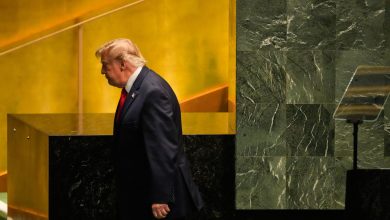
A framework peace deal between the US and Iran has been reached, Donald Trump and senior Iranian officials have said, bringing the 15-week conflict to a tentative end and offering hope of relief for the Middle East and the world economy.
The secretariat of Iran’s Supreme National Security Council said war and military operations on all fronts, including Lebanon, would end permanently from Monday night.
The precise terms of the deal remain unclear but in a statement posted to Truth Social on Sunday evening, the US president announced the opening of the strait of Hormuz as well as the removal of the US naval blockade. “Ships of the World, start your engines. Let the oil flow!” he wrote.
Trump later clarified that reopening the strait would depend on the signing of an initial memorandum of understanding on Friday, which Pakistan, acting as mediator, said would take place in Geneva.
Leaked drafts suggest the memorandum will trigger an immediate 60-day period of intensive technical talks, during which the most contentious issues, including Iran’s nuclear programme, will be discussed. Iran’s deputy foreign minister, Kazem Gharibabadi, confirmed that negotiators would seek to reach a broader agreement that would include sanctions relief for Iran.
News of the full reopening of the strait of Hormuz, through which a fifth of the world’s oil and liquid gas pass, sent stock markets higher and oil prices lower on Monday morning. Iran had closed the waterway to most shipping in the early days of the conflict.

Trump will travel to the French Alps on Monday to meet the leaders of Canada, France, Germany, Italy, Japan and the UK at a potentially acrimonious G7 summit. The US president and other senior officials have repeatedly accused European allies of failing to provide adequate support during the war. Several European leaders, in turn, have sharply criticised his decision-making throughout the conflict.
JD Vance, the US vice-president, is expected to attend the signing ceremony. The Iranian delegation is likely to include Mohammad Bagher Ghalibaf, the Iranian parliamentary speaker and lead negotiator, and Abbas Araghchi, the foreign minister.
Shehbaz Sharif, the prime minister of Pakistan and a lead mediator during negotiations in recent months, announced the agreement on Sunday afternoon, saying both sides had declared “the immediate and permanent termination of military operations on all fronts, including in Lebanon”.
Israel has fiercely resisted Lebanon’s inclusion in the deal, where its forces have mounted a sweeping offensive and occupied a swath of land in the south. Trump called for restraint on Sunday after Israel launched fresh airstrikes on Beirut.
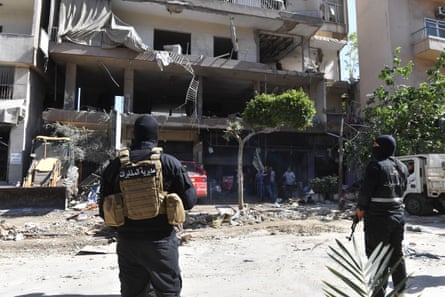
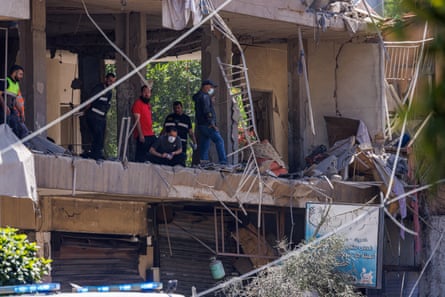
Israel braced for retaliatory Iranian missile strikes after its attack destroyed a building in the Lebanese capital’s southern suburbs, killing three and injuring six. Israeli military officials said the strike targeted senior Hezbollah commanders after the militant Islamist organisation, which has close ties to Tehran, launched three projectiles into northern Israel.
Reports suggested Trump made minor last-minute concessions after the Israeli strike, possibly over the timing of the lifting of the US naval blockade, to allow the deal to go ahead.

There has been no official response from Benjamin Netanyahu, who faces a tough battle for re-election this year. The Israeli prime minister must now explain to voters why so few of the objectives he outlined at the start of the conflict have been achieved.
Israeli officials are also likely to be disappointed that neither Iran’s support for regional militant movements, including Hezbollah, nor its ballistic missile armoury are reportedly on the agenda in negotiations over a final agreement.
The talks are likely to focus on Iran’s nuclear programme, with the US pressing Tehran to dilute its stockpiles of highly enriched uranium stockpiles and accept new restrictions and monitoring measures.
Experts have warned that it is unlikely that a comprehensive agreement on such complex, technical issues will be reached with such a short timeframe, making it likely that negotiations will drag on.
Iran, meanwhile, is keen to secure sanctions relief for Iran and the release of billions of dollars in frozen assets. The US blockade has further damaged the country’s crisis-hit economy, making relief imperative for Iranian policymakers. Inflation has soared and there are shortages of some basic goods.
Other issues could also pose challenges, including disagreements over Iran’s demand to charge de facto tolls – potentially disguised as service fees – on shipping through the strait of Hormuz.
Iran’s Mehr state news agency reported that the memorandum of understanding called for the reopening of the strait within 30 days under “Iranian arrangements”.

The US has long maintained that any tolling arrangements on international shipping – such as those reportedly discussed with Oman – would be unacceptable.
There has also been opposition to the deal in Iran and the US, including from hardline factions linked to Iran’s Islamic Revolutionary Guard Corps, whose influence has grown during the conflict.
While the war has become a political liability for Trump, with polls showing Americans deeply frustrated by rising fuel prices in the run-up to midterm elections in November, some Republicans favour a tougher approach.
The Republican senator Lindsey Graham, a leading Iran hawk, welcomed the deal but said he would be “watching closely” the negotiations on the nuclear programme. “Under our law, any nuclear deal with Iran will be sent to Congress for review and a vote,” he said.
Trump has told the New York Times that if Tehran fails to reach a nuclear deal, it could face renewed military action.
Iran has long maintained that its nuclear programme is peaceful and has not publicly committed to giving up the highly enriched uranium, which is believed to be buried beneath three nuclear sites heavily damaged by US strikes last year.
Trump withdrew the US from the 2015 multilateral agreement negotiated by Barack Obama, which lifted sanctions on Tehran in exchange for limits on its nuclear programme, including international inspections.
In a joint statement, the UK, Germany, France and Italy said they were prepared to lift sanctions on Iran in response to “clear, verifiable steps” to limit its nuclear programme.
Before the deal was announced, a senior Iranian official told Reuters that, under the terms of the draft, the US would agree to release $25bn in frozen Iranian assets. The Trump administration has previously said any release of Iranian funds would occur only after Iran had met specific conditions under a peace deal.
Thousands of people have been killed in the conflict, most of them in Iran and Lebanon, since US and Israeli forces first attacked Iran on 28 February. Iran retaliated with attacks on Israel and Gulf states hosting US bases, targeting military and civilian infrastructure.
-

-

-

-