If you’ve searched for vitamin B17, you’ve probably seen big promises: “natural cure,” “anti-cancer vitamin,” “immune booster.” This topic trends because it’s often linked to apricot kernels and a substance called amygdalin (also marketed as laetrile).
Here’s the honest headline:
“Vitamin B17” is not an officially recognised vitamin. The name is commonly used to market amygdalin/laetrile, which can break down into cyanide in the body. Major cancer and food-safety authorities warn there’s no reliable proof it treats cancer and there is a real poisoning risk.
This article explains:
- what “B17” really is
- what it’s claimed to do vs what research shows
- where it’s found
- why safety warnings matter (especially during chemotherapy)
- safer, evidence-based alternatives for wellbeing
Quick takeaways (for busy readers)
- Not a real vitamin: “B17” is a marketing term for amygdalin/laetrile.
- Main risk: it can release cyanide, which can cause serious illness.
- Cancer claim: clinical evidence in humans shows no anticancer activity from laetrile/amygdalin, and toxicity can be severe.
- Where it’s found: especially raw apricot kernels (also bitter almonds, and some fruit stones/seeds).
- UK/EU safety: UK food-safety guidance advises against eating raw, unprocessed apricot kernels and powdered forms; EFSA warns that even small amounts can exceed safe cyanide exposure.
What is “Vitamin B17” really?
“Vitamin B17” usually refers to:
1) Amygdalin
A naturally occurring compound (a cyanogenic glycoside) found in some kernels/seeds, especially in the Prunus family (apricot, peach, cherry).
2) Laetrile
A product related to amygdalin that has been promoted as an alternative cancer treatment for decades. When processed by the body, it can produce cyanide.
Important: Calling it a “vitamin” is misleading. Vitamins are essential nutrients required for normal health in small amounts. “B17” does not meet that definition.
Why do people think vitamin B17 is good for you?
The most common claims online
You’ll often see “B17” promoted for:
- cancer prevention or treatment
- “targeting cancer cells only”
- detox and liver cleansing
- immune boosting
These claims spread fast because they’re emotional, hopeful, and often supported by personal stories rather than clinical evidence.
What credible medical sources say
The U.S. National Cancer Institute (NCI) notes laetrile/amygdalin has shown no anticancer activity in human clinical trials, and toxicity can mirror cyanide poisoning, including coma and death.
Cancer Research UK states laetrile changes into cyanide in the body and there isn’t enough reliable scientific evidence it treats cancer.
Where can you find “vitamin B17” (amygdalin)?
Amygdalin is most associated with kernels and seeds, particularly:
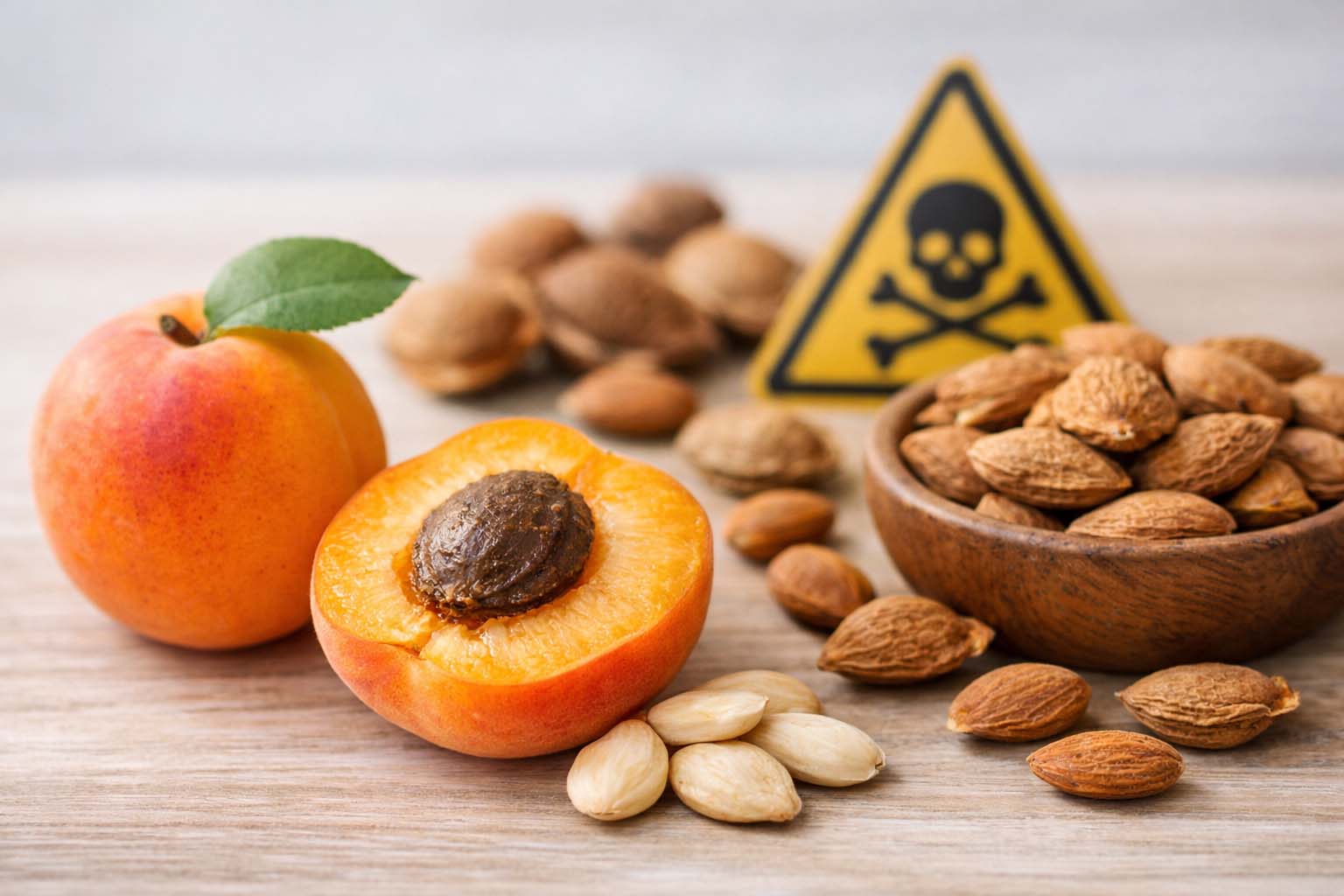
- Raw apricot kernels (bitter kernels are the biggest concern)
- Bitter almond kernels
- Peach / cherry / apricot stones (the kernel inside)
- Apple seeds (lower amounts, but not something to consume intentionally) (General caution aligns with cyanogenic compound guidance.)
Apricot fruit vs apricot kernels (not the same)
- Apricot fruit (fresh or dried) is a normal food.
- Apricot kernels are the concern because they can release hydrogen cyanide when chewed, ground, or digested.
Is vitamin B17 safe? (This is the part that matters most)
EFSA warning (Europe)
EFSA warns that eating more than three small raw apricot kernels (or less than half of one large kernel) in a serving can exceed safe levels for cyanide exposure.
UK guidance
UK government toxicology guidance notes hydrogen cyanide can be released from certain raw/unprocessed plants when they’re damaged (chewed/ground) or digested, and states the Food Standards Agency advises against eating raw, unprocessed apricot kernels, bitter almond kernels and powdered forms.
The UK Food Standards Agency also provides business guidance that raw, unprocessed apricot kernels should not be sold for human consumption unless cyanide levels meet legal limits.
Symptoms: what cyanide/poisoning can look like
Poisoning symptoms can include feeling sick, confusion, difficulty breathing, seizures, and loss of consciousness. If someone becomes seriously unwell, treat it as an emergency.
Vitamin B17 and cancer: what the evidence actually says
This is where “B17” content online often becomes dangerous.
Clinical evidence in humans
NCI’s PDQ summaries (patient + professional) report no anticancer activity in human clinical trials and describe serious side effects consistent with cyanide toxicity.
Cancer Research UK also highlights lack of reliable evidence and the cyanide risk.
Why you still see “promising” headlines
Some lab or animal studies may show interesting effects in controlled settings, but that does not mean a treatment works in humans—especially when toxicity is a limiting factor. (This is why medical bodies focus on clinical outcomes and safety.)
Extra caution: chemotherapy + “B17” products
If someone is having chemotherapy (or any cancer treatment), adding unregulated supplements can be risky. With amygdalin/laetrile, there’s an additional concern: cyanide toxicity.
If you (or a loved one) are on cancer treatment and are considering any supplement—especially one marketed as “B17”—run it past your oncology team or pharmacist first. This is the safest approach when treatment plans are complex and side effects can overlap.
So… what is vitamin B17 “good for” in practical terms?
If we’re being evidence-led:
✅ It is not an essential vitamin.
✅ It has no proven benefit as a cancer treatment in humans.
⚠️ It carries a real risk of poisoning due to cyanide release.
That’s why many health organisations treat “B17” as a health myth + food safety issue, not a wellness hack.
Safer alternatives (if your goal is immunity, wellness, “anti-inflammatory”)
If your search for B17 is really about wanting to support health, there are safer, evidence-based options that don’t involve cyanide risk:
- Eat a wide variety of fruit and vegetables (colour diversity matters)
- Prioritise fibre (beans, lentils, oats, whole grains)
- Include healthy fats (olive oil, nuts that are sold as edible nuts, seeds)
- Keep protein steady (eggs, fish, yogurt, tofu, legumes)
- For supplements: consider only what’s appropriate for you (many UK adults check vitamin D with a clinician)
If you want, tell me your goal (energy, immunity, skin, hormone balance, cancer-support nutrition) and I’ll tailor a safe food-first plan for Chochilino readers.
FAQ (great for Google snippets)
Is vitamin B17 real?
“Vitamin B17” is not an officially recognised vitamin. It’s a name used to market amygdalin/laetrile.
Where is “vitamin B17” found?
Mostly in certain kernels/seeds—especially raw apricot kernels and bitter almond kernels—which can release cyanide.
Can apricot kernels cure cancer?
Major cancer authorities report no proven anticancer activity in human clinical trials and warn of cyanide toxicity.
What should I do if someone ate lots of apricot kernels and feels unwell?
Poisoning can be serious. NHS guidance lists symptoms like vomiting, confusion, difficulty breathing, seizures, and loss of consciousness—seek urgent medical help if severe.
Suggested featured image (horizontal, no text)
Hero image prompt (16:9):
Realistic photo of fresh apricots in a bowl on a clean kitchen counter, soft natural daylight, neutral tones, high detail, shallow depth of field, UK lifestyle look, no text, no labels.
In-article image prompt (16:9):
Realistic close-up of apricot fruit and a warning-style composition (kernels in the background out of focus), clean editorial health blog style, soft daylight, high detail, no text.
Safety note (please keep on Chochilino posts)
This article is general information, not medical advice. If you have cancer, are on chemotherapy, take blood thinners, are pregnant, or feel unwell after consuming apricot kernels/“B17” products, please speak to a GP, pharmacist, or your oncology team—and seek urgent help for severe symptoms.