
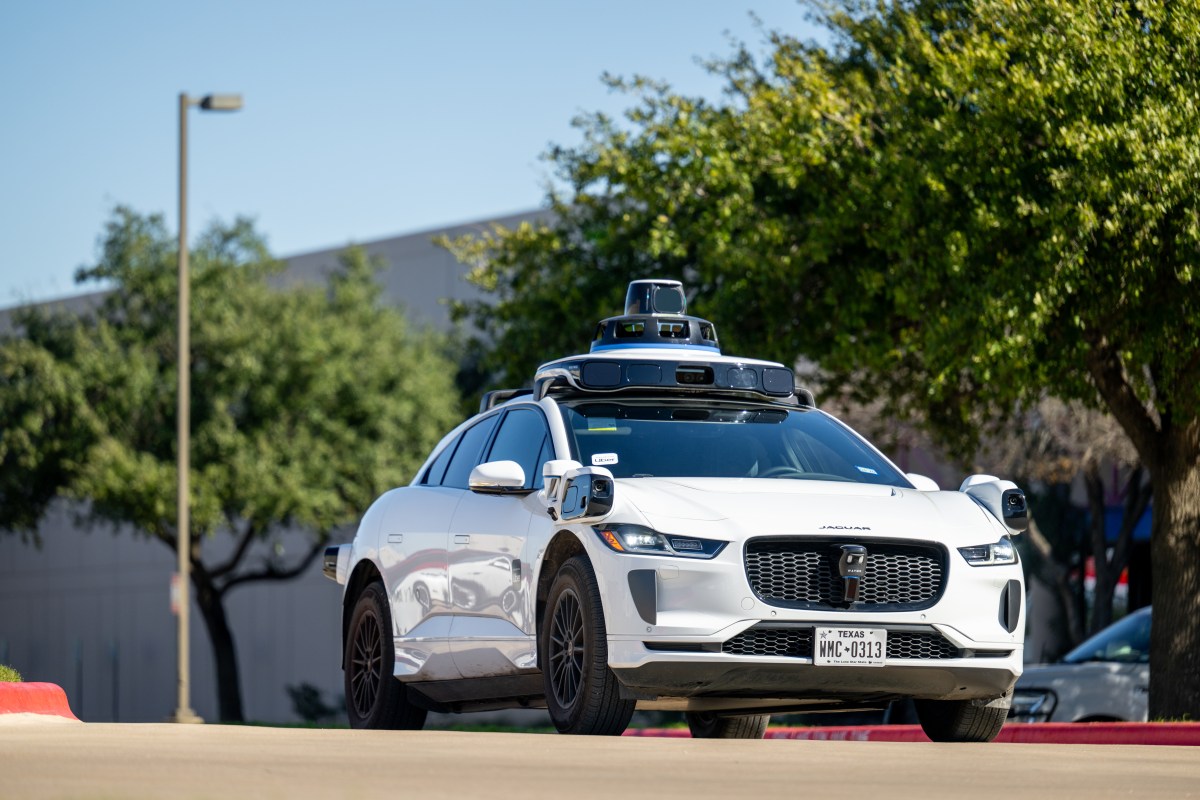
An admission by a Waymo executive during a U.S. Senate hearing has drawn renewed scrutiny to how autonomous vehicles operate when technology alone is not enough.
On Wednesday, Feb. 4, the Senate Committee on Commerce, Science and Transportation convened a hearing on the safety and oversight of autonomous vehicles. Testimony included representatives from Tesla, the Autonomous Vehicle Industry Association and members of academia.
Also appearing was Dr. Mauricio Peña, chief safety officer at Waymo, the Alphabet-owned autonomous driving company.
During questioning, Sen. Ed Markey, a Massachusetts Democrat, asked what happens when a Waymo vehicle encounters a driving situation it cannot independently resolve.
“The Waymo phones a human friend for help,” Markey explained, adding that the vehicle communicates with a “remote assistance operator.”

Markey criticized the lack of public information about these workers, despite their role in vehicle safety.
Peña responded by clarifying the scope of the operators’ involvement: “They provide guidance, they do not remotely drive the vehicles,” Peña said.
“Waymo asks for guidance in certain situations and gets input, but Waymo is always in charge of the dynamic driving task,” according to EVShift.
Pressed further on where those operators are located, Peña told lawmakers that some are based in the United States and others abroad, though he did not have an exact breakdown. After additional questioning, he confirmed that overseas operators are located in the Philippines.
Sharp Criticism
The disclosure prompted sharp criticism from Markey, who raised concerns about security and labor implications.
“Having people overseas influencing American vehicles is a safety issue,” he said.
“The information the operators receive could be out of date. It could introduce tremendous cyber security vulnerabilities,” according to People.
Markey also pointed to job displacement, noting that autonomous vehicles already affect taxi and rideshare drivers in the U.S.
Waymo defended the practice in comments to People, saying the use of overseas staff is part of a broader effort to scale operations globally.
“All Fleet Response agents are required to have a passenger car or van license, and are reviewed for records of traffic violations, infractions and driving-related convictions,” a Waymo spokesperson told Newsweek.
“Additionally, they are routinely, randomly screened for drug use, and are put through thorough criminal background checks in addition to evaluations of their driving records.”
The company has stressed that the agents never control vehicles directly and only provide additional context when the system requests help.
Operators Within the U.S. vs. Overseas
Waymo has not disclosed how many operators are based overseas versus in the U.S.
According to the company’s website, Waymo currently operates autonomous ride-hailing services in Atlanta, Los Angeles, Miami, Phoenix, the San Francisco Bay Area and Austin, Texas, with plans to expand to cities including Boston, Dallas, Denver, Las Vegas and Washington, D.C., as well as internationally.
The hearing took place amid heightened attention on autonomous vehicle safety following a series of incidents. Less than two weeks earlier, a Waymo vehicle struck a child near an elementary school in Santa Monica, California.
Local outlet ABC7 reported that the child suffered minor injuries.
Additional Testimony from Tesla
Lawmakers also heard testimony from Tesla executives, who argued that their systems are designed to prevent outside interference.
Tesla Vice President of Vehicle Engineering Lars Moravy told the committee the company has built “many layers of security” so that driving controls “cannot be accessed from outside the vehicle,” according to EVShift.
As autonomous vehicles expand across U.S. cities, members of Congress continue to debate whether federal legislation is needed to create uniform safety standards for a technology that increasingly blends automation with human oversight.
To read how Newsweek uses AI as a newsroom tool, click here.
