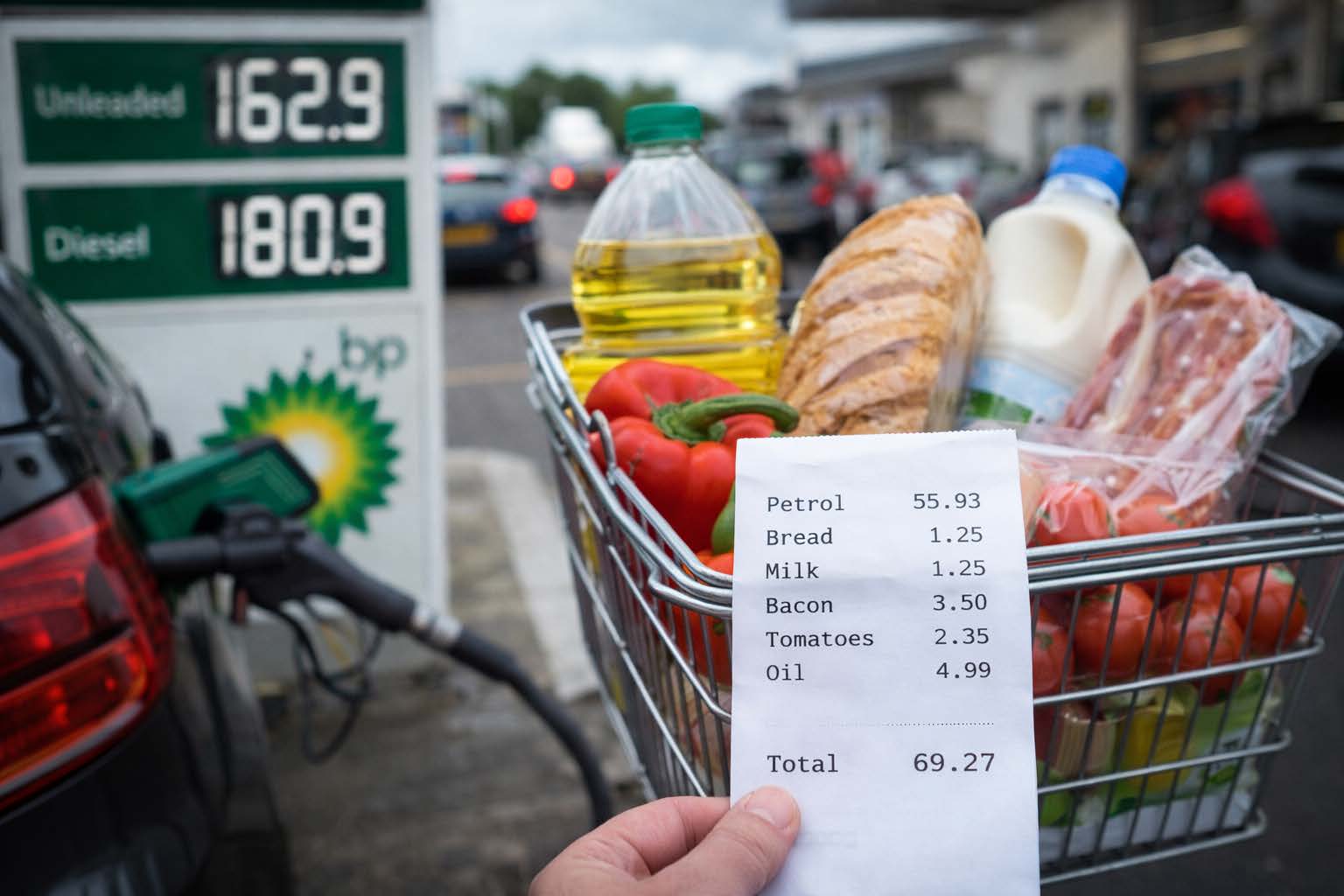
When oil prices jump, most of us notice it first at the petrol station. But that’s only the start. In the UK, oil doesn’t just power cars—it’s baked into food prices, delivery costs, flights, commuting, packaging, and even parts of your home energy bill.
That’s why a sudden spike can show up in your weekly budget faster than you’d expect—sometimes within days.
This guide explains the “oil-to-your-wallet” chain in plain English, what typically changes first, and the smartest ways to protect your household budget.
The short version: oil is a hidden tax on everyday life
Oil affects household spending through three big channels:
- Fuel for cars and vans (petrol + diesel)
- Transport and logistics (everything delivered costs more)
- Petrochemicals (plastics, packaging, fertiliser inputs, many household goods)
So when oil moves, the cost of moving and making things moves too.
1) Petrol and diesel: the fastest hit
Why it shows up quickly
UK forecourts buy fuel linked to wholesale markets that track crude oil and refined products. Retailers often adjust prices rapidly when wholesale costs rise—especially if the move is sharp and headlines are intense.
What you’ll notice
- Petrol/diesel prices rising first
- Bigger price gaps between supermarkets vs motorway stations
- More frequent changes week-to-week (sometimes day-to-day)
Tip: If you must fill up, do it early in a fast-moving spike—prices tend to “ratchet” up faster than they fall.
2) Food prices: the slower burn that lasts longer
Even if you don’t drive, you still pay for fuel—because food is delivered by diesel trucks.
What oil touches in your grocery basket
- Farm machinery fuel
- Refrigerated transport
- Packaging (plastic trays, wraps, bottles)
- Ingredients shipped internationally
- Fertiliser and chemicals (more linked to gas than oil, but transport still matters)
Timing
Food inflation usually shows with a lag (weeks to months), because supermarkets use contracts, inventory, and pricing cycles.
3) Energy bills: not always direct—still important
In the UK, household gas/electricity prices are more directly tied to natural gas markets than crude oil. But oil spikes can still affect energy costs through:
- Broader inflation pressures (costs rise across supply chains)
- Substitution effects (when markets switch between fuels)
- Confidence shocks that raise risk premiums
Also, if you use heating oil (common in rural areas), you’re directly exposed to oil prices.
4) Travel: flights, holidays, and commuting costs
Flights
Jet fuel is refined from crude oil. Airlines hedge fuel, but sustained higher oil prices typically filter into:
- Higher fares
- Higher surcharges or less discounting
- More expensive long-haul routes
UK commuting and services
Even if your own commute is by train, oil can raise the cost of:
- Taxis, couriers, tradespeople call-outs
- Parcel deliveries and returns
- Ride-hailing prices during busy periods
5) The UK-specific accelerators: why it can feel brutal
Fuel duty + VAT amplify changes
Pump prices include fixed taxes (fuel duty) plus VAT on top of the total. When the underlying price rises, VAT rises too—so the final number grows faster than many people expect.
The pound matters
Oil is priced globally in US dollars. If the pound weakens while oil rises, the UK feels a double hit.
“Sticky down” effect
Fuel prices often climb quickly but fall more slowly. Some of that is normal lag (retail inventory), and some is pricing behaviour.
A simple “oil spike timeline” for households
Days: petrol/diesel, delivery surcharges, some travel pricing
Weeks: busier service costs, courier pricing, some retail goods
1–3 months: grocery prices, packaged goods, broader inflation
3–6 months: lingering cost-of-living pressure even if oil cools
What you can do: practical UK money moves
1) Cut fuel spend without changing your life
- Combine errands into one trip (one “big run” weekly)
- Keep tyres correctly inflated (small but real savings)
- Use supermarket fuel price apps and avoid motorway stations when possible
2) Protect your food budget
- Switch 2–3 “high inflation” items to own-brand (snacks, cleaning, staples)
- Batch cook 2 meals/week (less waste, fewer top-up trips)
- Prefer seasonal UK produce when possible
3) Reduce “delivery leakage”
- Fewer, larger online orders (reduce shipping/returns)
- Delay non-urgent bulky purchases during peak freight spikes
4) If you’re planning a holiday
- Book earlier for peak dates when fuel is rising
- Compare airports (sometimes one has consistently cheaper routes)
- Be flexible on days—midweek can beat weekend pricing
5) Build a “spike buffer” (even a small one)
If you can, set aside a mini buffer like £10–£25/week during a spike period. It helps absorb the shock without borrowing.
FAQ
How fast do oil spikes affect petrol prices in the UK?
Often within days, because wholesale fuel markets move quickly and retailers adjust frequently during sharp spikes.
Do oil prices directly change UK electricity and gas bills?
Not always directly—UK household energy is more linked to gas markets and regulation. But oil can still raise costs through inflation and risk premiums.
Why do prices rise quickly but fall slowly?
Retail fuel pricing often reflects supply chain lags and inventory timing, and decreases can take longer to feed through.
What household costs are most sensitive to oil?
Fuel, deliveries, flights, taxi/courier services, and anything with heavy transport or plastic packaging.
Should I change investments because oil is rising?
If you’re a long-term investor, avoid panic moves. Short-term spikes can reverse quickly; focus on diversification and risk tolerance.