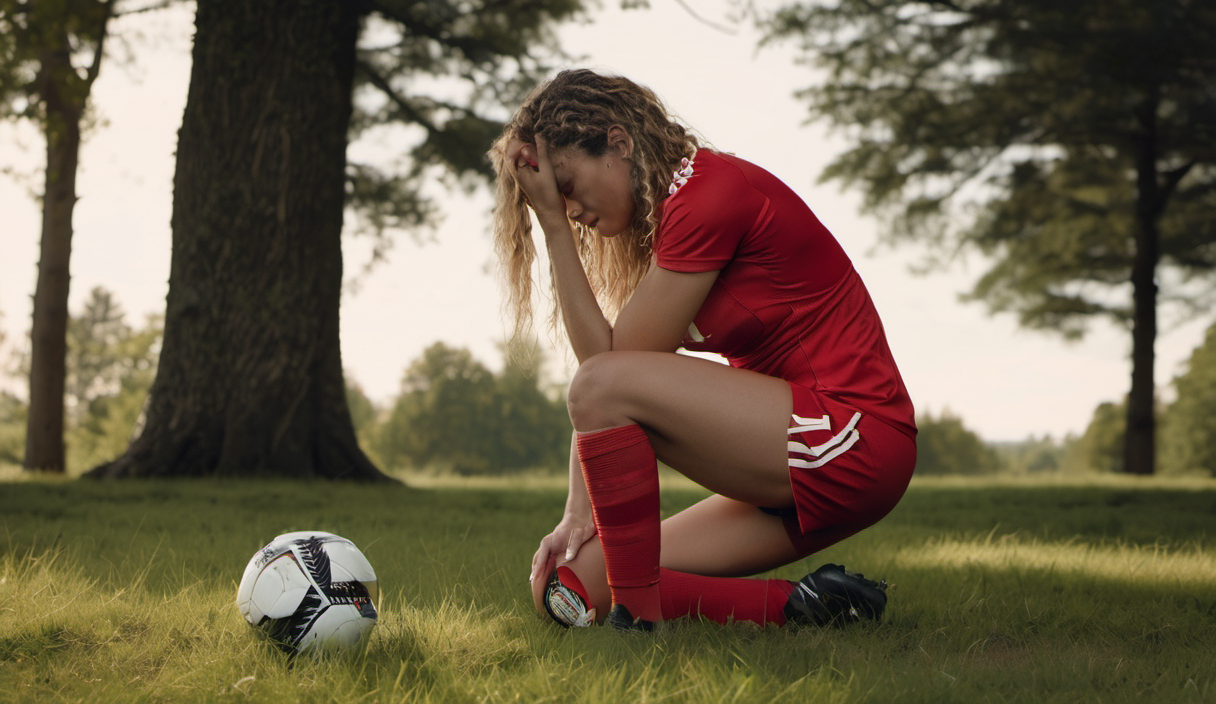
Featured image: A young woman is kneeling on a grassy field. AI-generated image; not a photograph of the reported event.
Women’s football is growing into a billion-dollar industry. But many players still earn low wages, work under unstable contracts, and face rising mental health stress. Source: bbc.co.uk.
Key Findings from the Fifpro Survey
Of 800 surveyed players, 59% said financial issues were a key reason for leaving football early.
46% reported psychological stress. Among them, 57% struggled with mental health. Half received no support from their clubs.
Only 78% had written contracts. 82% were paid by clubs. Yet, just 57% said their pay covered playing costs.
Wage Disparities by Region
- Monthly earnings have tripled since 2017. The median salary remains at $1,669 (£1,250).
- Salaries vary widely: $6,450 (£4,886) in North America; $3,982 (£3,016) in central and western Europe; $878 (£664) in Eastern Europe; and $480 (£363) in Africa.
- Payments in 10 Eastern European countries remain below national minimum wage levels.
Despite rising visibility and investment, many players still face short contracts and late payments.
Contract Lengths and Payment Insecurity
Contract lengths grew from one year in 2017 to 19 months. Still, only two-thirds get full-year pay.
24% of players faced late payments in the past two seasons. 42% reported no pension plan.
Players’ View of Professional Status
FIFA defines a professional player as someone with a written contract and who earns more than their playing expenses.
62% of players called themselves professional. 27% were semi-professional. 12% were amateur.
Despite playing in top leagues, many don’t feel they receive full professional benefits.

Positive Progress and Ongoing Challenges
One positive shift: fewer players now cite family goals as a reason to leave the sport.
Fifpro credits this improvement to updated FIFA maternity rules introduced in 2021.
Yet, a major divide remains. The top 5% of players benefit from investment. The rest face short contracts, late pay, and unstable conditions.
As Alex Culvin, head of women’s football at Fifpro, said: ‘You’ve got an industry focused on the top 5%. The rest — 95% — are not paid on time. They don’t get full-year pay. They’re in vulnerable, precarious situations.’
Why This Matters
The sport’s growth hasn’t matched player protections.
Culvin says the system needs stronger support and accountability. She insists commercial success and player welfare must go together.
She called it a ‘wake-up call’: ‘There’s no wraparound support for players. That’s not acceptable.’
What to Watch Next
As women’s football grows, clubs and bodies will face pressure to improve pay, mental health support, and contract stability.
With rising revenue, the real challenge is ensuring growth benefits all players — not just a few.
For more on the global state of women’s football, see the original report at BBC Sport.