Several new Premier League managers have started their careers with disappointing results. This list highlights some of the worst first-game performances by managers in the competition’s history, offering insight into how early outcomes can shape managerial legacies and club trajectories.
Frank de Boer: Crystal Palace’s Catastrophic Start
Frank de Boer’s tenure at Crystal Palace began with a 0-3 defeat to Huddersfield Town. The result was a major setback for the club and de Boer. The match marked the first time Huddersfield played in the Premier League, and they scored three goals—all in the first half—demonstrating a rapid and aggressive start to their campaign.
They were shut out in 20 of their 38 league games, a statistic that underscores the fragility of their defensive structure at the time. The loss triggered immediate internal scrutiny, with the club’s board raising alarms about the team’s form and leadership.
De Boer’s early exit was swift. The club’s board raised alarms after the loss and replaced him with Roy Hodgson just one month later. Despite a mid-table finish with 40 points, the result set a tone of instability. Some analysts argue that Palace rarely finish above mid-table under any manager, suggesting that the early loss may have reflected deeper structural issues rather than just a single performance.
De Boer’s appointment was seen as a bold move to inject stability into a club that had been in a prolonged period of decline. However, the early defeat revealed a lack of cohesion between players and coaching staff, and it signaled that the club’s culture may have been resistant to change.
Thomas Frank: A Tough First Test at Crystal Palace
Thomas Frank took over at Crystal Palace in a high-profile move. His first game was a 3-2 loss to Coventry City, a result that has since been dubbed ‘El Frankico’—a play on the name of the manager and the intensity of the match. The game was widely seen as a sharp contrast to his success at Brentford and his time at Tottenham.
Frank’s tenure at Spurs was marked by a lack of consistency. He failed to win any of the first 10 games under his management, and the team struggled to establish a clear identity. His approach at Spurs was often criticized for being overly rigid and overly reliant on set-piece routines, which limited the team’s adaptability in high-pressure situations.
Coventry’s win was a significant blow. It showed early signs of instability in Frank’s approach, particularly in how he managed transitions between defense and attack. The loss occurred in a crucial six-pointer, and it raised questions about whether the team was already in a state of decline before Frank arrived.
Palace fans have expressed concern that the early loss may have been symptomatic of deeper issues. Some believe that the team had already been struggling with poor defensive organization and inconsistent player performance before Frank took over. Others argue that Frank’s style, while disciplined, may not have been suited to the demands of a high-stakes Premier League environment.
Frank’s cult-like support from the UK press remains unwavering, and if the early results continue to reflect a lack of progress, fans may be told that the evidence of their own eyes is wrong—suggesting that the team was already in crisis and that their new manager was merely a temporary fix.
Mauricio Pochettino: A Historic Defeat at Manchester United
Pochettino’s first game as Manchester United manager ended in a 4-0 loss to Liverpool. United were behind from the start, and by the 10th minute, Liverpool had a 1-0 lead. The scoreline remained unchanged for the rest of the game, with United conceding four goals in the first half.
The team’s defense was exposed, and there was no recovery in the second half. The loss was a clear indicator of poor team cohesion and a lack of tactical clarity. This result was particularly damaging given the historical significance of Manchester United, a club with a legacy of dominance and resilience.
Some analysts argue that this result may have been a sign of deeper issues at United, including a lack of player confidence, poor communication between the coaching staff and players, and a failure to adapt to modern football tactics. The loss occurred in a match that was widely seen as a test of the club’s ability to rebuild after years of instability.
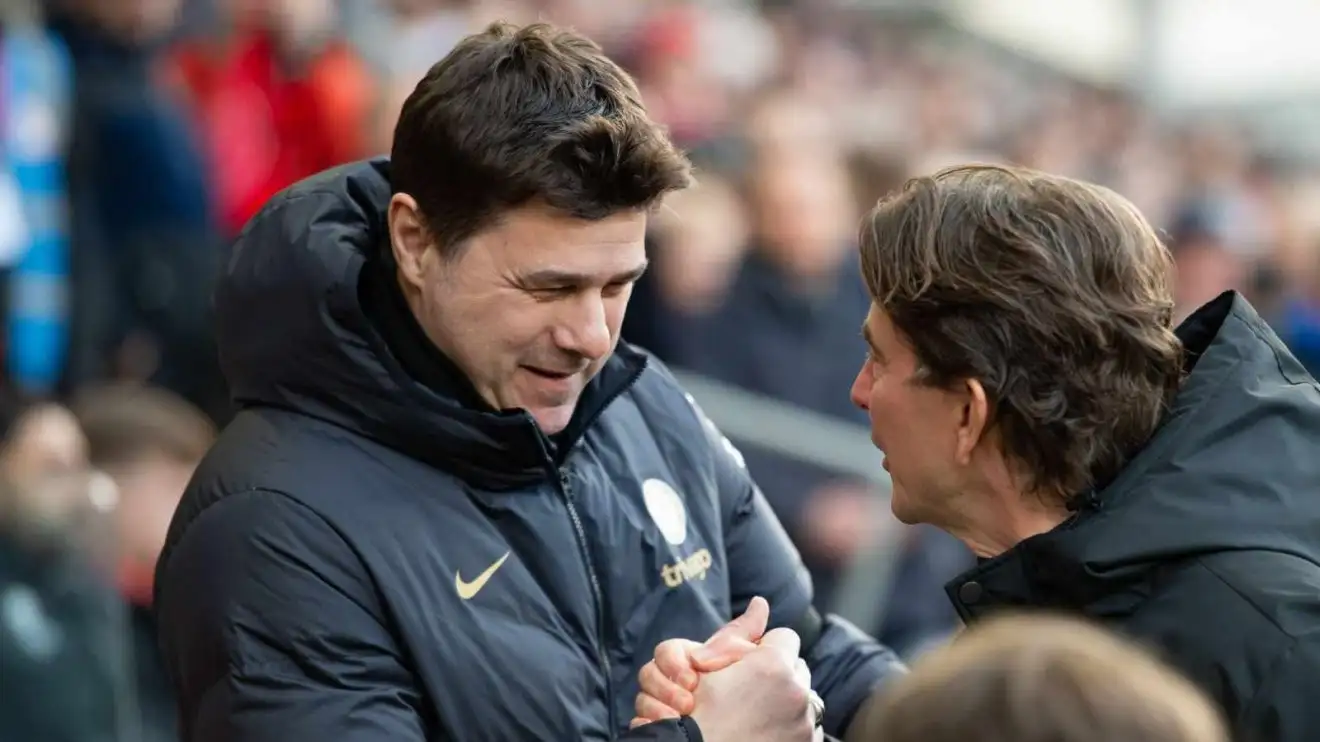
Despite the early defeat, Pochettino has since made several notable career choices, including joining Tottenham Hotspur in 2019, where he achieved significant success. His appointment at United, however, has been viewed as a high-risk move, given the club’s long history of poor defensive performances and inconsistent results.
Patrick Vieira: A Disappointing Start at Chelsea
Patrick Vieira took over at Chelsea in a high-profile appointment. His first game ended 3-0 against Crystal Palace. The match was seen as a routine win for Chelsea, who were widely regarded as European champions at the time.
Academy graduate Trevoh Chalobah scored a 25-yard goal, which was the highlight of the match. The win was expected to reinforce Chelsea’s title credentials, and it was widely celebrated as a statement of dominance.
Despite the win, the result did not reflect Vieira’s potential. The team finished third in the league, 20 points behind Manchester City, a gap that highlighted the growing disparity between the top and lower tiers of the Premier League. By the next season, Thomas Tuchel had left, and the team’s performance declined, suggesting that the managerial change did not bring the expected transformation.
Vieira’s tenure ended after one season. He did not make a significant impact, and the club moved on to new leadership. The result at Crystal Palace, while a win, was not a strong indicator of future performance, and it may have been more symbolic than meaningful.
David Moyes: A Mixed Start at West Ham
David Moyes took over at West Ham in a short-term role. His first game ended 2-0 against Watford. Goals from Will Hughes and Richarlison gave West Ham the lead, but the team was ultimately undone by a strong defensive performance.
Heurelho Gomes made three saves to stop Andy Carroll and Marko Arnautovic, demonstrating the importance of individual performances in high-pressure matches. The result was a clear indicator of the team’s vulnerability, especially in the face of strong opposition.
Moyes managed to keep West Ham in safety. The team finished 13th in the league, nine points above the relegation zone. His short-term appointment was seen as a pragmatic move to stabilize the club during a period of uncertainty.
He left after six months but returned 18 months later after Manuel Pellegrini left. His second stint at West Ham was more successful, and he helped the club avoid relegation, showing that a manager’s impact can evolve over time.
Sam Allardyce: A Poor Start at West Brom
Sam Allardyce took over at West Brom in December 2020. His first game ended 0-3 against Aston Villa. The match began with an early lead. Anwar El Ghazi scored first, and Jack Grealish set up the second.
After a red card for Jake Livermore, the team lost momentum. Bertrand Traore scored the third goal, sealing the defeat. The red card, which involved introducing studs into Jack Grealish’s shin, was a serious breach of the rules and raised concerns about player discipline and team culture.
West Brom were eventually relegated. Allardyce’s record of never being relegated from the Premier League was broken, marking a significant moment in the club’s history. The loss was not just a tactical failure but a reflection of broader issues in team management and player conduct.
Claudio Ranieri: A Shambles at Watford
Claudio Ranieri took over at Watford in October 2021. His first game ended 0-5 against Liverpool. Mo Salah, Roberto Firmino, and Sadio Mane scored. Firmino had a hat-trick, making it one of the most damaging defeats in the club’s history.
After the match, Ranieri said: ‘I saw some bad things but I have also seen some good things.’ This statement reflects a balanced perspective, acknowledging both the severity of the loss and the potential for improvement.
Watford had a few positive results. They beat Everton 5-2 in his second game and Man United 4-1 in what, rather adorably looking back on it now, was seen at the time very much as an unbeatable low point for the fallen greats.
After January, the club replaced Ranieri with Roy Hodgson. They failed to recover, and the team continued to struggle. The loss at Liverpool was not just a result of poor form but a symptom of deeper issues in team cohesion and player development.
Igor Tudor: A Devastating Start at Tottenham
Igor Tudor was appointed as Tottenham’s manager in a short-term role. His first game ended 1-4 against Arsenal.
However, the second half saw a strong Arsenal response, and the team was overwhelmed. Spurs lost their next two games, and the team was later replaced by Roberto De Zerbi.
De Zerbi was brought in to save the club after a series of poor results. The decision was made in the wake of a pattern of defensive failures and poor team morale. Tudor’s tenure is often cited as one of the most damaging managerial appointments in Premier League history.
Brendan Rodgers: A Harsh Start at West Brom
Brendan Rodgers took over at West Brom. His first game ended 3-0 against Liverpool. Romelu Lukaku, on loan from Everton, scored to complete the rout. The team dominated the match, and the result was a clear indicator of their strength.
Before the season, Liverpool had won a few Europa League qualifiers, which showed their standing at the time. However, the loss at West Brom was a significant blow to their confidence.
Despite the loss, Rodgers finished the season in seventh place, one place behind Everton. The team managed to avoid relegation, and the result was seen as a sign of resilience and adaptability.
Louis van Gaal: A Wretched Start at Manchester United
Louis van Gaal started at Manchester United in 2014. His first game ended 1-2 against Swansea City. The result was a sign of United’s long-term struggles, and it highlighted the club’s difficulty in adapting to modern football tactics.
Van Gaal used a back three with Phil Jones, Chris Smalling, and Tyler Blackett. The formation was seen as outdated and ineffective, especially in the face of modern attacking football. The team lost the match, and the result was a clear indicator of the club’s lack of cohesion.
Van Gaal, however, managed to get United into the top four. They won the FA Cup in his final season, showing that a manager’s impact can evolve over time. The early loss, while damaging, did not define the entire tenure.
Why These First-Game Results Matter
These early defeats are not just about one match. They reflect broader issues in team performance and managerial stability. A poor start can lead to early exits, but it does not always result in a manager’s departure.
Many managers face pressure to deliver results quickly. A poor start can lead to early exits, especially in clubs with high expectations. However, some managers recover over time, and their long-term success may be more important than the first game.
Some clubs have long histories of poor first games. Others recover over time, showing that a manager’s ability to adapt and evolve is more important than initial results.
These results show that a manager’s first game is a strong indicator of future performance, but it is not a definitive measure of success or failure.
Limitations and Open Questions
Not all early losses lead to managerial exits. Some managers recover over time, and their long-term success may be more important than the first game.
Some results were influenced by team form and opponent strength. For example, Liverpool’s dominance in 2021 may have contributed to the severity of the Watford defeat.
There is no clear pattern in how long it takes for a manager to recover. Some managers, like Moyes and van Gaal, showed improvement over time, while others, like Tudor, did not.
These results do not reflect long-term success or failure. A manager’s impact on a club is shaped by many factors, including player development, financial investment, and external pressures.
What to Watch Next
Thomas Frank’s performance at Crystal Palace will be closely watched. His ability to stabilize the team will be key. The club’s board will be evaluating his tactical approach and player management in the coming weeks.
Manchester United’s defense under Pochettino will be under scrutiny. The team’s recovery will be critical, especially given the historical significance of the club and the expectations placed on it.
Spurs’ future under De Zerbi will be a key development. His approach may differ from previous managers, and his ability to rebuild the team will be closely monitored.
For more on Spurs’ youth development, see Williams-Barnett Debut: Spurs Teenager Shines in First Premier League Start.
Full coverage of this list is available at the original source: Pochettino and Frank join De Boer, Moyes, Rodgers, Van Gaal and more in worst first Premier League games.
Sources & further reading
Featured image: Man Utd manager. Via original publisher. Image source