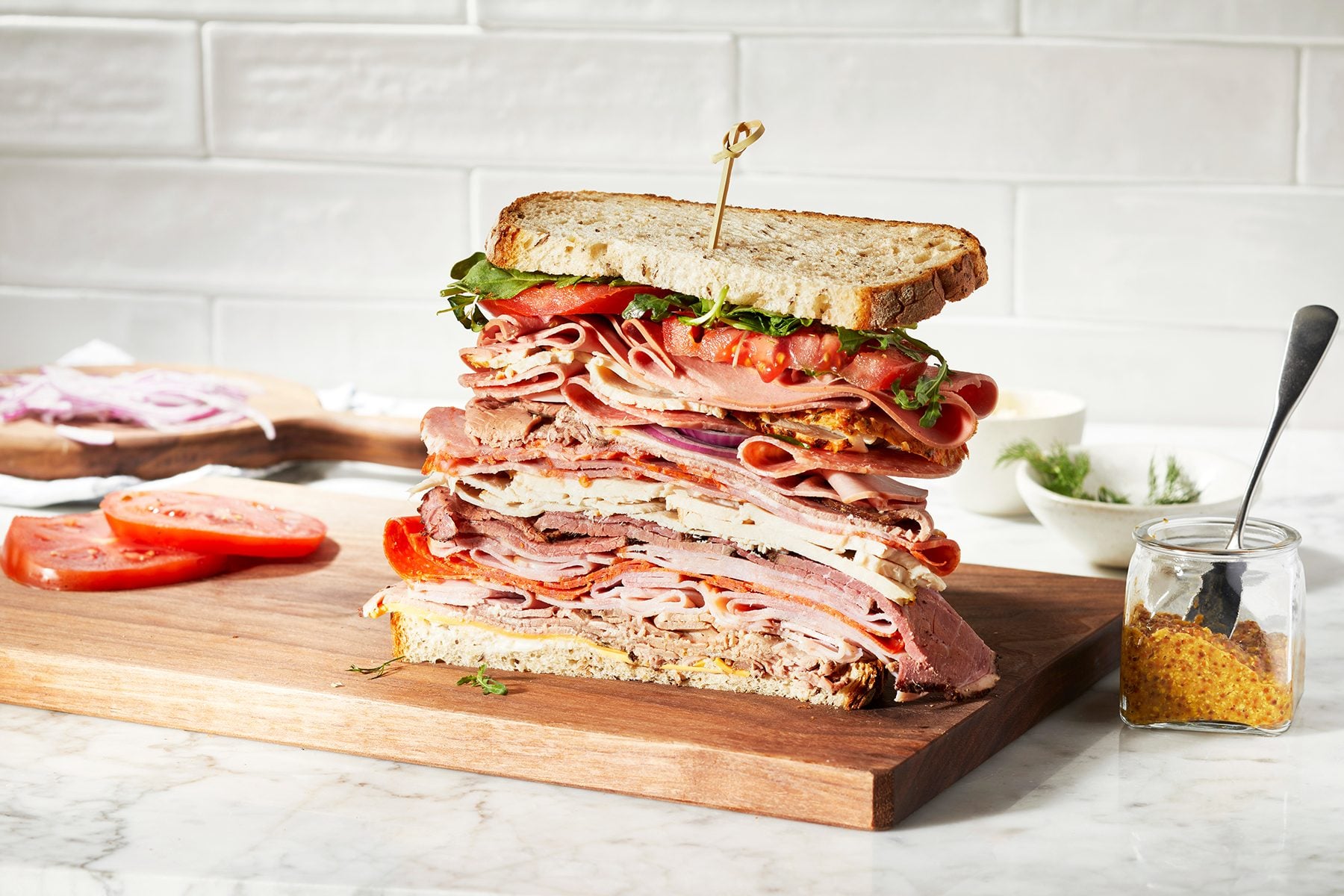
Whether you call it deli meat, lunch meat or cold cuts, one thing is certain: This protein-packed staple is an American favorite. But when your number gets called at the deli counter, the sheer number of options can feel overwhelming. Do you go with ham or turkey for your kiddo’s school lunch? What kind of salami should you get for your charcuterie board? When should you choose pastrami over corned beef—and is there even a difference?
Instead of panic ordering a pound of whatever is in front of you, take a second to think about what you want to make. All types of deli meats are precooked or cured, but differences in cut, seasoning and cooking method create flavor profiles that range from light and lean to rich, smoky or bold. Once you know what you’re looking for, it’s a lot easier to turn a basic sandwich into something really incredible.
There are endless options, but these common deli meats are our go-to choices for making the best sandwich. Think of them as easy wins next time you’re at the deli counter.

1
/
10

Turkey
Turkey is one of the most popular choices at the deli counter. This lean option has less fat than most lunch meats, making it a convenient choice for making healthy sandwiches. Oven-roasted turkey breast has a light, simple flavor, but there are also plenty of herbed, spiced and peppered varieties if you’re looking for a little more pizazz. Most deli counters also offer smoked turkey, which is slightly less juicy but has a saltier, bolder taste.
Deli turkey is best enjoyed thinly sliced and can be piled high on your favorite sandwich bread. We like pairing it with creamy spreads and crisp veggies, and the oven-roasted varieties taste great when combined with salty lunch meats like ham or salami. For a classic option, layer thinly sliced turkey with bacon, cheese and lettuce for a turkey club sandwich.
2
/
10

Ham
Deli ham typically comes from the hind leg of a pig, especially if it’s labeled as “off the bone.” Some processed ham is “reformed,” which means it may contain other pork cuts. Either way, ham can be prepared in a variety of ways. Depending on the style, it can be dry-cured and smoked or wet-brined and oven-roasted, creating flavors that range from sweet and mild to rich and smoky.
A few options you may find at the deli counter include:
- Black Forest ham: Originating from Germany, Black Forest ham is dry-cured, seasoned and smoked. It typically has a blackened exterior and rich flavor from the extended smoking process. It’s a classic option for any ham sandwich.
- Honey ham: As its name suggests, honey ham is glazed with honey (and sometimes maple syrup) to give it a signature sweet flavor. It pairs especially well with Swiss cheese.
- Virginia ham: Also known as country ham, Virginia ham is typically smoked over hardwood, like hickory, oak or walnut. It has a mild, slightly sweet flavor.
- Prosciutto: This Italian dry-cured ham is sliced extremely thin and is known for its salty, savory character. It’s commonly enjoyed on its own but also tastes delicious layered on sandwiches with mozzarella cheese and pesto, creating Stanley Tucci’s favorite sandwich.
- Serrano ham: This Spanish dry-cured ham is similar to prosciutto but typically has a higher fat content. It’s also cured longer (up to two years for Serrano ham versus up to one year for prosciutto), giving it a punchier, saltier taste.
3
/
10

Roast Beef
Not to be confused with pot roast-style roast beef recipes, which braise tough, fatty cuts in liquid until tender and shreddable, deli roast beef is made by dry-roasting leaner cuts of beef, like eye of round, top round or sirloin tip. The result is a meaty, beef-forward flavor and tender texture. Ask for it shaved for melt-in-your-mouth-tender bites or sliced for a heartier chew.
Roast beef can be enjoyed in cold sandwiches, especially when combined with horseradish and sharp cheddar cheese, but we think it really shines in a hot roast beef sandwich. It can also be used as a convenient alternative to other steak cuts for sandwiches like Philly cheesesteak sliders or French dip subs.
4
/
10

Pastrami
Pastrami is traditionally made from beef belly, but today it’s more commonly made from beef brisket (particularly the fatty deckle cut). It’s brined, seasoned with herbs and spices, smoked and then steamed. This labor of love has a strong flavor that’s rich, salty and bursting with savory spices like black pepper, mustard seeds, coriander, garlic and fennel. Pastrami sandwiches are a staple at Jewish delis and are typically served hot on rye bread with mustard.
Many people confuse pastrami and corned beef, which is similar to pastrami but made by curing the leaner flat cut of brisket. It’s brined with salt and pickling spices, then boiled until tender. Corned beef is a must-have for a classic Reuben sandwich, although using pastrami is a popular alternative. If you’re trying to decide between the two, pastrami is generally smokier, more peppery and a tad more robust.
5
/
10

Salami
Salami is the name for several dry-cured hard sausages that are sliced thin for sandwiches and charcuterie boards. It is commonly made from pork but can also be made from beef or veal. The curing process gives salami its signature texture, but the exact taste varies by style.
Common varieties of salami include:
- Genoa salami: Genoa salami is air-cured and fermented using naturally occurring yeast and bacteria. It’s usually made with wine, vinegar and spices, giving it a bright and tangy flavor.
- Hard salami: Similar to Genoa salami, hard salami is cured and air-dried. But it’s generally made with fewer spices and is often smoked, lending a milder, smokier taste. It also has less moisture and can be drier, firmer and more chewy.
- Soppressata: This Italian salami is made from coarsely ground pork, which gives it a rustic texture and larger pockets of fat. Its flavor can vary depending on the region it’s produced in, with dried chilis, garlic, cloves and peppercorns being common additions.
- Cotto salami: Unlike most salamis, cotto salami is cooked before it’s cured (cotto means “cooked” in Italian). That gives it a softer texture and milder flavor, making it ideal for sandwiches and wraps.
Not sure which type of salami to try first? Give several a whirl by making a classic Italian grinder sandwich.
6
/
10

Pepperoni
What is pizza without pepperoni? This popular cured sausage is a type of salami typically made with a blend of pork and beef. The meat is seasoned, stuffed into casings, fermented and air-dried. It’s typically flavored with spices like red pepper, paprika, garlic and fennel seeds, providing a slightly spicy kick and a bold, tangy flavor.
It’s best-known as a pizza topping, but it works well on charcuterie boards and Italian-style sandwiches. Layer it on pizza subs and open-faced pizza sandwiches, or use it to make stromboli sandwiches.
7
/
10

Mortadella
Mortadella is an Italian cold-cut made with finely ground pork and small cubes of pork fat stuffed into a casing. It is traditionally seasoned with black peppercorns and often contains whole pistachios, giving each slice a speckled look. Despite the richness of the ingredients, it has a surprisingly mild flavor and a delicate, silky texture that sets it apart from other salamis.
It tastes delicious layered onto crusty bread with provolone and arugula, whether served hot or cold. And you can’t make a classic New Orleans muffuletta sandwich without it.
8
/
10

Bologna
Also known as baloney, bologna is an American version of mortadella. The smooth, emulsified sausage is typically made from a blend of meats that can include pork, beef or chicken. The mixture is seasoned with spices and finely ground to create its uniform texture. Some say it has a less refined flavor than mortadella, but fans love its familiar flavor that’s reminiscent of a hot dog.
Bologna on white bread is a lunchbox classic, but this deli meat really shines when it’s cooked. Indulge in bologna by pan-frying a thick slice until the edges crisp up, then top it with melty cheese and serve on a soft onion bun. Outside the sandwich bun, you can substitute bologna for SPAM in dishes like fried rice or musubi.
9
/
10

Capicola
Capicola (aka coppa, aka “gabagool” in Italian American slang) is an Italian cured meat made from pork shoulder or neck. It’s seasoned with garlic, herbs, spices and wine, then hung to air-cure for several months. It has a fatty, chewy texture and a bold, salty taste that’s somewhat reminiscent of bacon, but with a lingering spicy finish.
This flavorful cold cut is usually layered onto Italian sub sandwiches alongside salami, prosciutto, mortadella and ham. Try adding it the next time you make a grinder sandwich for an extra hit of richness and spice.
10
/
10

Chicken
Like turkey deli meat, chicken is a lean, low-calorie cold cut that works well in everyday sandwiches. You’ll find several variations at the deli counter, each offering a different flavor. Roasted versions are clean and simple, while smoked versions are a little more robust.
Even spiced deli chicken has a very mild flavor, making it exceptionally versatile in the sandwich world. It’s an easy base for sandwiches made with bold ingredients like spicy mustard or pesto, but it’s just as good in a fresh veggie wrap or grilled sandwich. A crispy Florentine panini is a favorite way to eat this lean meat in my house.
Types of Deli Meat FAQ
What’s the difference between cured and uncured deli meat?
The terms “cured” and “uncured” refer to how a deli meat is preserved using nitrates or nitrites. Cured meats commonly use synthetic forms of these compounds to extend shelf life and help to prevent the growth of bacteria. “Uncured” meats are still preserved, but the nitrates come from natural ingredients, like celery powder or celery salt.
What are the healthiest deli meats?
Turkey and chicken are generally considered to be the healthiest deli meats, but whether a deli meat is “healthy” is highly dependent on your health needs and concerns. Some common factors to consider include fat content, sodium content and the use of additives. Deli turkey and chicken are generally considered to be low-cholesterol options, as they’re lower in saturated fat than salami, bologna, ham and roast beef. Most deli meats tend to be high in sodium due to curing and processing, so look at the nutrition facts if you’re looking for low-sodium options.
How long does deli meat last?
An opened package of deli meat or freshly cut meat from the deli counter should be eaten within five days. Store it in an airtight container in the fridge for optimal freshness. You can also freeze deli meat for up to two months.
What are the best ways to use deli meat?
Cold-cut sandwiches are my go-to way to use deli meat when I need a meal in a flash, especially in the height of summer when I don’t even want to think about turning on the oven. However, there are many ways to use deli meat, and sandwiches aren’t your only option. Try making appetizers like ham pickle pinwheels, entrees like creamy prosciutto pasta or light lunches like chef salad.