Collecting dusty shoeboxes, learning to text at 78, growing mint for a son who mentioned it once — grandmothers have always spoken love and empathy in a language the rest of us are still learning to read. Their quiet acts of kindness and unconditional family love don’t make headlines, but they build the kind of legacy that holds a family together long after the person is gone. These 11 stories are proof.
- I’m an orphan and lived with my grandma since I was 6. At my wedding, she told everyone I was “marrying down” and that my fiancé was “using me.” I was humiliated.
3 years later, my husband left me with a newborn. I showed up at her door at midnight. She opened it and yelled, “What took you so long?! I’ve had your room ready for months!”
She pulled me inside, already holding my baby. “I knew he’d leave. I’ve been praying you’d come home before you hit rock bottom.”
Then she showed me the nursery she’d been quietly preparing—crib, clothes, everything. “I was harsh at your wedding because I hoped you’d call it off. When you didn’t, I knew I had to prepare for this day instead.”
She raised my daughter with me, never once saying “I told you so.” Years later, she admitted, “Being right doesn’t matter. Being there when you’re wrong does.”


- There was a rule in my grandmother’s house that was never spoken aloud but was absolute and total: nobody left without eating something.
It did not matter if you were a stranger who had come to fix the boiler. It did not matter if you had just arrived and said you weren’t hungry and genuinely meant it. By the time you were leaving there would be something — a plate, a bowl, a wrapped portion for the road.
She fed the plumber, she fed the postman, she fed every friend any of her grandchildren ever brought through that door. And she did it not because she was performing hospitality but because in her understanding of the world, feeding someone was simply what you did when they were in front of you.
That instinct cost her nothing and built something in everyone who experienced it that I don’t have a better word for than warmth.
Did your grandmother have a habit, a drawer, a meal, or a single sentence that you’ve never been able to forget? Share her story in the comments because some legacies deserve to be remembered out loud.
- My grandmother had a drawer in her kitchen that nobody was allowed to open except the grandchildren.
Inside was a chaos of small things she had collected over the years that she associated with each of us — a sticker I had liked when I was five, a drawing my cousin made that she had kept for decades, a button that had fallen off my jacket during a visit when I was seven and that she had apparently saved because she thought I might want it back.
None of it was valuable. All of it said the same thing: I was here. She noticed, and she kept the evidence.
- After my grandmother passed, we found a shoebox in her wardrobe containing letters she had written to each of her grandchildren at different points over the years.
Mine were dated — one from when I was born, one from when I started school, one from the year I went through something difficult as a teenager that I thought nobody had fully understood. She had never mentioned writing them.
The letter from my teenage year began: I noticed you seemed far away this year and I didn’t want to crowd you, but I wanted you to know I was paying very close attention. She had been waiting for the right moment to give them to me, and then she ran out of time, and somehow that made them the most important thing I have ever read.
Collecting stories is how we keep people alive. Tell us one thing your grandmother did that you only fully understood years later.
- My grandma was 78 when I moved abroad for work. She had never owned a smartphone in her life and had no interest in technology of any kind. But within two weeks of my leaving, she had asked my cousin to teach her how to send text messages.
The texts she sent were extraordinary — no punctuation, random capitalization, often just a single word like COLD or SUNDAY or THINKING. But they arrived every single morning without exception for four years until she passed.
I would give anything to receive one more message that just said MORNING in capital letters with no punctuation from a woman who taught herself something completely foreign to her because she refused to let me wake up in a different country and not feel her there.
- When I was in my twenties I had a health scare that turned out to be manageable but that terrified me completely in the days before we knew that. My grandmother drove two hours to sit with me in the waiting room.
We had never been the kind of family that talked easily about fear or vulnerability, and she seemed to understand that completely. She sat next to me and didn’t say anything for three hours. She didn’t offer reassurances she couldn’t back up. She didn’t try to redirect my thoughts or fill the silence with noise.
She just stayed, solidly and completely, in the chair next to mine, and somewhere in that silence I understood that this was what she had to give and that it was exactly enough.

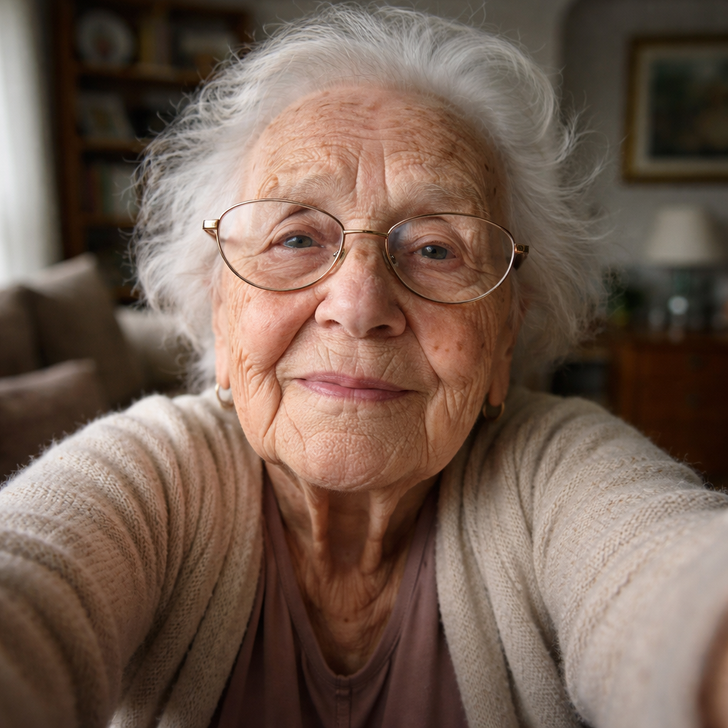
- Going through my grandmother’s belongings after she died, we found every school report card any of her grandchildren had ever received, bundled together in elastic bands by name. Not just the good ones. All of them — including years I was embarrassed about, years I had failed things, years that told a story I would rather have forgotten.
When I asked my mother about it, she said my grandmother had always said the same thing, which was that she wanted to keep the full picture of who we were, not just the parts we were proud of. She loved us in totality, including the parts that hadn’t worked out yet.
I didn’t fully understand what that meant until I saw my own name written in her handwriting on a rubber band around a stack of my worst years, kept safe and private, in a drawer.
- Years after a painful family argument during which I had felt completely alone, my aunt told me that my grandmother had spoken about it privately at a family gathering I hadn’t attended. She hadn’t announced it or made it dramatic — she had simply, quietly, stated that she believed I had been treated unfairly, and that she wanted the people in the room to sit with that.
My aunt said she had done it without anger, without theatrics, in the tone she used when she was simply telling you something true. I never knew at the time that she had done this. She never told me.
She had defended me in a room I wasn’t in and then gone on to make tea and never mentioned it, because for her it wasn’t something that required acknowledgment. It was simply what you did for the people you loved.
Your grandmother’s kindness deserves to be remembered. Drop a story in the comments — big or small, we want to hear it.
- When I was at university, I brought a close friend home for a week during a break because she had nowhere else to go and her own family situation was difficult. I was nervous about how it would feel, inserting someone into the rhythms of my grandmother’s house.
Within ten minutes of arriving, my grandmother had learned my friend’s name, found out what she liked to eat, and assigned her a specific cup that was apparently now hers. By the second day she was asking about my friend’s mother by name and setting a place at the table with the quiet certainty of someone who had simply decided this person was now included.
My friend has spoken about that week more times than almost any other memory from that period of her life. She said it was the first time she understood what it felt like to be automatically welcomed somewhere.
- My grandmother was deeply religious in a private, unperformative way. Once, as a child, I came into the room while she was saying her evening prayers and heard her say the name of a woman who, I knew even at that age, had caused her significant pain years before — a falling out that had never been repaired.
I asked her about it afterward and she was quiet for a moment and then said that she prayed for her because she had clearly been carrying something very heavy for a very long time and someone had to. She said it the way she said most things — simply, without looking for a response.
I have thought about that sentence a lot. Someone has to. She had decided, without fanfare and without any expectation of resolution, that she would be the one.
Somewhere in every family is a grandmother who quietly held everything together. Tell us how yours did it.
- There were summers in my childhood when I was left with my grandmother for weeks at a time because my parents were dealing with things they didn’t explain to me. I was a difficult child in the way that children going through uncertainty often are — loud sometimes, withdrawn other times, needing more than I knew how to ask for.
My grandmother absorbed all of it without ever making me feel like I was too much. She didn’t do this by ignoring the difficulty. She did it by meeting each version of me that showed up with the same steadiness — the same routines, the same meals, the same unhurried presence.
She created a consistency around me so reliable that even when I was at my most chaotic, I could feel the structure she had built holding me in.
- When I was young my grandmother used to pull me aside sometimes and tell me quietly, as if it were a confidence, that I was her favorite. She said it with such genuine warmth that I completely believed her and held it privately for years as a small treasure.
After she died, at the gathering afterward, I mentioned it somewhat cautiously to my cousin, who looked at me with an expression I can only describe as recognition, and said she had told him exactly the same thing. We went around the room. She had told all eight grandchildren, individually and privately, that they were her favorite.
The remarkable thing is that none of us felt deceived when we found out. We all agreed, without much discussion, that somehow she had meant it every time — that she had found something specific and real in each of us that she genuinely treasured most, and she was simply telling each of us the true version of the story that belonged to us.
Comments
Lucky you! This thread is empty,
which means you’ve got dibs on the first comment.
Go for it!