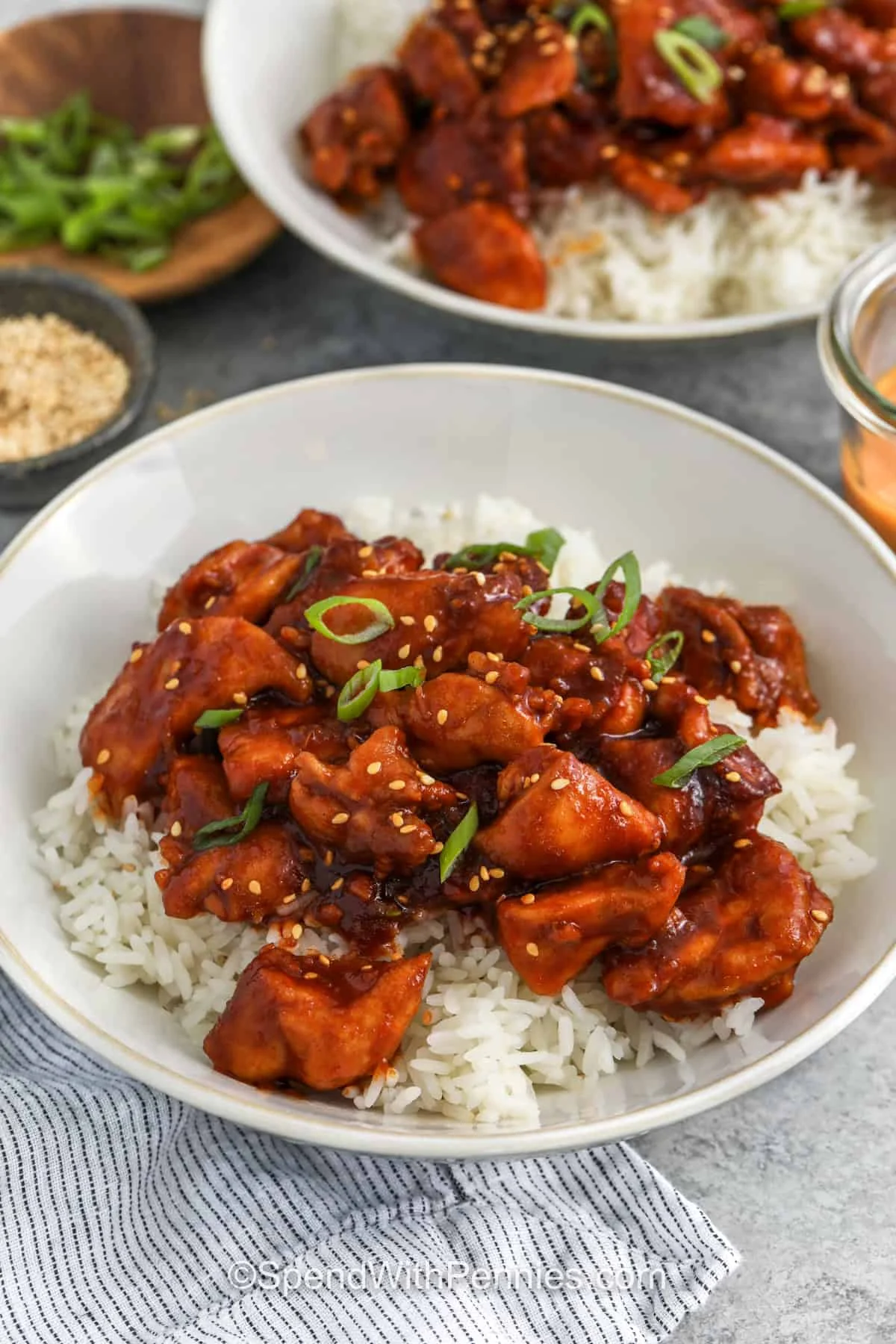
A 15-minute skillet gochujang chicken recipe delivers a flavorful, sticky sauce with tender chicken thighs in just minutes.
What It Is
This dish features boneless, skinless chicken thighs that brown in a skillet before being tossed with a quick sauce. The result is juicy, savory chicken with a glossy, slightly sweet, and spicy glaze.
Key Ingredients and Their Roles
- Chicken thighs: These stay juicy during high-heat cooking. They are ideal for browning and holding flavor.
- Cornstarch: A light coating helps the chicken brown and gives it a crisp edge. It also helps the sauce cling to the meat.
- Gochujang: A Korean fermented chili paste that adds depth, sweetness, and spice. Heat levels vary by brand, so adjustments are needed.
- Soy sauce: Adds savory depth. Low-sodium versions are recommended to avoid overpowering the dish.
- Honey: Provides sweetness. Brown sugar or maple syrup can substitute, each altering the flavor slightly.
- Rice vinegar: Unseasoned vinegar allows precise control over the dish’s overall sweetness.
- Fresh ginger: Grated from frozen for quick access. Adds aromatic depth without extra prep time.
How to Prepare It
- Toss chicken thighs with cornstarch to coat lightly.
- Heat a large skillet and cook the chicken in batches, undisturbed for a few minutes to form a golden crust.
- Set the cooked chicken aside while preparing the sauce.
- Whisk together the sauce ingredients—gochujang, soy sauce, honey, rice vinegar, and ginger—before adding to the skillet.
- Whisk the sauce into the skillet until it thickens.
- Add the chicken back and cook until heated through.
Why This Recipe Works
The technique relies on two key steps: browning the chicken and whisking the sauce before adding it. This ensures even flavor distribution and a glossy finish.
Using two batches of chicken helps avoid overcrowding, which improves browning. Overcrowding leads to steaming instead of searing, reducing texture and flavor.
Adjusting for Taste and Preference
According to the recipe source, gochujang brands vary in heat. For a milder version, start with two tablespoons. For more heat, use up to four tablespoons.
For a balanced flavor, reducing the gochujang slightly and increasing honey can help offset the spice, as noted in the recipe’s variation suggestions.
Side Dishes and Serving Suggestions
- Serve over oven-baked rice or coconut rice for a complete meal.
- Pair with a side of garlic bok choy or a refreshing Asian cucumber salad to balance the heat.
- Leftovers can be reheat in a skillet or microwave, with a splash of water added if the sauce thickens.
Storage and Reuse
Leftovers can be stored in an airtight container in the refrigerator for up to four days.
Store rice separately to prevent sogginess. For longer storage, freeze in a freezer-safe bag for up to three months.
Reheat gently on the stovetop or in the microwave. As the recipe notes, leftovers are especially good in rice bowls with cucumbers, shredded carrots, or steamed vegetables.
Recipe Variations
Adding steamed broccoli, bell peppers, snap peas, or green beans creates a colorful, balanced skillet.
For a lighter option, chicken breast can be used, though it cooks more quickly and requires close monitoring to avoid overcooking.
For a complete meal, pairing with a side of sesame chicken—such as the one featured in another recipe on the site—offers a complementary flavor profile.
One-Pot Broccoli Chicken Mac and Cheese offers a similar quick, satisfying meal with a different flavor profile.
Recipe source: SpendWithPennies
Sources & further reading
Featured image: bowls of Gochujang Chicken.. Via original publisher. Image source