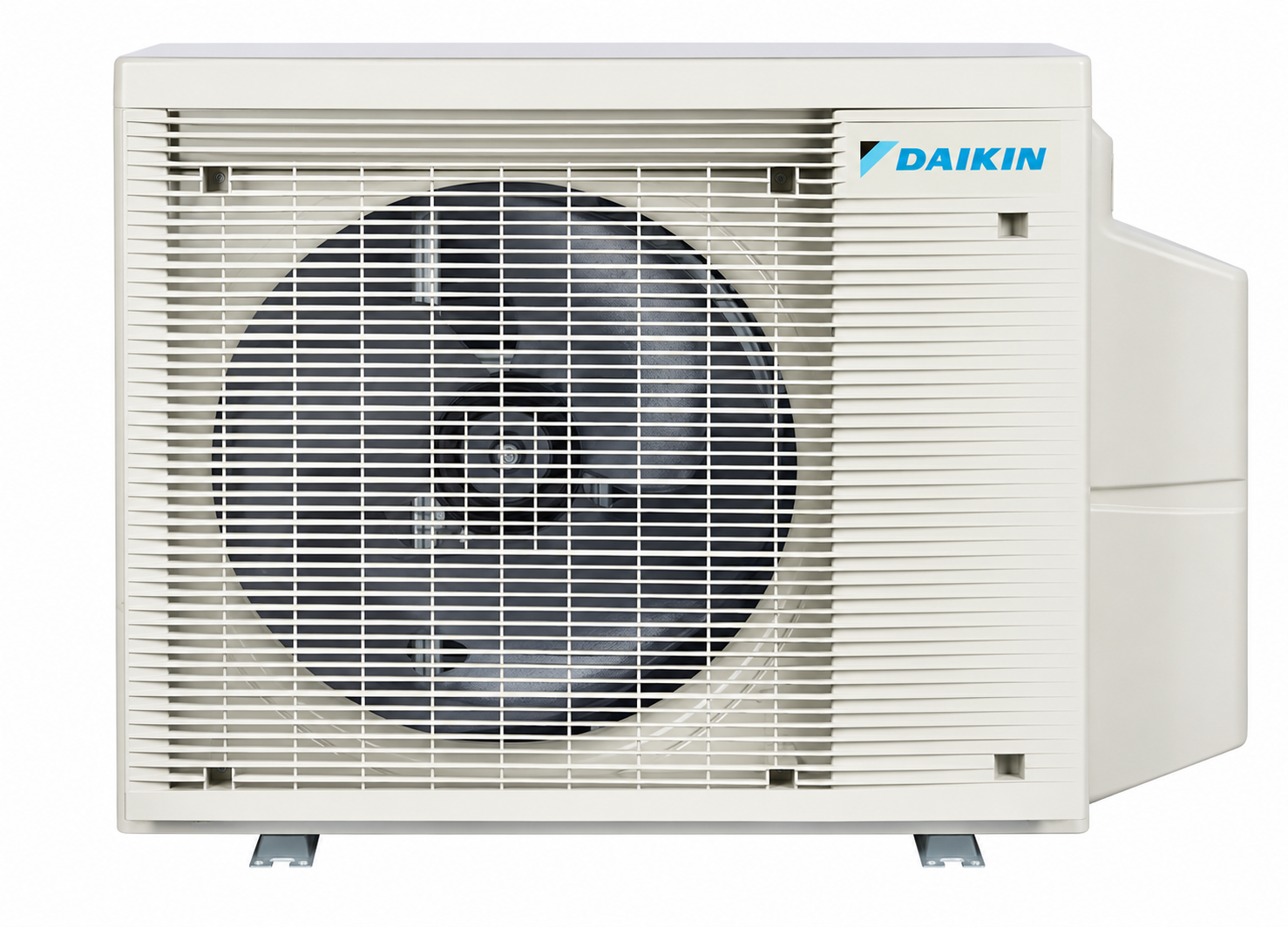
The X Series heat pump integraes cooling, hydronic heating, and domestic hot water via one outdoor unit with inverter-based load sharing. It uses R-32 refrigerant, supports 180–230 L hot water storage, and connects to HEMS via Onecta for centralized, PV-optimized energy management.
Japanese heating system manufacturer Daikin has announced this week it will begin selling a new residential heat pump system with a mixed design in Europe in September.
The X Series heat pump blends air-to-air and air-to-water technologies into a unified system. While multi-split systems combining air-to-air cooling and domestic hot water are already on the market, including Daikin’s own Multi+ line, the X Series introduces full-scale hydraulic space heating into the mix. This architecture allows a single outdoor unit with five integrated ports to simultaneously manage forced-air cooling, radiant underfloor heating or water radiators, and domestic hot water production.
By consolidating these functions, the system eliminates the hardware footprint, redundant piping, and installation complexity typically associated with running separate heat pump systems for air conditioning and hydronic loops, according to the manufacturer.
The setup is designed for new-builds and comprehensive modernizations of properties up to 150 m².
The system uses difluoromethane (R-32) refrigerant and achieves a 35 C flow temperature for underfloor heating and 55 C for traditional radiators. For domestic hot water (DHW), it utilizes either a 180-liter or 230-liter integrated storage tank.
Daikin said that the combined architecture enables centralized thermal management. Instead of relying on separate compressors for space conditioning and hydronic heating, a single inverter-driven compressor allocates capacity between the indoor air-conditioning units and the hydrobox as demand shifts. This approach reportedly reduces compressor cycling while improving overall operating efficiency by matching output more closely to real-time heating and cooling loads.
The X Series is also designed for integration with Home Energy Management Systems (HEMS), offering connectivity through Daikin’s Onecta platform for cloud-based monitoring and control. Users can track energy consumption across individual indoor units and optimize system operation remotely.
For households with rooftop solar, the integrated architecture provides additional opportunities to increase on-site PV utilization. Excess solar generation can be directed toward multiple thermal loads, including space heating through hydronic underfloor systems or domestic hot water production, depending on household demand. By offering several options for storing surplus renewable energy as heat, the system can help improve self-consumption compared with standalone air-to-air or air-to-water heat pump configurations.
Daikin did not disclose additional technical specifications or product documentation at the time of the launch.