Israel’s foreign minister responded harshly to Miliband’s statement, which he said he “reject[ed] outright”.
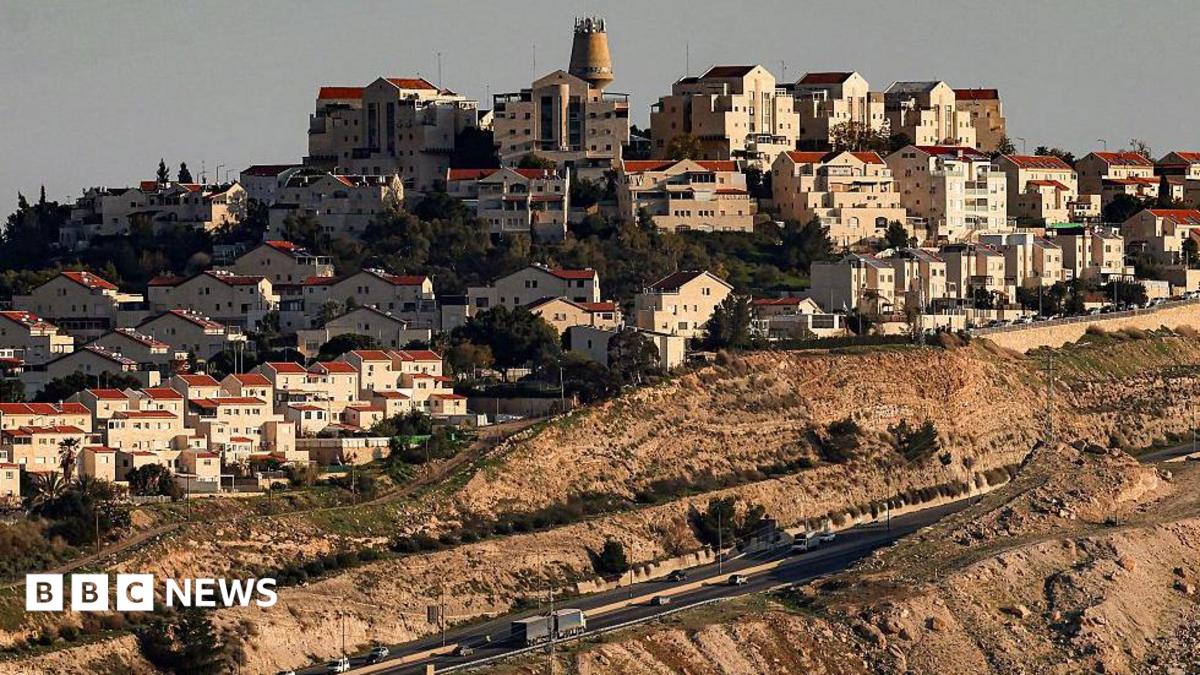
Israel has built about 160 settlements housing 700,000 Jews since it occupied the West Bank and East Jerusalem – land Palestinians want, along with Gaza, for a hoped-for future state – during the 1967 Middle East war. An estimated 3.3 million Palestinians live alongside them.
Despite the fierce international opposition, successive Israeli governments have allowed settlements to grow.
However, expansion has risen sharply since Prime Minister Benjamin Netanyahu returned to power in late 2022 at the head of a right-wing, pro-settler coalition, as well as the start of the Gaza war, triggered by Hamas’s 7 October 2023 attack on Israel.
Under international pressure, Israel held off for decades on plans to build in E1.
Many of its allies and Palestinians argued these would deal a major blow to hopes of a two-state solution, effectively bisecting the West Bank.
But the current Israeli government gave the go-ahead for E1 construction a year ago, expressly to “erase” the idea of a Palestinian state.
Despite an Israeli court challenge to the plans by Bedouin Palestinians living in the area and Israeli peace groups, the housing ministry has now issued a tender for 1,234 of the 3,401 housing units approved by the Israeli government last August.
It covers about 12 sq km (4.6 sq miles) between East Jerusalem and the settlement of Maale Adumim.
At the time of their unveiling, Finance Minister Bezalel Smotrich – an ultranationalist and settler – said the idea of a Palestinian state was “being erased”.
The deadline for bids is 19 October, just days before Israel’s general election on 27 October, making it much harder for any future government to overturn any tenders issued.
In a statement published on Wednesday evening, the UK’s foreign secretary said “Britain will not stand back and accept the destruction of the Two-State Solution”.
“The UK has been clear privately and publicly in our opposition to E1 and our support for a two-state solution,” said Miliband, adding that “all settlements damage that prospect and are a flagrant breach of international law”.
Miliband said the Israeli Chargé d’Affaires had been summoned to the Foreign Office, where he had “set out the UK’s profound objection to this move by the Netanyahu government and demanded an immediate reversal”.
Miliband added that “in the coming weeks” the British government would “set out a comprehensive set of measures to respond to Israeli government policies, protect the viability of the Palestinian state, target sanctions at those who participate in illegal settlement expansion and support a just and lasting peace for Israelis and Palestinians.”
But Israeli Foreign Minister Gideon Saar said it was “absurd for Britain to lecture the Jewish people about where they may live in their historic tiny homeland”.
“The UK government’s decision to damage the relationship between our countries is deeply unfortunate,” he said.
Israel captured the West Bank, including East Jerusalem, from Jordan in the 1967 Middle East War. It annexed East Jerusalem in 1980, in a move not recognised by the vast majority of the international community.
Opponents of the E1 project have warned that it would effectively block the establishment of a Palestinian state because it would cut off the north of the West Bank from the south, and prevent the development in the centre of a contiguous Palestinian urban area connecting Ramallah, East Jerusalem and Bethlehem.
Peace Now, an Israeli anti-settlement watchdog that has challenged the plans in court, said: “The government is trying to sign contracts with contractors before the elections so that it will be much harder for the next government to cancel the construction.”
It said even the partial implementation of the construction plans would “fundamentally” alter “the geographic and strategic character of the area by severing the northern West Bank from the south and isolating East Jerusalem”.
“Building in E1 will ruin the possibility of reaching an end to the conflict and a peace arrangement based on two states,” it said.
Jamal Juma, a Palestinian activist for the Stop the Wall campaign, who lives in Jerusalem, said the project would have a devastating impact on Palestinians.
“It is destruction of the communities, it’s destruction of families… this is a disaster”, he told the BBC.
He added that more than 40 Bedouin communities would be affected and would have to be evicted.
A spokesperson for the UN’s Secretary-General António Guterres said he was “deeply alarmed” by the new tenders.
“The Secretary-General calls on Israel to refrain from taking any further steps in this regard”, they said.