US President Donald Trump has unveiled a new government taskforce to oversee artificial intelligence, renaming the technology as ‘Super Intelligence’ in a move aimed at reshaping public and official discourse.
What Happened
Trump announced the formation of the ‘Super Intelligence Force’ through a post on social media.
The taskforce will be led by Jay Clayton, the Director of National Intelligence, who took office in August after being selected to replace Bill Pulte, a choice rejected by lawmakers.
Trump signed an executive order instructing federal agencies to replace the term ‘artificial intelligence’ with ‘Super Intelligence’ in all official communications.
Key Facts
- The taskforce will report directly to President Trump and White House Chief of Staff Susie Wiles.
- Members include Federal Trade Commission Chair Andrew Ferguson, Defense Research Undersecretary Emil Michael, and Office of Personnel Management Director Scott Kupor.
- The initiative follows growing pressure from tech executives to strengthen AI safety oversight.
- Executives from top tech firms like OpenAI, Anthropic, SpaceX, and Google signed a ‘morally binding’ pact, pledging to uphold AI safety standards.
- Elon Musk announced on social media that SpaceXAI will be renamed SpaceXSI, aligning with the new terminology.
Background and How It Works
Clayton, a former US attorney for the Southern District of New York, has previously overseen high-profile cases including one involving former Venezuelan President Nicholas Maduro.
He has stated that when a technology presents both opportunity and risk, ‘you better get your arms around it’—a sentiment echoed in the new taskforce’s mission.
The Super Intelligence Force will coordinate engagement with consumers, public interest groups, religious organizations, critical infrastructure providers, and Super Intelligence Companies.
Why It Matters
The rebranding of AI to ‘Super Intelligence’ is a significant shift in language and policy framing.
It reflects growing concerns about the capabilities and risks of AI systems, especially after incidents involving breaches of Australian government systems by ChatGPT-related technology.
OpenAI has previously paused the release of a new model due to safety concerns, indicating industry-level anxiety about AI risks.
David Robinson, a former OpenAI safety team member, criticized the firm’s culture in an article for the Atlantic magazine, saying it prioritizes rapid launches over safety and transparency.
Limitations and Open Questions
Experts have questioned the logic of rebranding AI as ‘Super Intelligence’—a term that may imply more advanced, potentially autonomous systems, which could cause confusion.
There is no indication that the taskforce will introduce new regulatory standards or enforce compliance.
Trump has dismissed calls for stronger government oversight, emphasizing that AI companies should regulate themselves.
While the executive order mandates the use of ‘Super Intelligence’ in official channels, enforcement and consistency across agencies remain unverified.
What to Watch Next
Observers will monitor how the taskforce interacts with AI companies and whether it leads to tangible safety improvements or policy changes.
Public reactions to the rebranding may influence how AI is discussed in media and policy.
Further developments may include updates on AI safety protocols or new government guidance on AI use in critical infrastructure.
The BBC has contacted OpenAI for comment. The full details of the taskforce’s operations and responsibilities will be revealed as it begins work.
Source: BBC News — Original article
Sources & further reading
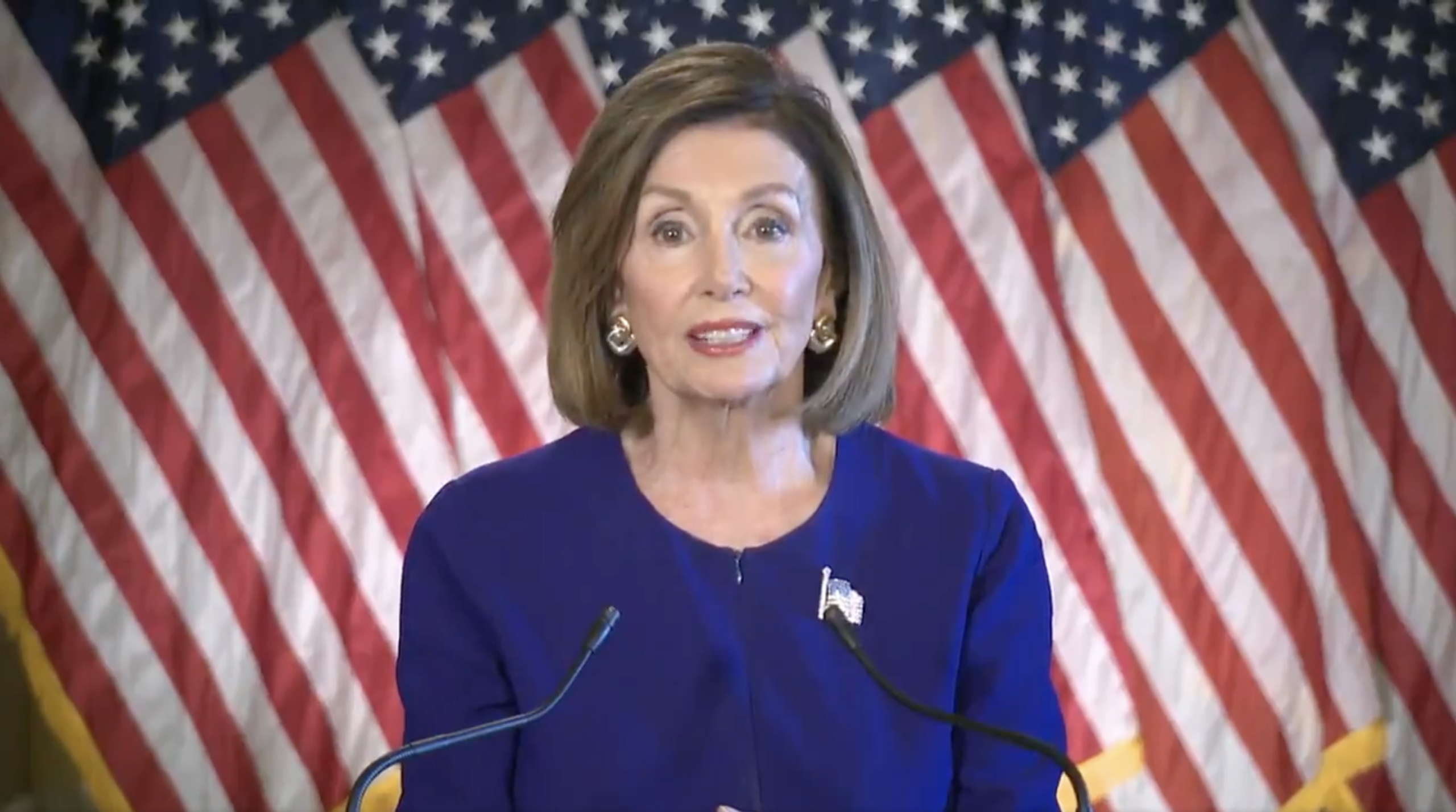
Featured image: Nancy Pelosi announces impeachment inquiry against Trump 01.png by Office of Speaker Nancy Pelosi, Public domain, via Wikimedia Commons. Image source