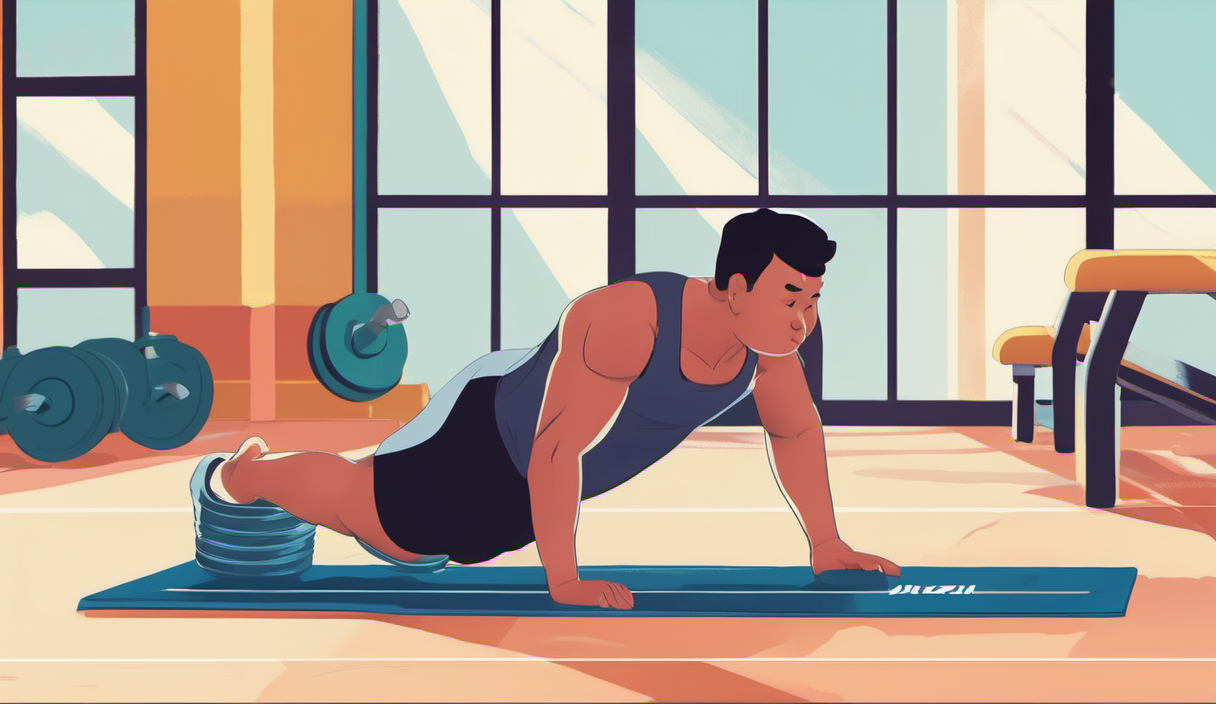
Many people find themselves stuck between knee push-ups and full push-ups. That’s normal. It’s one of the hardest jumps in fitness progression.
Why the Jump Is Difficult
Knee push-ups reduce body weight by about 50%. Full push-ups require pressing full bodyweight. That shift demands significant strength and technique.
Most people feel weak or awkward when trying full push-ups. This is common. The body must adapt to new mechanical demands.
How to Progress Safely
Follow a simple, evidence-based system:
- Start with 5 to 10 controlled reps at your current level.
- Add one rep each week.
- Only move to the next level when you can do 10 reps with strong form.
If you haven’t reached 10 reps yet, return to your current level and try one of these:
- Add another set.
- Do more than 10 reps.
- Add a pause at the bottom of each rep.
After making these adjustments, try the next rung in a few weeks.
Key Technique for Success
One form cue helps most people unlock full push-ups:
Position your upper arms at about 45 degrees from your torso. Avoid flared elbows. This alignment improves pushing efficiency and reduces strain.
Correct form looks like an arrow. This position helps distribute force and keeps your body stable.
How to Fit It Into Your Week
For steady progress, aim for 2 to 3 workouts per week.
Include push-ups or a similar movement early in each session—2 to 5 sets per session.
That adds 5 to 10 total sets per week of your current progression.
Between workouts, practice the movement in daily life:
- Do a few reps while brushing your teeth.
- Try one while coffee brews.
- Do a few before checking your phone.
These small moments build confidence and muscle memory.
Background: The Push-Up Progression Ladder
Push-ups progress from easiest to hardest:
- Wall push-ups
- Countertop push-ups
- Elevated push-ups (hands on a chair, couch, stairs)
- Knee push-ups
- Floor push-ups
Each step builds strength. Knee push-ups are especially effective for rehab and strength building. As one user noted, they helped rebuild strength after a severe ankle injury.
Why This Matters
Push-ups are accessible, effective, and adaptable. They work multiple muscle groups and require no equipment.
They fit into busy lives. A few reps during routine moments add up over time.
For many, getting their first full push-up is a milestone. It builds confidence and shows progress.
Limitations and Considerations
The system works best for people with basic mobility and no joint issues.
It does not account for medical conditions or injuries. Always consult a doctor or physical therapist if you have concerns.
Progression is personal. Results vary based on fitness level, recovery, and consistency.
What to Watch Next
For a full progression plan, see The Push-Up Progression Plan.
Download the Ultimate Guide to First Push-Up for more detail.
Learn how to use push-ups as a ‘Next Available Win’ in fitness routines at Back on Track.
Push-ups are not just a workout—they’re a daily habit. With the right approach, anyone can reach their first full push-up.
Sources & further reading
AI-generated illustration.