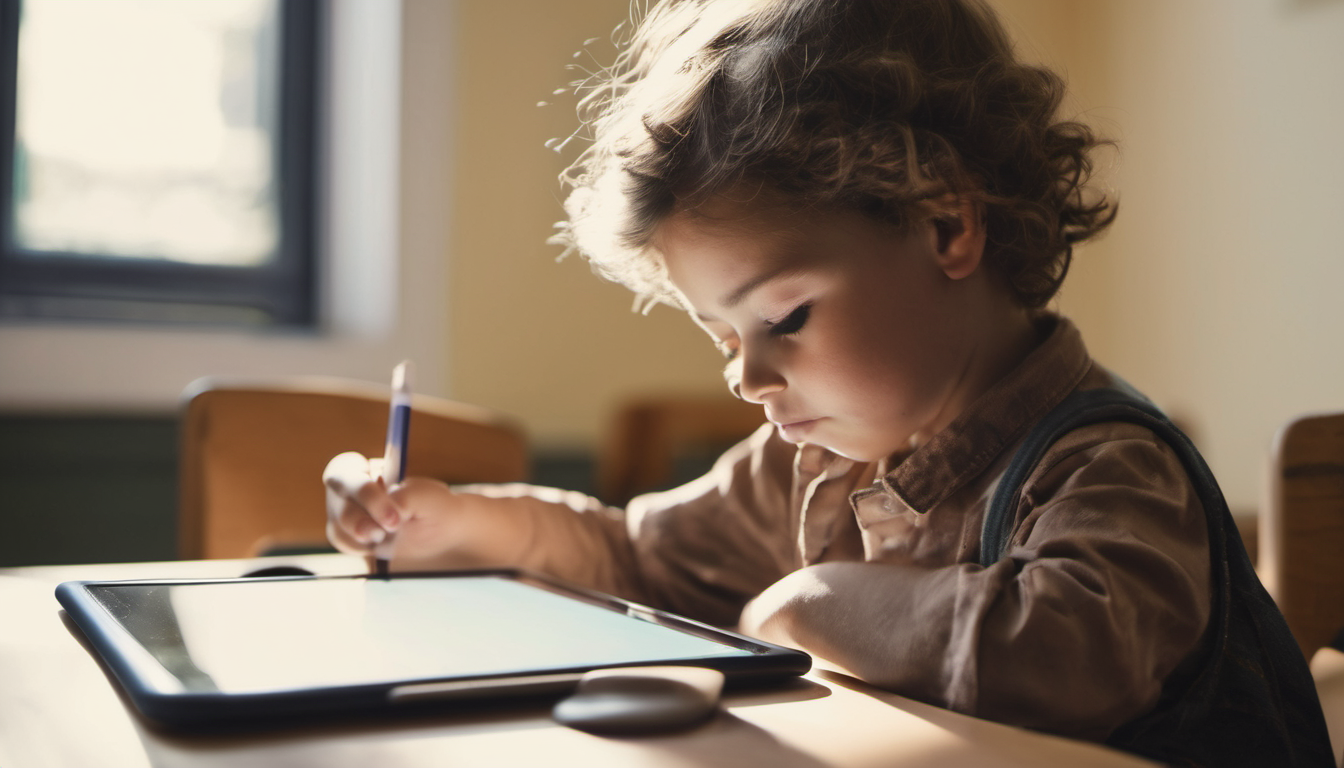
Featured image: A young child is sitting at a table, holding a pencil and writing on a tablet. AI-generated image; not a photograph of the reported event.
A group of over 150 clinicians has released an open letter urging the UK government to cut screen time in English schools. Source: bbc.co.uk.
What Clinicians Are Saying
The letter targets Education Secretary Lucy Powell and Health Secretary Yvette Cooper.
It warns that children are spending too much time on tablets and laptops during lessons.
These devices are used without full understanding of long-term health effects, especially on eyesight.
Short-Sightedness on the Rise
Nearly one million children in England use screens in most lessons.
An analysis of 276 global studies found short-sightedness rose from 24% in 1990 to nearly 36% by 2023.
The condition is linked to long-term eye health risks.
Children Need Rest and Balance
Dr Becky Foljambe, an NHS GP and founder of Health Professionals for Safer Screens, says children need sleep and rest.
She argues short-sightedness isn’t just genetic. She calls screen use as a prep for digital work a ‘lazy argument’.
Children also need time to think critically and appraise information.
Who Is Involved and What’s at Stake?
The clinicians include GPs, paediatricians, and specialists who prescribe glasses, hearing aids, and speech therapy.
They note children with special educational needs are being sent to screen-based learning more than others.
Government Response
The Department for Education says it is developing screen-time guidance for children aged five to 18.
It will also consult on AI and educational tech safety in schools.
It adds: ‘Used well, technology can support learners who need it and free up teachers to deliver excellent education.’
Context: School Screen Use in England
Since June, schools in England have banned smartphones.
Each school and trust must now keep devices out of classrooms all day.
Yet, clinicians say classroom screen use on tablets and laptops remains a serious issue.
Why This Matters
Short-sightedness increases risk of long-term eye problems.
Without action, more children may face lasting vision issues.
Current trends suggest screen use in schools will only grow.
Source: BBC News. Original article: BBC News