Netflix’s adaptation of John Steinbeck’s East of Eden has drawn widespread attention for its bold reimagining of the novel’s morally complex character, Cathy Ames. Florence Pugh’s performance stands out, not just for its emotional depth but for the visual evolution of her character through hair and makeup.
The Evolution of Cathy and Kate
This timeline demands a consistent visual language that reflects historical accuracy and character transformation.
Co-hair and makeup designers Nancy Hennah and Sarah Rubano worked closely with the art and costume departments to ensure authenticity. They prioritized the script over the original novel, noting that creator Zoe Kazan provided clear character descriptions.
For Florence Pugh’s character, the transformation from Cathy to Kate is both literal and symbolic. The visual shift in hair and makeup mirrors the character’s journey from innocence to power.
Early Cathy: Innocence and Healing
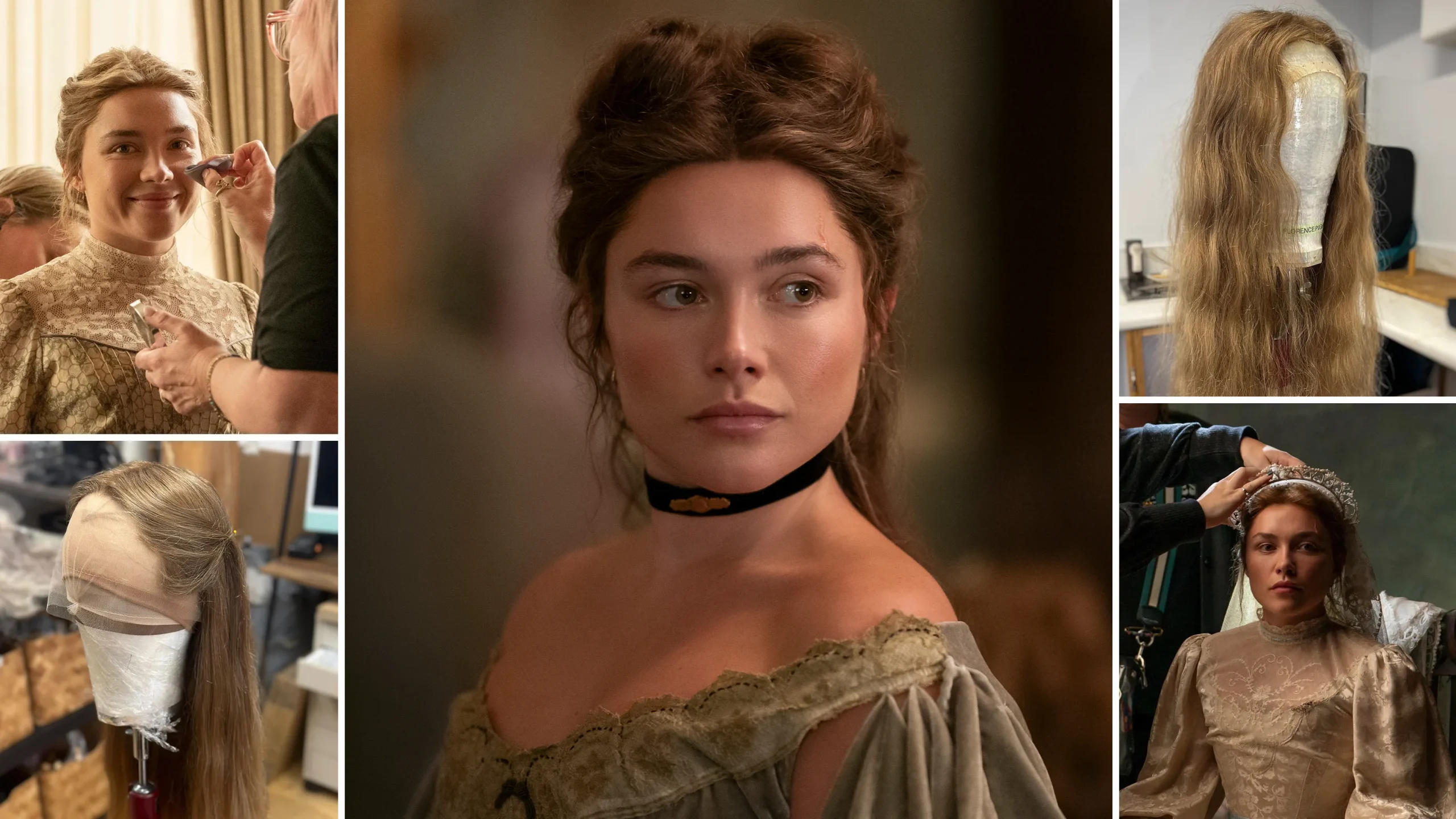
When Cathy first arrives at the Trask farm, she is injured and recovering. Her hair is left down to reflect her physical limitations. This practical choice also underscores her vulnerability.
Hairstylist Jaime Leigh McIntosh explains that the hair was wet-set, avoiding hot tools to maintain a natural texture. This method supports the character’s healing state and realism.
Fluffy wisps and flyaways were intentionally included. These details give Cathy a soft, youthful appearance, helping her appear vulnerable to Adam Trask.
Her accessories are symbolic. A blue ribbon, inspired by Alice in Wonderland, appears during her time in Boston. This ribbon echoes her youthful innocence.
McIntosh also created a small ribbon from the bloodied dress she wore upon arrival. This detail, shared only with Pugh and herself, adds a subtle layer of realism.
Makeup: A Tool of Performance
Early makeup is minimal and natural. The foundation uses a wash of color from Westman Atelier’s Beau Domaine The Cream. This technique avoids heavy coverage, maintaining a fresh, unthreatening look.
Makeup artist Heba Thorisdottir credits the use of Westman Atelier’s Baby Cheeks Blush Stick and English Rose Lip Tint for creating Cathy’s flushed cheeks and rosy lips. These products are specifically suited to Pugh’s skin tone.
Thorisdottir has since used English Rose on multiple actors, noting its effectiveness across different skin tones and scenes.
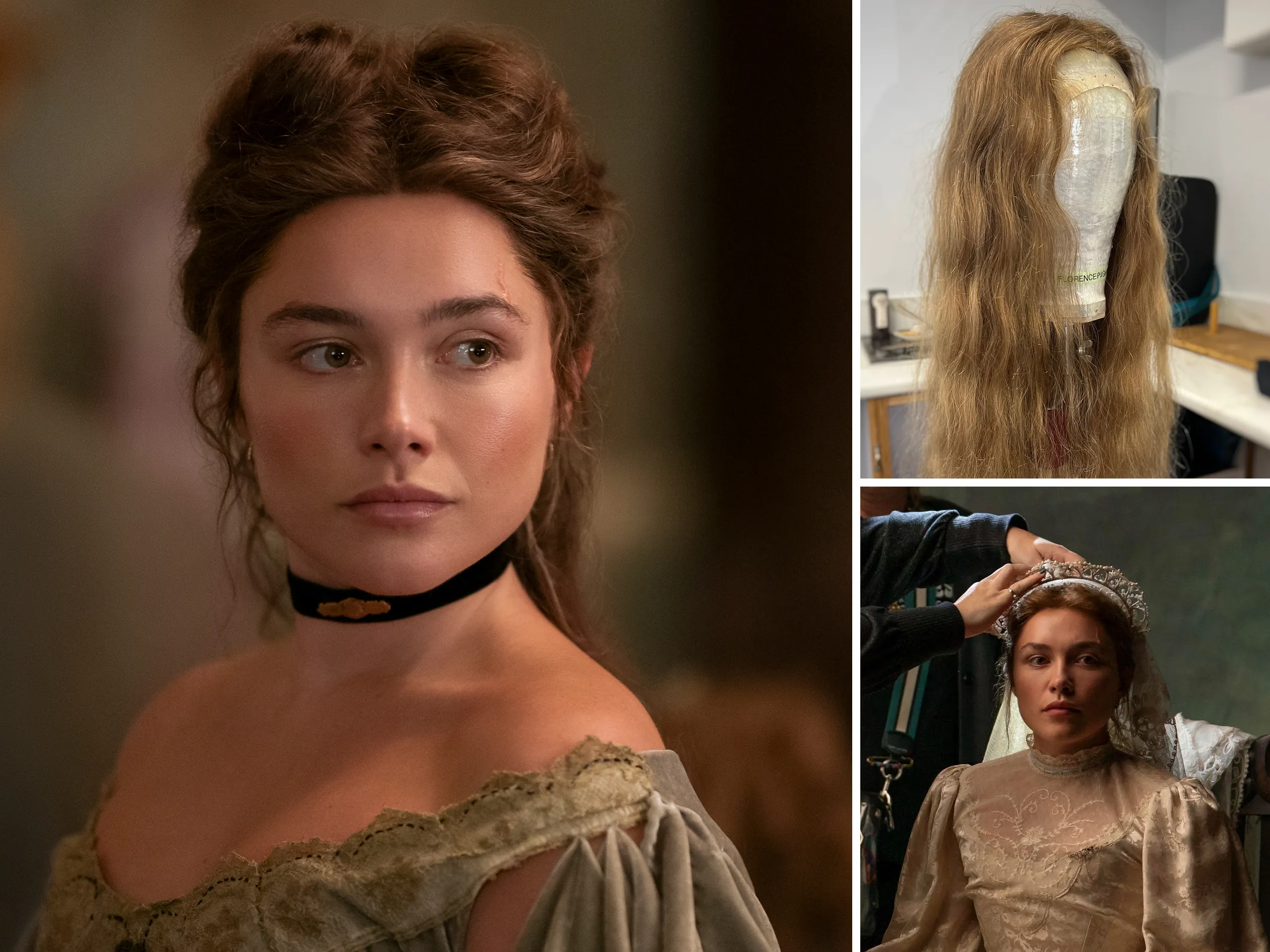
Florance Pugh’s authenticity in performance extends to makeup. She is comfortable acting with or without makeup, as long as it serves the scene. This collaboration ensures the character feels grounded.
From Cathy to Kate: A Visual Rebirth
After giving birth, Cathy feels trapped by her role as a wife and mother. She shoots Adam and runs to a brothel in Salinas, seeking independence.
At the brothel, she meets Faye (Martha Plimpton). This moment marks the beginning of her transformation into Kate. Her hair changes visibly—first with the return of the blue ribbon, then with a darker, more structured style.
McIntosh notes that the sheriff’s request to darken Cathy’s hair is a pivotal moment. It signals her official departure from the identity of Cathy and her emergence as Kate.
The second wig was made to match the first, but then dyed to achieve a darker, more intentional color. This choice ensures Kate’s appearance is not a natural evolution, but a deliberate act of self-creation.
Madame Kate: Power and Presence
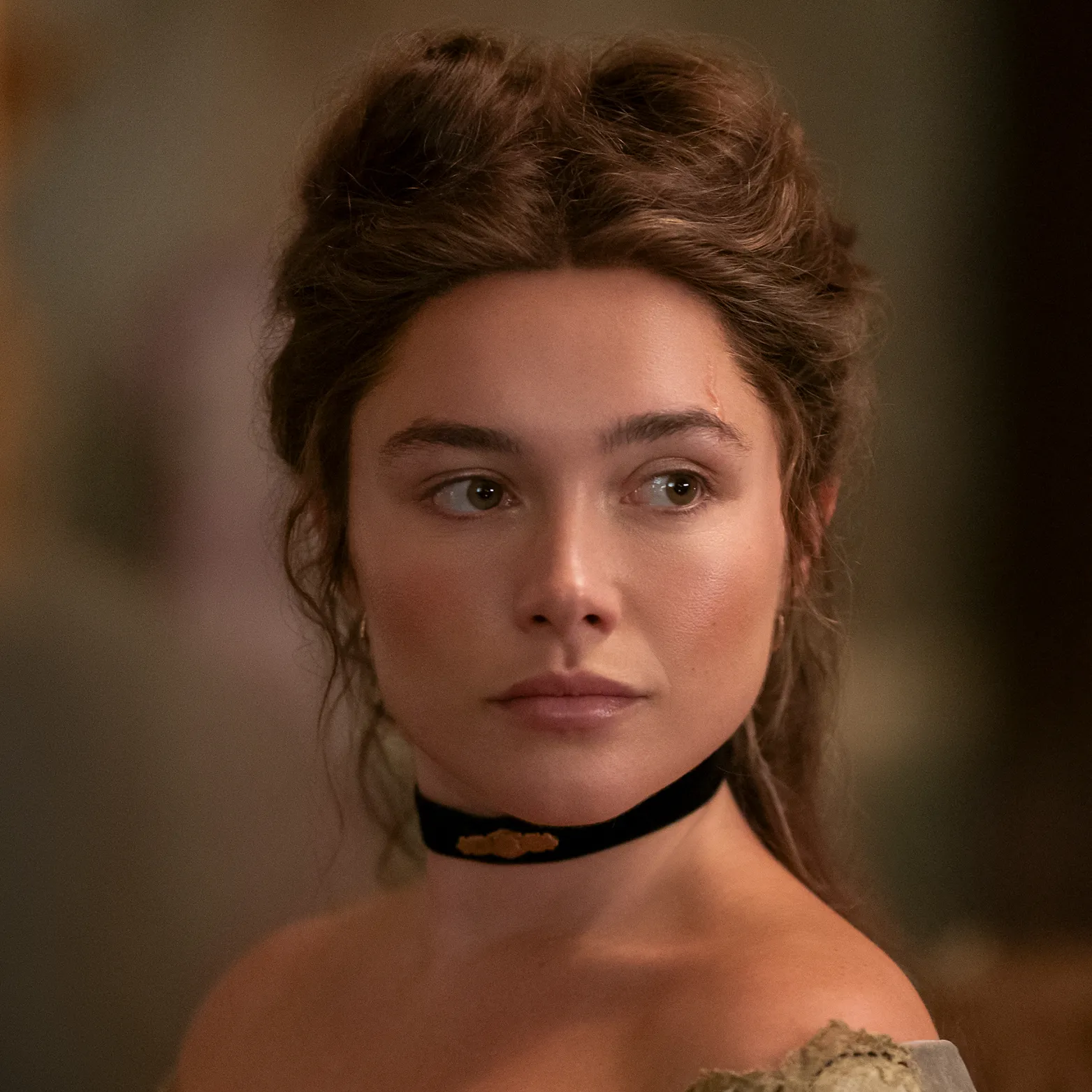
As Kate runs the brothel, her hair becomes more intricate. A style with two peaks at the top—nicknamed ‘kitten ears’—appears and grows throughout the series.
McIntosh explains that this look was inspired by Florence Pugh’s genuine interest. The style becomes a signature, symbolizing Kate’s growing confidence and control.
By the time Kate owns the brothel, her hair is darker and includes visible gray strands. This reflects her age and the passage of time.
Her hair is no longer just decorative. It becomes a symbol of authority. She wears tiara-style accessories, sourced from a New Zealand artist, Daughters of July.
These accessories represent Kate’s rise to power—she is now the queen of her domain.
Makeup as a Sign of Agency
While early 1900s Salinas may not have had widespread access to cosmetics, Kate’s clients would have likely traveled and traded. This suggests she could have acquired makeup before others in the town.
Thorisdottir discovered Westman Atelier during filming in New Zealand. She has since used its foundations for all of Cathy’s looks—from youth to old age.
One of the most striking moments is in episode six, ‘The Great Try.’ Kate wears a bold red lipstick—a dramatic departure from Cathy’s innocent look.
Thorisdottir mixed Le Rouge Français 010 and MAC Russian Red to achieve this shade. She has used this combination since her work on Inglourious Basterds.
Final Transformation: Unraveled and Whole
In the final episode, ‘Tinshel,’ Kate’s empire collapses. Her hair becomes messy and unraveled, yet the ‘kitten ears’ style persists.
McIntosh notes that the half-up style mirrors the young Cathy with whom she confronts at the end. This visual echo closes the loop between past and present.
The scene is powerful. Kate, dressed in full jewelry, hugs her younger self. Her hair is long, messy, and full of the ‘kitten ears’ detail. Her makeup is broken down, natural and unpolished.
Thorisdottir describes this moment as one of the most emotionally resonant she has ever seen. It captures a character’s full arc—power, loss, and reconciliation.
Unlike many productions, the makeup is designed to break down and move with the character. It does not aim to last through long shoots or weather. Instead, it evolves with Kate’s emotional state.
This approach reflects the show’s deeper theme: beauty as a tool of agency, not just appearance.
The hair and makeup team did not just serve the visual needs of the series. They helped tell a story about identity, power, and transformation—through the smallest details of a character’s look.
For fans of character-driven storytelling, the evolution of Cathy and Kate offers a compelling case study in how visual design can support narrative depth.
Those interested in the technical side of makeup artistry may explore best lip liners for mature skin to understand how product choices shape performance.
For a broader look at how makeup and styling serve narrative, see the original source.
Sources & further reading
Featured image: original publisher image. Via original publisher. Image source